
Buying diamond jewellery is usually a careful decision.
You compare stones. You think about metal choice. You consider setting style, budget, certification, finger size, delivery timing and whether the piece feels right for the person who will wear it.
Insurance can feel like the unromantic part of the process.
Yet it may be one of the most sensible decisions you make.
After Diamonds now features Assetsure jewellery insurance at the point of purchase, giving buyers the opportunity to consider specialist cover while the details of the jewellery are still fresh, documented and easy to act on.
That timing matters.
A new engagement ring, pair of diamond earrings, pendant or bracelet may be worn almost immediately. It may go on holiday, to a proposal, to a wedding, to dinner, to work, or simply into everyday life. Once jewellery leaves the box and becomes part of real life, the risk changes.
Insurance is not about expecting something to go wrong. It is about making sure a treasured piece is protected if it does.
Quick Answer
Diamond jewellery insurance is worth considering when you buy a valuable piece, especially if it will be worn regularly outside the home. Arranging cover at the same time as your jewellery purchase can be convenient because the item details, purchase value and documentation are already available. After Diamonds now features Assetsure insurance at checkout so buyers can consider specialist cover before the jewellery enters everyday wear.
A short guide to why diamond jewellery insurance is worth considering at the point of purchase, especially before a new piece enters everyday wear.
Table Of Contents
- Why Consider Insurance At The Same Time As The Jewellery?
- Jewellery Is Bought To Be Worn
- But Doesn’t Home Insurance Cover Jewellery?
- Why Assetsure Is A Useful Add-On For After Diamonds Customers
- The Value Of A Standalone Jewellery Policy
- Lab-Grown Diamonds Make The Insurance Question More Relevant
- What To Keep After Buying Diamond Jewellery
- Insurance Works Best Alongside Good Jewellery Care
- A Sensible Step, Not A Spoiled Moment
- Protect Your Jewellery Before Real Life Begins
- FAQ
Why Consider Insurance At The Same Time As The Jewellery?
Most people do not intend to leave insurance until later.
They simply get distracted.
The ring arrives. The proposal happens. The jewellery is worn, admired, photographed, packed for a trip or placed into a jewellery box. Insurance becomes one of those sensible tasks that can wait until next week.
Then next week becomes next month.
Arranging cover at the point of purchase helps avoid that drift.
It also means the practical information is already in front of you:
- What the item is
- What it cost
- When it was purchased
- Who supplied it
- What documentation came with it
- Whether a certificate or invoice is available
That makes the insurance decision simpler, cleaner and less likely to be forgotten.
For many buyers, this is the strongest reason to consider the Assetsure option during the After Diamonds checkout process. It turns insurance from a separate admin task into a natural part of responsible ownership.
Before The Jewellery Leaves The Box
If you are buying through After Diamonds, the Assetsure insurance option appears at the point of purchase so you can consider protection while the item details, value and documents are still close to hand.
Jewellery Is Bought To Be Worn
Diamond jewellery is not like a television, sofa or kitchen appliance.
It does not stay in one place.
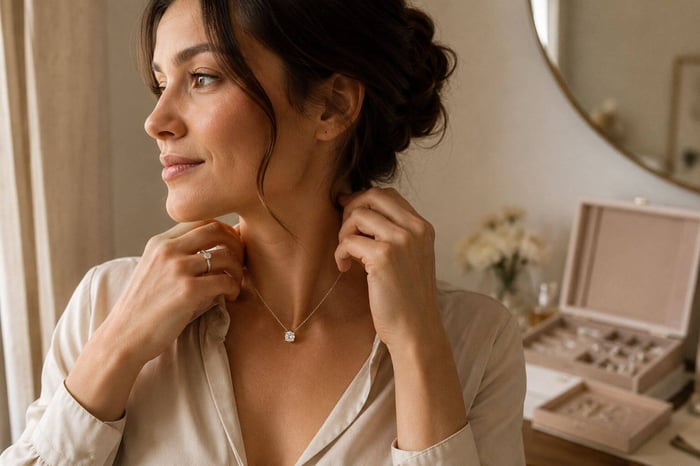
An engagement ring may be worn every day. Earrings may be taken on holiday. A pendant may go from home to office to restaurant to hotel room. A bracelet may be worn at a wedding, removed briefly, and then mislaid in the confusion of the day.
Most jewellery losses are not dramatic.
They are ordinary.
A ring slips off. A claw is damaged. A stone is lost. An earring back fails. A piece disappears somewhere between a hotel room and an airport security tray.
That is why specialist jewellery insurance can be worth considering. It is designed around the fact that jewellery is worn, carried and enjoyed outside the safety of the home.
But Doesn’t Home Insurance Cover Jewellery?
Sometimes it does.
Sometimes it does not cover as much as people assume.
Many home insurance policies include some cover for valuables, but there may be limits on individual items, total jewellery value, accidental loss, travel, and what happens when the item is away from the home.
This is not a reason to panic.
It is a reason to check.
For lower-value jewellery, your existing household policy may be enough. For higher-value or emotionally important pieces, particularly engagement rings and diamond jewellery worn frequently, it may be sensible to consider whether specialist cover gives you a better fit.
The problem is that many people only discover the limitations of their existing policy after something has gone wrong.
That is the situation worth avoiding.
Why Assetsure Is A Useful Add-On For After Diamonds Customers
After Diamonds customers are often making thoughtful, considered purchases. Many choose lab-grown diamonds because they want more beauty, scale or specification for their budget without losing the essential character of a real diamond.
That can mean a buyer ends up with a more impressive piece than they first imagined.
A larger centre stone.
A finer pair of diamond studs.
A more substantial bracelet.
A pendant that becomes an everyday signature piece.
The more meaningful or valuable the jewellery becomes, the more sensible it is to think about how it is protected.
Featuring Assetsure during the purchase process is useful because it meets the buyer at the right moment. You are already thinking clearly about the jewellery. You already know what you are buying. You already have the purchase value. You have not yet put the item into everyday use and then forgotten the practical follow-up.
It is not about adding pressure to the sale.
It is about making protection easier to consider while the decision is still simple.
The Value Of A Standalone Jewellery Policy
A standalone jewellery policy may be attractive because it is separate from your general home insurance.
That can make the cover feel more directly matched to the item itself.
Depending on the policy terms, specialist jewellery insurance may include cover for risks such as theft, accidental damage, accidental loss, and loss of stones. It may also include cover away from home and while travelling.
This matters because jewellery is often at greatest risk when it is being worn and enjoyed.
The key point is not that every buyer must choose separate insurance.
The key point is that valuable jewellery deserves a conscious decision.
Useful Questions To Ask Before You Rely On Existing Cover
- Do you know whether your home insurance covers the piece?
- Do you know the single-item limit?
- Do you know whether it is covered outside the home?
- Do you know whether accidental loss is included?
- Do you know what would happen if a stone were lost from the setting?
If the answer to those questions is unclear, it is worth reviewing your position before you rely on an assumption.
Lab-Grown Diamonds Make The Insurance Question More Relevant
Lab-grown diamonds have changed what many buyers can realistically own.
A budget that might once have bought a smaller natural diamond can now often buy a larger lab-grown diamond or a more substantial piece of jewellery. That is one of the great attractions of buying lab-grown diamond jewellery.
But it also means the insurance question can become more important.
You may not think of yourself as someone buying “high-value jewellery”.
Yet your new engagement ring, earrings, necklace or bracelet may still be valuable enough that replacing it would be painful.
That is especially true when the piece has emotional significance.
Financial value is only part of the story. If a ring marks a proposal, a wedding, an anniversary or a personal milestone, losing it is not just an inconvenience. It can feel deeply upsetting.
Insurance cannot replace the original moment.
But it can make the practical recovery much easier.
What To Keep After Buying Diamond Jewellery
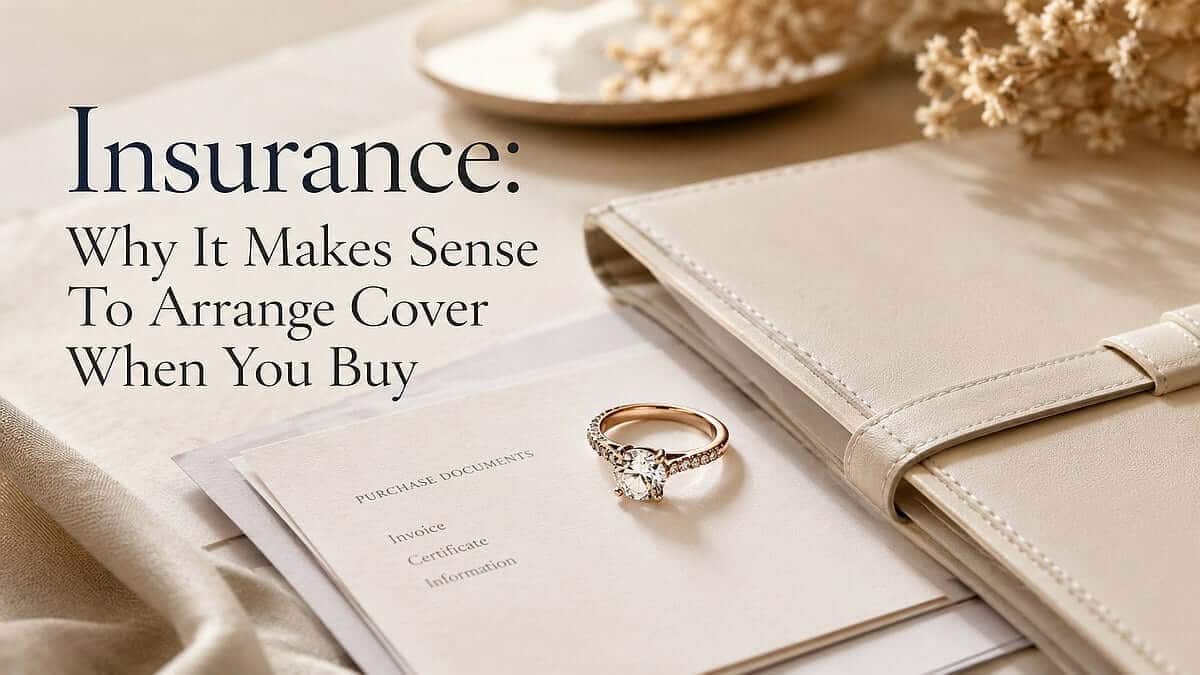
Whether you choose Assetsure, another specialist insurer, or your existing home insurance provider, good documentation helps.
Keep:
- Your purchase invoice
- Any diamond certificate or grading report
- Clear photographs of the jewellery
- Policy documents
- Any valuation documents
- Service, repair or inspection records
This is another reason why arranging cover at purchase can be convenient. The documents are already to hand.
Rather than hunting for information later, you can deal with the practical protection while everything is fresh.
If you are comparing documentation and diamond reports, our guide to lab diamond certification and transparency may also be useful.
Insurance Works Best Alongside Good Jewellery Care
Insurance should not replace common sense.
It should sit alongside it.
Diamond jewellery still benefits from sensible care. Store pieces separately when not worn. Avoid wearing rings during heavy manual work. Remove jewellery before swimming, gardening, lifting weights or using harsh chemicals. Have settings checked periodically, especially where stones are held by claws.
Good care reduces risk.
Insurance protects you if care is not enough.
For more practical ownership guidance, see our advice on caring for diamond jewellery and other precious gems.
That combination of care and cover is what gives jewellery owners genuine peace of mind.
A Sensible Step, Not A Spoiled Moment
Insurance will never be the most romantic part of buying diamond jewellery.
That is fine.
It does not need to be.
The romantic part is choosing the piece, giving it, wearing it and letting it become part of someone’s life.
Insurance simply protects the practical side of that decision.
For After Diamonds customers, the Assetsure option at checkout makes that step easier to consider at the right time. You are not being asked to turn a beautiful purchase into paperwork. You are being given a convenient opportunity to protect something you already care enough to buy well.
That is the real value.
Not fear.
Not pressure.
Just a sensible layer of reassurance before your jewellery enters real life.
Protect Your Jewellery Before Real Life Begins
If you are buying a meaningful piece of diamond jewellery from After Diamonds, it is worth taking a moment to consider how it will be protected once it is worn.
The Assetsure insurance option at checkout is designed to make that decision easier while your purchase details are already available.
You can still compare options, check your existing home insurance and make your own decision. But do it consciously.
Beautiful jewellery is bought to be enjoyed.
The right cover can help you enjoy it with greater confidence.
FAQ
Do I Need Diamond Jewellery Insurance?
You may not need separate jewellery insurance if your existing home insurance gives you suitable cover. However, valuable or frequently worn pieces may need specialist cover, especially if they are worn outside the home or taken abroad.
Why Should I Consider Insurance When I Buy The Jewellery?
It is often easier to arrange cover at the time of purchase because the item details, price, invoice and supporting documents are already available. It also reduces the chance that insurance becomes a task you intend to do later but forget.
Does Home Insurance Cover Engagement Rings?
Some home insurance policies cover engagement rings, but limits and exclusions vary. You should check the single-item limit, whether the ring is covered away from home, and whether accidental loss is included.
What Does Specialist Jewellery Insurance Usually Cover?
Specialist policies may cover risks such as theft, accidental loss, accidental damage and loss of stones, depending on the policy wording. Always check the terms, conditions and exclusions before buying.
Is Jewellery Covered When Travelling?
Some specialist jewellery policies include travel cover, but there may be limits on trip length or other conditions. Check the policy wording before relying on cover abroad.
What Documents Should I Keep For Jewellery Insurance?
Keep your invoice, diamond certificate or grading report, photographs, policy documents and any valuation, repair or inspection records. These can be helpful if you ever need to make a claim.