
In This Article
- How the Jonker Diamond Redrew America’s Gemstone Map
- Rain, Fortune, and a Hen’s Egg: The Discovery that Shook Diamond History
- Breaking the Mould: Harry Winston’s Risk and American Diamond Cutting Revolution
- From Workshop to Wonder: The Jonker’s Transformation and Table of Famous Stones
- Diamonds, Fame and the Art of the Cluster: A Wild Card in Jewellery’s Tale
- A Legacy Written in Light, Not Just Stone
- From Legendary Diamonds to Your Own Quiet Treasure
How the Jonker Diamond Redrew America’s Gemstone Map
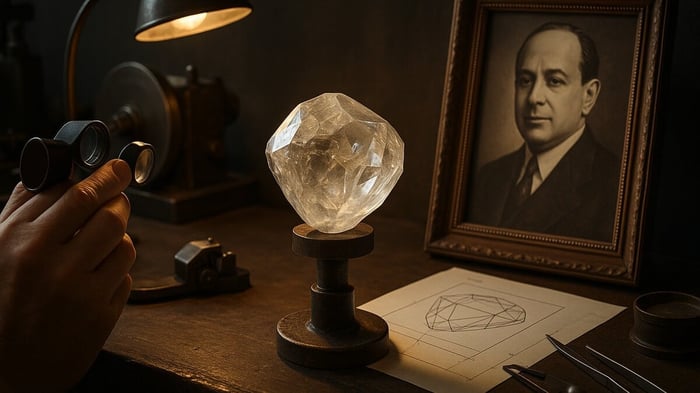
What if the story of modern American diamond-cutting didn’t start in a workshop but in a rain-soaked field halfway across the world? Imagine Jacobus Jonker, covered in South African mud, on the verge of giving up after years without success, when he stumbles upon a gemstone the size of a hen’s egg, a stone that would come to be called the Jonker diamond.
Later, thousands of miles away, a young Harry Winston studies the stone through a loupe, sensing it could shape his future. There’s something almost magical about moments like these, when luck, ambition, and skill converge, and a muddy rock finds its way to the dazzling lights of New York. This isn’t just the story of a gemstone; it’s about defying expectations, sparking quiet revolutions in art, and daring to challenge the world’s oldest traditions.
TL;DR: The Jonker diamond’s journey from South African soil to Harry Winston’s Manhattan atelier reshaped the global diamond landscape and turned American craftsmanship into a shining beacon of innovation and elegance.
Rain, Fortune, and a Hen’s Egg: The Discovery that Shook Diamond History
Heavy rainfall transformed the landscape near Pretoria, South Africa, in the early months of 1934. For Jacobus Jonker, a miner who had spent nearly two decades searching without reward, this downpour would change his life and diamond history forever. While sifting through the softened earth, Jonker uncovered a rough diamond of astonishing size: 726 carats, its mass likened to that of a hen’s egg. News of the discovery of the fourth-largest gem-quality diamond ever recorded at the time marked the beginning of the Jonker diamond's history.
To grasp the diamond size significance, consider this: the Jonker diamond’s rough weight could have produced around 1,400 average engagement rings. Its discovery was not only a personal triumph for Jonker but also a moment that captured the imagination of the gemological world. Traditionally, such exceptional stones were sent straight to established cutting centres in Antwerp or Amsterdam, where European expertise reigned supreme.
Lab Diamond Chain Necklace 3.00ct in 18k Rose Gold 24"

£2,415.00
£4,395.00
Enjoy the Lab Diamond Chain Necklace, featuring 3.00ct of D/VVS quality genuine diamonds, each meticulously bezel set to highlight their brilliance. This piece, crafted in 18k rose gold, measures 24" in length, offering a perfect blend of sophistication and delicacy.… read more
But the Jonker diamond was destined for a different journey. In a bold move that would redraw the map of gemological history, the stone was purchased by Harry Winston, a 39-year-old New Yorker whose reputation for recognising rare gems was fast growing. At the time, the Jonker was the second-largest diamond in the world, and Winston’s decision to have it shipped to New York, rather than Europe, was a major departure from tradition.
Once in Manhattan, the Jonker diamond became the talk of the city’s diamond cutters. The anticipation was palpable, as Winston later recalled:
‘One of them cried the other day. And another one threw kisses at it.’The stone’s arrival in America signalled a new era, challenging the dominance of European cutting houses and placing New York at the heart of the world’s diamond trade.
The Jacobus Jonker diamond discovery and its journey to New York did more than just shift industry norms; it set the stage for American innovation in diamond cutting, forever altering the course of gemstone history.
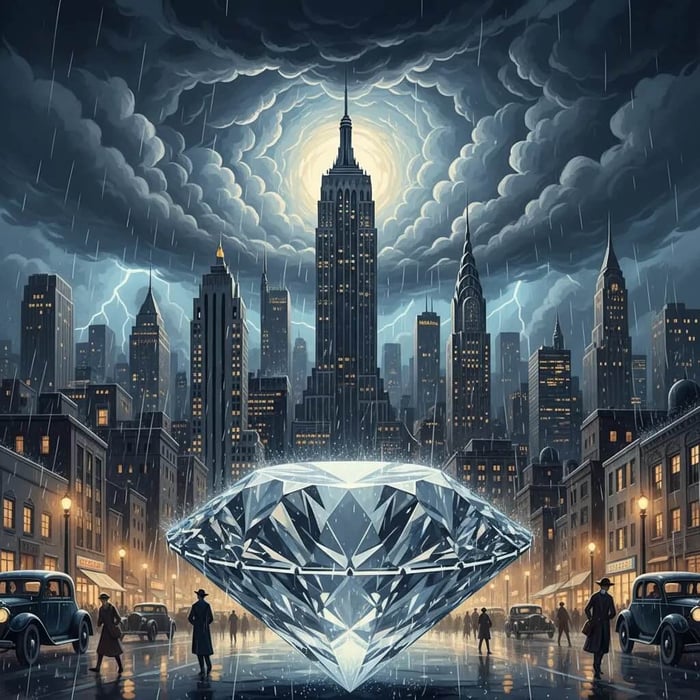
Breaking the Mould: Harry Winston’s Risk and American Diamond Cutting Revolution
In 1934, the diamond world watched in disbelief as Harry Winston, a young New York jeweller, made a decision that would forever change the landscape of American diamond craftsmanship. Instead of sending the newly discovered 726-carat Jonker diamond to the established cutting houses of Antwerp or Amsterdam, Winston insisted it be cut in Manhattan. This bold move challenged centuries of European dominance in diamond-cutting techniques and set the stage for a new chapter in the art of gemstone transformation.
The stakes were unprecedented. No American workshop had ever attempted to cut a stone of such size and quality. The risk was so pronounced that, as Winston later recalled,
‘So risky was the process that Lloyd’s of London… declined to underwrite it.’The diamond’s arrival in New York sparked intense anticipation. For 14 months, Winston’s team of cutters and gemologists studied the Jonker, mapping every inclusion and plane, knowing that one wrong move could shatter both the stone and America’s burgeoning reputation.
The process was as much about vision as it was about skill. Unlike traditional European cutters, who often prioritised retaining as much weight as possible, Winston championed a new philosophy: proportion and brilliance over mere carat size. This approach would later influence modern brilliant-cut standards and set a precedent for Harry Winston diamond cutting. When the chief cutter finally struck the first blow, splitting the Jonker in two. This action was more than a technical feat; it was a declaration that American diamond cutting could rival the best in the world.
The excitement among New York’s diamond cutters was palpable. As Winston described, “One of them cried the other day. And another one threw kisses at it.” The successful cleaving and subsequent transformation of the Jonker into twelve dazzling stones, including a 125.35-carat D-colour emerald cut, was a triumph that reverberated far beyond Manhattan. It marked the moment when the United States, through Winston’s daring, stepped onto the global stage, not just as a consumer of diamonds, but as a creator of brilliance.
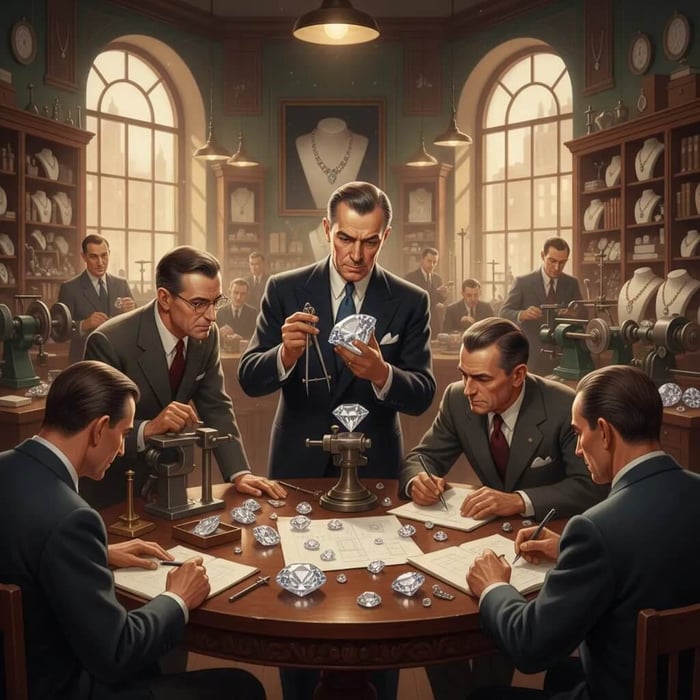
From Workshop to Wonder: The Jonker’s Transformation and Table of Famous Stones
The Jonker diamond's story represents a pivotal moment in the history of diamonds and the American jewellery industry. After months of careful planning and nerve-wracking precision, Harry Winston’s Manhattan workshop transformed the 726-carat rough Jonker into 12 polished gems. The largest, a breathtaking 125.35-carat D-coloured emerald-cut diamond, was sold to King Farouk of Egypt, an act that dazzled the world and signalled the arrival of American craftsmanship on the global stage.
The American media widely publicised Jonker's successful cutting, igniting national pride and setting the Harry Winston diamond as a new benchmark of excellence. This achievement marked the beginning of a remarkable era. As Winston’s reputation soared, so did his collection of extraordinary stones.
Over the years, Winston acquired and cut some of the most famous diamonds handled in gemological history: the Lesotho (601 carats, cut into 18 gems), the Vargas (726.6 carats, yielding 29 stones), and the legendary Taylor-Burton (69.42 carats, pear-shaped), worn by Elizabeth Taylor.
Winston’s peerless approach placed US diamond artistry in international focus. As one industry observer noted:
‘Over his career, it is estimated that one-third of the world’s most famous diamonds passed through Harry Winston’s hands, cementing his status as the “King of Diamonds.”’The table below highlights the scale and frequency of Winston’s extraordinary finds, each of which is a milestone in the American jewellery industry and a testament to his vision.
| Diamond | Original Carat Weight | Polished Stones Produced | Largest Stone (Carats) | Notable Owner/Story |
|---|---|---|---|---|
| Jonker | 726 | 12 | 125.35 (D-colour emerald cut) | King Farouk of Egypt |
| Lesotho | 601 | 18 | 71.73 | Worn by Jackie Kennedy |
| Vargas | 726.6 | 29 | 48.26 | Named for Brazilian President |
| Taylor-Burton | 69.42 | 1 | 69.42 (pear-shaped) | Elizabeth Taylor |
The Jonker’s transformation set a new benchmark, inspiring a legacy where American innovation and artistry could shine as brightly as the world’s rarest stones.
Lab Diamond 0.50ct Cluster Ring D/VVS Quality in 9k Yellow Gold

£485.00
£915.00
Revel in the striking beauty of the Lab Diamond 0.50ct Cluster Ring, a masterpiece of feminine elegance and sparkle. This exquisite ring features a dazzling cluster of real diamonds, meticulously claw set to showcase their brilliance. Crafted in 9k yellow… read more
Diamonds, Fame and the Art of the Cluster: A Wild Card in Jewellery’s Tale
In the 1940s, Harry Winston introduced a revolution that would forever change the landscape of fine jewellery: the Winston Cluster technique. Unlike traditional settings, where metal dictated the form and flow, Winston’s philosophy was simple yet radical: “The stones should dictate the design—not the other way around.” His signature cluster design set diamonds with the lightest touch of metal, allowing each stone to catch and reflect light to its fullest. As one expert put it,
‘Winston’s signature “cluster” technique… allowed the stones to dictate the design and maximised brilliance.’This Cluster design was more than a technical feat; it was a statement. By letting diamonds take centre stage, Winston redefined what luxury could look like; fluid, organic, and dazzling from every angle. The effect was immediate and profound, establishing the Cluster as a hallmark of the Harry Winston brand and a symbol of American ingenuity in jewellery.
However, Winston's innovations extended beyond the workbench. In 1944, he became the first jeweller to lend diamonds to a Hollywood star, actress Jennifer Jones, at the Academy Awards. This single act sparked a new era of celebrity culture in jewellery, where red carpet glamour and brand association became inseparable. Soon, the world’s most famous faces were seen draped in Winston’s creations, and the brand’s reputation soared alongside those stars.
Winston's uncompromising commitment to excellence was evident behind the scenes. His diamond assessment standards regularly exceeded those of leading gemological laboratories. Stones that met the highest industry grades were often declined if they failed to satisfy Winston’s own rigorous criteria. This ongoing search for perfection reflected an enduring American quest: to set new benchmarks, not just meet them.
- 1940s: Winston pioneers the Cluster technique, letting diamonds lead the design.
- 1944: First celebrity jewellery loan, launching a new era of Hollywood glamour.
- Ongoing: In-house diamond standards surpass even the most respected gem labs.
Winston’s blend of artistry, technical mastery, and cultural savvy transformed both the jewellery world and the public imagination, making every cluster piece a wildcard in the tale of diamonds and fame.
Maya Lab Diamond Bezel Solitaire Engagement Ring 4.00ct D/VVS Platinum
£3,035.00
£18,116.00
Fall in love with the Maya Lab Diamond Bezel Solitaire Engagement Ring. This stunning ring features a 4.00 carat D/VVS-graded lab-created diamond, bezel-set in platinum, the epitome of luxury. Certified by IGI and UK hallmarked, this ring boasts a solitaire… read more
A Legacy Written in Light, Not Just Stone
The journey of the Jonker diamond is more than a tale of geological fortune; it is a vivid illustration of the American dream in action, where risk, ambition, and innovation converge to redraw the boundaries of possibility. From a muddy South African field to the bright lights of Manhattan, the Jonker’s transformation under Harry Winston’s stewardship marked a turning point in the diamond-cutting legacy. No longer was the world’s gaze fixed solely on Europe; instead, American diamond craftsmanship stepped confidently into the spotlight, forever altering the map of global gemology.
Harry Winston’s vision was both bold and deeply personal. He saw in the Jonker not just a rare stone, but also an opportunity to elevate American artistry to the highest echelons of international acclaim. Through meticulous planning and fearless execution, Winston and his team accomplished what many believed to be impossible, establishing new standards that continue to serve as benchmarks in the industry today. As Winston himself believed,
‘At its core, the Harry Winston philosophy articulates a belief that American craftsmanship can, not only match, but surpass the world’s oldest and most esteemed traditions.’The Jonker’s story is a lesson in the power of daring, proof that light, when expertly harnessed, can outshine even the most storied legacies carved in stone. Winston’s approach to diamond cutting was revolutionary, prioritising the unique character and brilliance of each gem, and in doing so, he redefined what it meant to be a master of the craft. This ceaseless pursuit of perfection, letting each stone’s personality take centre stage, continues to define the Harry Winston brand and its enduring connection to the American dream.
Today, the legacy of the Jonker diamond lives on in every Harry Winston creation. The house’s never-ending dedication to excellence and creative freedom ensures that each diamond is not just a product but a testament to the spirit of innovation and artistry that first brought the Jonker to life. In the end, the true legacy is not only written in stone but also in the light each diamond casts, a beacon of American ingenuity and aspiration for generations to come.
Lab Diamond Cuban Link Bracelet 5.50ct in 9k Yellow Gold
£3,005.00
£5,995.00
Discover unparalleled style with the Lab Diamond Cuban Link Bracelet, featuring a striking 5.50ct of D/VVS quality real diamonds, meticulously set in a pave setting for an exquisite display of brilliance. Crafted in luxurious 9k yellow gold, this bracelet boasts… read more
From Legendary Diamonds to Your Own Quiet Treasure
Stories like the Jonker remind us how vision, courage, and craftsmanship can transform rough stone into something unforgettable. You may never hold a historic diamond in your hand, but you can still enjoy that same play of light in pieces created for real, modern life.
At After Diamonds, our lab-grown diamond jewellery brings together advanced technology and careful craftsmanship to offer exceptional sparkles with a fresh, accessible twist. Each piece is designed to catch the light beautifully, whether you are dressing for an ordinary day or a once-in-a-lifetime occasion.
If this journey from South African soil to Manhattan workshops has inspired you, why not explore the next chapter in diamond history for yourself?
🔗 Browse lab-grown diamond jewellery at AfterDiamonds.co.uk
Our Collections of High-Quality Diamond JewelleryFind the piece that tells your story, not in legend, but every time you wear it.