
In This Article
Why Carat Is Not Everything
Most people begin their diamond-buying journey with a single number in mind. Carat. It feels concrete, measurable, and reassuring. Bigger number, bigger diamond. Job done – but diamond size is not everything; read on to find out why.
That assumption is understandable. Jewellery shops often lead with carat weight, and online filters reinforce the idea that size is the main event. Many buyers only discover later that two diamonds with the same carat weight can look surprisingly different once worn.
I remember standing at a counter years ago, comparing two diamonds that were almost identical on paper. One was slightly cheaper, slightly heavier, and looked like the obvious choice. Yet when the stones were placed side by side under natural light, the lighter one looked brighter, crisper, and somehow more alive. That was the moment it clicked. Carat tells you weight, not beauty.
This diamond size guide explains what "carat" really means, why cut plays such a central role in how a diamond looks, how certification has evolved for lab-grown diamonds, and how to prioritise confidently when choosing diamond jewellery online.
What Carat Actually Measures
Carat is a unit of weight, not size. One carat equals 0.2 grams. That is roughly the weight of a raindrop. When you are dealing with such tiny measurements, those minuscule differences can feel significant on paper while remaining almost invisible to the eye.
The weight difference between a 1.00 carat and a 1.05 carat diamond, for instance, is only 0.05 grammes. Yet that small jump often triggers a noticeable price increase, especially around popular thresholds like one carat.
What your eye sees, however, is not weight. It sees diameter and surface area.
Elsie Pink Lab Round Diamond Halo Engagement Ring 4.00ct in Platinum

£4,865.00
£9,195.00
The Elsie Pink Lab Round Diamond Halo Engagement Ring is a breathtaking creation, showcasing a vivid 3.00ct pink lab-grown diamond of VS quality at its heart. This central stone, boasting a radiant pink hue and exceptional clarity, is IGI-certified, ensuring… read more
Why carat comparisons can mislead
It is common for buyers to compare diamonds around the same carat range and assume the heavier stone will look larger. In practice, that is not always true.
I once worked with a buyer choosing between two lab-grown diamonds, both listed at 1.02 carats. On screen they looked similar. In person, one measured around 0.2 millimetres wider across the table. That difference does not sound dramatic, but on the other hand, it was obvious. Friends commented on the size of one ring far more than the other.
The explanation was simple. The wider-looking diamond had a slightly better spread due to its cut proportions.
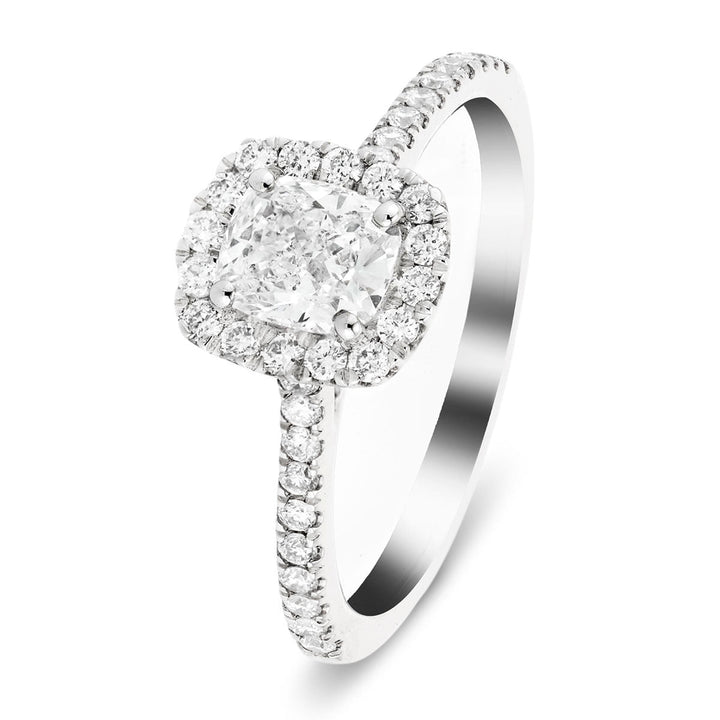
Eva Lab Diamond Halo Cushion Engagement Ring 0.85ct G/VS in 9k White Gold
£875.00
£1,346.00
Make a statement of love with the Eva Lab Diamond Halo Cushion Engagement Ring. Designed and handcrafted in the UK to the highest standards. This ring features a stunning 0.85-carat total weight of diamonds, including a G/VS certified, 0.50 carat… read more
Cut is the Quiet Driver of Beauty
If carat tells you how much a diamond weighs, cut tells you how it behaves.
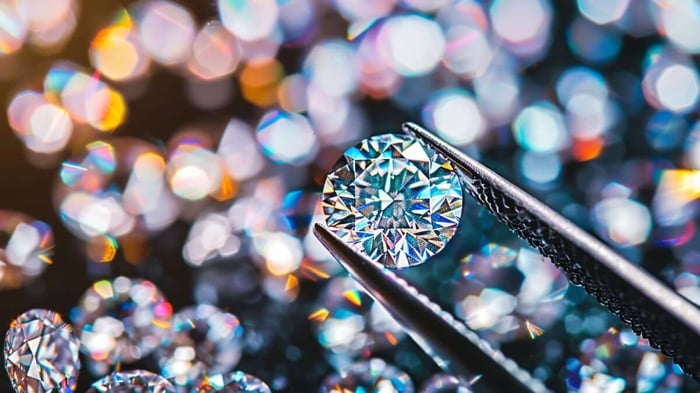
Cut affects how light enters the diamond, how it moves internally, and how much returns to your eye. This is what creates sparkle, brightness, and contrast.
It also affects how wide the diamond looks from above.
A practical way to think about cut
Most people judge a diamond from the top view, known as the table. A diamond that carries too much weight in its depth may look smaller from above, even if it weighs more. A diamond that spreads weight outward may look wider, even if it weighs less.
Cut is the difference between the weight you see and the weight you pay for but never notice.
Shallow and deep cuts in real life
A shallow-cut diamond can appear impressively wide under showroom lighting. This can be alluring, particularly for buyers seeking the largest possible appearance.
The downside often shows later. Under daylight or softer evening lighting, shallow stones can look flat or dull because light escapes through the bottom instead of returning to the eye.
Deep-cut diamonds have the opposite problem. They hide weight below the surface, reducing face-up size and sometimes sparkle.
A well-balanced cut avoids both extremes. It produces a diamond that looks lively, bright, and proportional rather than simply wide or heavy.
Ella Lab Diamond Solitaire Engagement Ring 0.50ct G/VS 18k Yellow Gold

£815.00
£1,046.00
Celebrate your love with the timeless elegance of the Ella Lab Diamond Solitaire Engagement Ring, carefully handcrafted in the UK. This beautiful ring showcases a magnificent 0.50-carat G/VS-graded lab-grown diamond, IGI certified and set in 18k yellow gold, creating a… read more
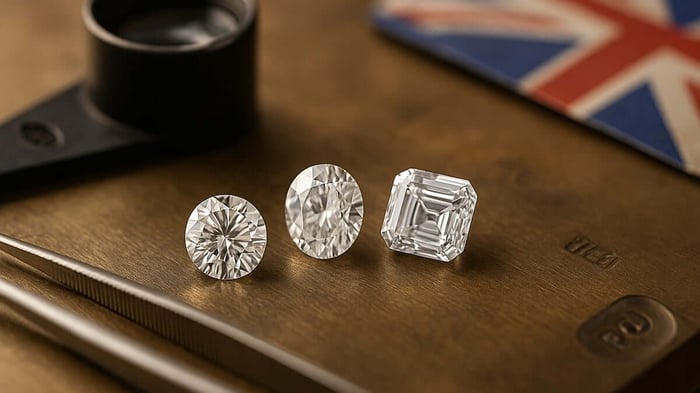
Why do proportions differ by diamond shape?
One reason this topic causes confusion is that there is no single set of “perfect” proportions for all diamonds. Different shapes are designed to perform differently, and what counts as well balanced in one shape may look wrong in another.
Round diamonds are engineered for maximum light return, so their proportions are relatively tight. Fancy shapes such as oval, pear, and marquise are designed to elongate the outline, which changes how depth and table size are used to control brilliance and spread.
This means a depth percentage that looks ideal on a round diamond could be too deep or too shallow on an oval or emerald cut.
What matters is not chasing the widest possible look but staying within proportion ranges that preserve sparkle while delivering pleasing size.
Typical depth percentage ranges by diamond shape
Depth percentage describes how tall a diamond is compared to its width. Staying within these general ranges helps avoid diamonds that look flat, dull, or smaller than expected for their carat weight.
| Diamond shape | Typical depth range | What this range aims to achieve | What to watch out for |
|---|---|---|---|
| Round brilliant | 59–62% | Strong light return and balanced face-up size | Below range may leak light; above range may look smaller |
| Oval | 60–63% | Good spread with consistent sparkle | Too shallow can look glassy; too deep can appear narrow |
| Cushion | 61–67% | Balance between brilliance and body | Excess depth can reduce visible size |
| Emerald cut | 61–68% | Clean reflections and elegant proportions | Too shallow can wash out; too deep can feel heavy |
| Princess | 68–75% | Preserves brilliance in a square outline | Shallow stones lose fire; deep stones hide weight |
| Pear | 60–65% | Even brilliance from tip to base | Shallow tips can look weak; deep stones lose elegance |
| Marquise | 58–63% | Maximises length while maintaining sparkle | Too shallow can window, too deep can look skinny |
Ava Lab Marquise Diamond Solitaire Engagement Ring 0.50ct G/VS 18k Yellow Gold

£855.00
£1,001.00
Celebrate your love in style with this enchanting Ava Lab Marquise Diamond Solitaire Engagement Ring, lovingly crafted by hand in the UK. This ring features a captivating 0.50ct total weight of G/VS-graded lab-created diamonds, with a beautiful marquise-cut diamond set… read more
How to use this information as a buyer
These ranges are not meant to turn you into a gemologist. Their purpose is to help you avoid the most common traps.
If a diamond's depth is significantly outside the typical range for its shape, there is usually a specific reason for this. Often that reason benefits the cutter rather than the wearer.
Cutting deeper preserves more weight from the original rough stone, which can push the carat figure higher without improving appearance. Cutting too shallow can inflate visible size at the cost of sparkle.
Neither extreme is ideal.
A diamond that falls comfortably within typical proportion ranges, supported by reputable certification and clear visuals, is far more likely to look bright, balanced, and attractive in everyday wear.
A small but telling real-world example
A buyer once compared two oval lab-grown diamonds, both listed at just over one carat. One looked noticeably wider on screen and cost slightly less. The other looked more restrained.
The wider diamond had a shallow depth and leaked light along the girdle (the widest part of the diamond). Under daylight, it looked glassy. The slightly deeper stone fell within ideal oval proportions and showed strong contrast and sparkle.
On paper, the first diamond looked like it was worth more. On the other hand, the second one looked unmistakably superior.
That difference came down to proportions, not carats.
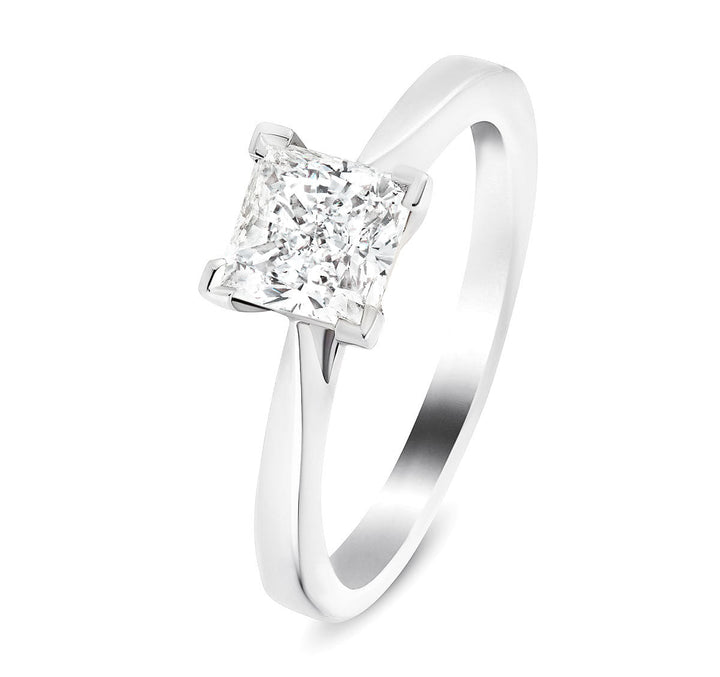
Grace Lab Princess Diamond Solitaire Engagement Ring 0.50ct G/VS 18k White Gold
£855.00
£1,001.00
Declare your love with the breathtaking Grace Lab Princess Diamond Solitaire Engagement Ring, crafted in the UK with the finest materials. This stunning ring features a sparkling 0.50-carat solitaire diamond of G/VS clarity and is set in luxurious 18k white… read more
Certification and How Lab-Grown Reports Have Changed
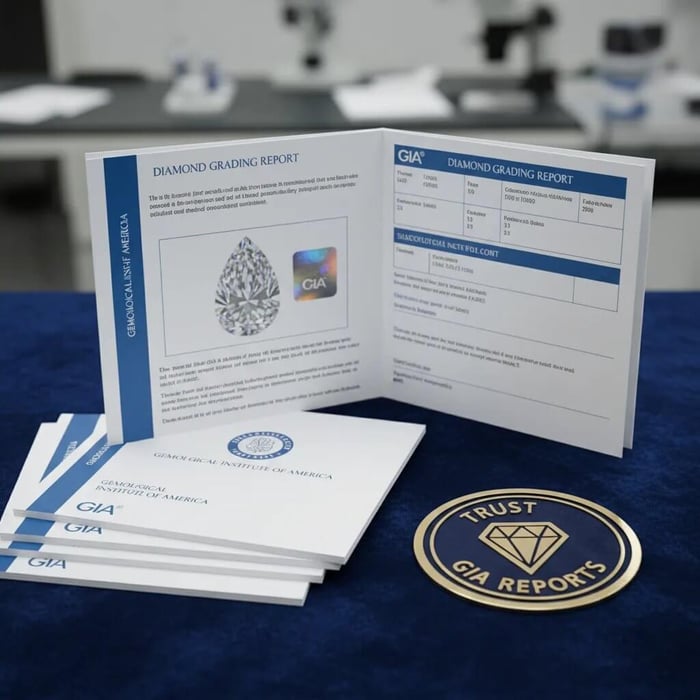
Certification is where confidence comes from, especially when buying online. A reputable grading report allows you to compare diamonds fairly and avoid relying on sales language alone.
People widely trust laboratories like GIA and IGI due to their consistent and independent grading.
Why lab-grown certification looks different today
Natural diamonds form under unique geological conditions, which means their characteristics vary widely. As a result, their grading reports remain detailed and technical.
Lab-grown diamonds are produced in controlled environments. Their growth patterns are more consistent, and extreme variations are less common. Because of this, reputable laboratories have simplified lab-grown diamond reports in recent years.
This simplification is not a reduction in quality. It is a recognition that buyers benefit more from clarity than complexity.
Modern lab-grown reports focus on the factors that most affect appearance rather than overwhelming buyers with technical angles that rarely change purchasing decisions.
What still matters in a certificate?
Whether the report is detailed or streamlined, there are core details that always matter:
Cut grade, which has the strongest influence on sparkle and perceived size
Measurements, which show the diamond’s true face-up dimensions
Overall proportions, which indicate balance and light return
These details explain why two diamonds of similar carat weight can look noticeably different once set.
How to Prioritise When Choosing a Diamond
For first-time buyers, decision fatigue is real. Filters, sliders, and price jumps can quickly feel overwhelming. A simple order of priorities helps.
Step one: secure good cut and reputable certification
This is where most visual value lives. A well cut, properly certified diamond will look better than a heavier stone with weaker proportions.
I have seen buyers downgrade carat slightly and end up happier because the diamond looked brighter and more refined on the hand.
Step two: resist chasing spread alone
Some diamonds are cut to look wide at the expense of sparkle. They can photograph well and look impressive under spotlights, but they often disappoint in everyday wear.
Sparkle is not just a bonus. It is what gives a diamond presence.
Step three: choose carat within those boundaries
Once the cut and certification are right, carat becomes meaningful. At this point, you are choosing a size in a range that already performs well.
This approach protects you from paying for weight that does not translate into visual impact.
Chloe Lab Diamond Halo Oval Engagement Ring 0.85ct G/VS in 9k White Gold

£875.00
£1,346.00
Embrace timeless elegance with the Chloe Lab Diamond Halo Oval Engagement Ring, handcrafted in the UK with the finest materials. This stunning ring features a total of 0.85 carats of G/VS-graded diamonds, including a captivating oval cut diamond at the… read more
A Table to Bring it Together
Here is a simple comparison that reflects the trade-offs discussed above.
| Factor | What it measures | What your eye actually notices | Common buyer mistake |
|---|---|---|---|
| Carat | Weight | Very little on its own | Assuming heavier means larger |
| Cut | Proportions and angles | Sparkle and visible size | Treating cut as secondary |
| Measurements | Diameter and depth | True face-up size | Ignoring dimensions |
| Shallow cut | Spread | Width without sparkle | Choosing size over brightness |
| Deep cut | Hidden weight | Smaller appearance | Paying for unseen weight |
| Certification | Independent grading | Buying confidence | Trusting descriptions alone |
A Simple Analogy That Resonates
Judging a diamond by carat alone is like judging bread by weight. A heavier loaf is not automatically better if it lacks texture or flavour.
Diamonds are the same. Carat is weight. Cut is character.
Two diamonds can weigh the same and look completely different because one handles light beautifully and the other does not.
This is why buyers often feel surprised when they see diamonds side by side. The numbers told one story. Their eyes told another.
Ready to Explore Lab-Grown Diamonds With Confidence?
Once you understand how carat, cut, and certification work together, buying diamond jewellery becomes far less intimidating. You now know the elements of diamond size and can make better choices. Remember, it is not about the biggest diamond size, but the right diamond size – for you!
Lab-grown diamonds make this process even clearer. Their consistency allows you to focus on visual performance, design, and value rather than chasing arbitrary numbers.
At After Diamonds, our lab-grown diamond jewellery is selected based on sparkle, balance, and presence rather than weight alone. Every piece is supported by reputable certification and presented transparently so you can choose with confidence.
If you are ready to see how these principles translate into real jewellery, browse our collection of lab-grown diamond rings, earrings, and necklaces and choose a piece that looks as good on your hands as it does on paper.