
In This Article
- What Diamond Colour Actually Measures In White Diamonds
- Why Colour Can Look Different In Real Life
- What Diamond Clarity Actually Measures
- Why Clarity Matters Less Than Many Buyers Assume
- The Difference Between Paper Grades And Visible Beauty
- How Colour Affects Different Jewellery Styles
- How Clarity Affects Different Diamond Sizes And Shapes
- Finding The Sensible Balance Between Budget, Diamond Colour and Clarity
- What Grades Are Often Worth Considering For Most Buyers
- Common Misunderstandings About Colour And Clarity
- How To Choose With Confidence
- Explore Lab-Grown Diamond Jewellery With A Clearer View
- Questions Buyers Often Ask About Diamond Colour And Clarity
- Which matters more, diamond colour or clarity?
- Can you actually see the difference between colour grades?
- What does eye-clean mean?
- Is flawless clarity worth paying for?
- Do larger diamonds show colour and clarity more easily?
- Are lab-grown diamonds graded in the same way as mined diamonds?
- Are coloured diamonds graded differently from white diamonds?
Diamond colour and clarity are two of the first things buyers encounter when comparing stones, yet they are also two of the most misunderstood. They are often treated as simple markers of quality, as though a higher grade always means a better choice. In practice, the picture is somewhat more nuanced than that.
Colour and clarity matter. They affect appearance, rarity and price. What they do not do is tell the whole story on their own. A diamond can have excellent grades on paper and still offer little visible advantage over a more balanced, better-value option once it is set in jewellery and worn in real life.
For most buyers, the aim is not to chase technical perfection. The goal is to grasp the meaning of these grades, their visual impact, and when to be choosy. That is especially true when choosing jewellery rather than loose stones under showroom lighting.
This guide explains how diamond colour and clarity work in practical terms, where they make the biggest visual difference, and how to weigh them sensibly when choosing lab-grown diamond jewellery.
What Diamond Colour Actually Measures In White Diamonds
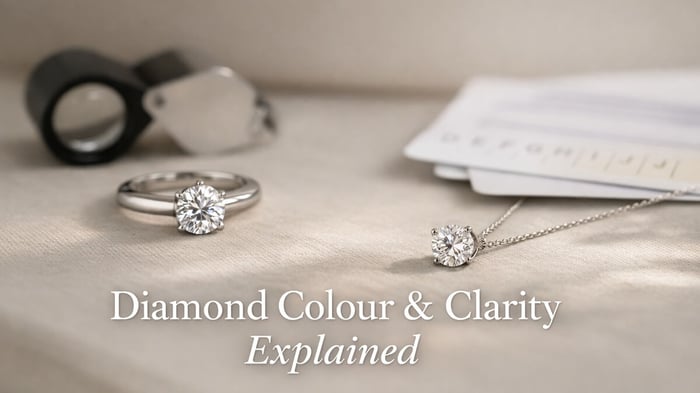
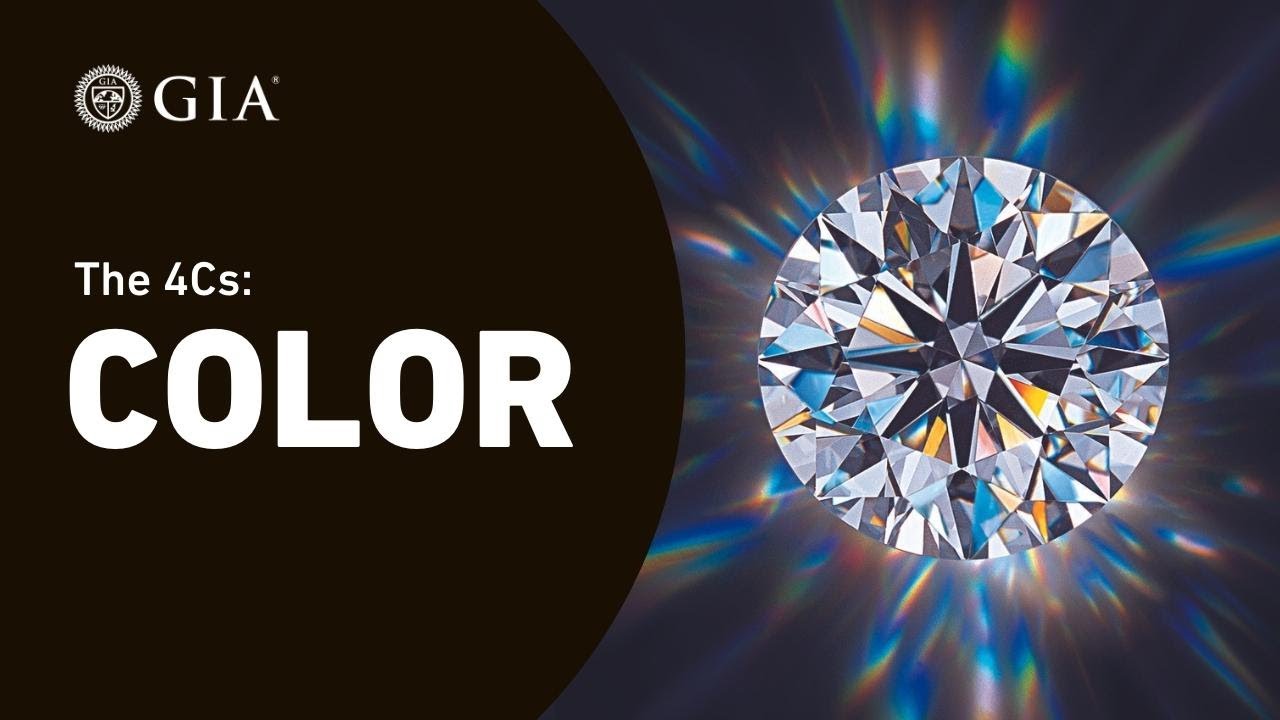
When jewellers talk about diamond colour in this context, they are talking about white diamonds. The grading scale measures how little body colour a stone has, beginning with colourless grades and moving gradually into warmer tones. Put simply, the less noticeable tint there is, the higher the grade.
That can sound straightforward, but the grading process is more controlled than everyday viewing. Diamonds are assessed loose, against a neutral background, under standard lighting conditions designed to reveal subtle differences. What this means is that distinctions that are meaningful in a laboratory may be far less obvious once a diamond is mounted in a ring, pendant or pair of earrings.
Worth knowing: this system applies to white diamonds. Fancy-colour diamonds, including yellow, pink and blue stones, are assessed differently because their colour is part of what gives them character and value.
For most buyers, the key point is that colour grade is best understood as a scale of warmth, not a simple divide between good and bad. A nearly colourless diamond can still look bright, crisp, and attractive in normal wear, particularly when the overall design suits it well.
Ella Lab Diamond Solitaire Engagement Ring 2.00ct D/VVS 18k White Gold

£1,715.00
£5,381.00
Experience the brilliance of the Ella Lab Diamond Solitaire Engagement Ring, a stunning piece designed to capture the essence of your love. This ring features a sparkling 2.00-carat D/VVS lab-grown round solitaire diamond set in 18k white gold. Certified by… read more
Why Colour Can Look Different In Real Life
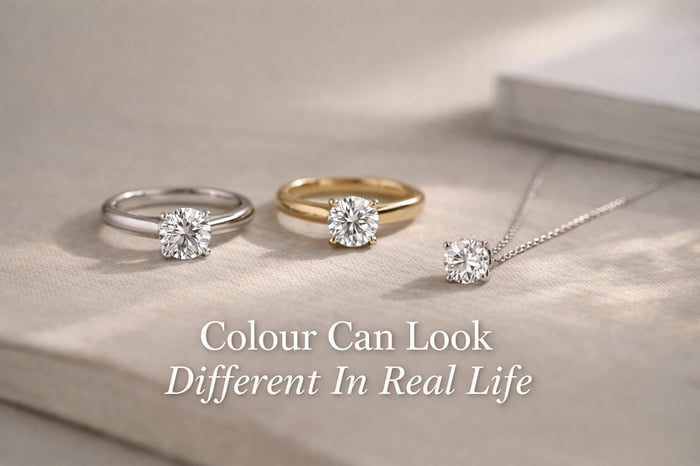
One reason colour causes confusion is that it does not present itself in a fixed way. The same diamond can look slightly different depending on lighting, viewing angle, setting style and the metal around it. Daylight, warm indoor lighting and spotlit retail environments do not all reveal colour in quite the same way.
Metal choice matters too. White metals such as platinum and white gold tend to emphasise a cooler look, while yellow or rose gold can make a little warmth feel more natural within the design. In real terms, a grade that looks slightly warmer on a certificate may appear entirely appropriate once it is part of a finished piece.
Stone size also plays a part. Larger diamonds give the eye more area to read, which means colour can become easier to notice as carat weight increases. Smaller stones, by contrast, often appear bright and lively across a wider range of grades.
That is why colour needs to be judged in context. A technically higher grade is not always the most sensible use of budget if the visual gain is slight and the jewellery itself will not show the difference clearly.
What Diamond Clarity Actually Measures
Clarity refers to the tiny internal features and surface characteristics found in a diamond. Internal features are known as inclusions, while external marks are called blemishes. Nearly all diamonds have some of these natural or growth-related features, whether mined or lab-grown. The clarity grade reflects how visible they are, how many there are, and where they sit within the stone.
Like colour, clarity is judged under magnification and according to standard criteria. This is useful because it creates consistency and allows stones to be compared more objectively. Even so, the grading scale can sound more dramatic than the real-life viewing experience usually is.
A common question is whether a lower clarity grade means a diamond will look flawed. Very often, the answer is no. Many inclusions are so small that they are difficult to find without magnification, even when you know where to look.
What clarity really tells you is how clean the stone is under examination, not necessarily what you will notice when the diamond is worn. That distinction matters because buyers can otherwise end up paying a premium for a technical improvement they are unlikely to appreciate day to day.
Eva Lab Diamond Halo Cushion Engagement Ring 2.20ct G/VS in Platinum

£2,175.00
£3,641.00
This elegant Eva Lab Diamond Halo Cushion Engagement Ring is a sight to behold, boasting 2.20 carats of G/VS diamonds set in platinum. The certified cushion cut diamond weighing 1.50 carats is surrounded by a halo of smaller diamonds, while… read more
Why Clarity Matters Less Than Many Buyers Assume
Clarity sounds important because the language around it suggests that imperfections must be a problem. In practice, they often are not. For most buyers, the relevant question is whether a diamond looks clean to the naked eye at a normal viewing distance.
This is where the idea of an eye-clean diamond becomes useful. It does not refer to a formal grading category. It simply means that no inclusions are obvious without magnification in ordinary viewing conditions.
Once a diamond reaches that point, spending more for a higher clarity grade may deliver rarity on paper rather than a noticeable visual improvement. There are exceptions, particularly in larger stones or shapes that make internal features easier to spot, but the principle holds true surprisingly often.
For most buyers, clarity is best treated as a quality check rather than a status race. You want the stone to look clean and attractive. Beyond that, the smartest choice is often the one that balances clarity against size, design and budget.
The Difference Between Paper Grades And Visible Beauty
Certificates and grading reports are valuable because they offer transparency. They help buyers compare one diamond with another and reduce uncertainty when shopping online or across different retailers. That matters, especially for research-led customers who want to understand exactly what they are buying.
At the same time, a certificate does not replace the visual reality of the finished jewellery. Sparkle, proportion, setting design and overall balance all shape the way a diamond looks. A slightly higher colour or clarity grade may increase cost far more than it improves visible beauty.
What this means is that grades should be used as a guide to sensible selection, not as a substitute for judgement. A well-chosen, near-colourless, eye-clean diamond can look every bit as refined and satisfying as a higher-graded alternative once it is set and worn.
This is often where confident buying begins. Instead of aiming automatically for the highest available specification, you start to ask which qualities genuinely improve the piece you are choosing.
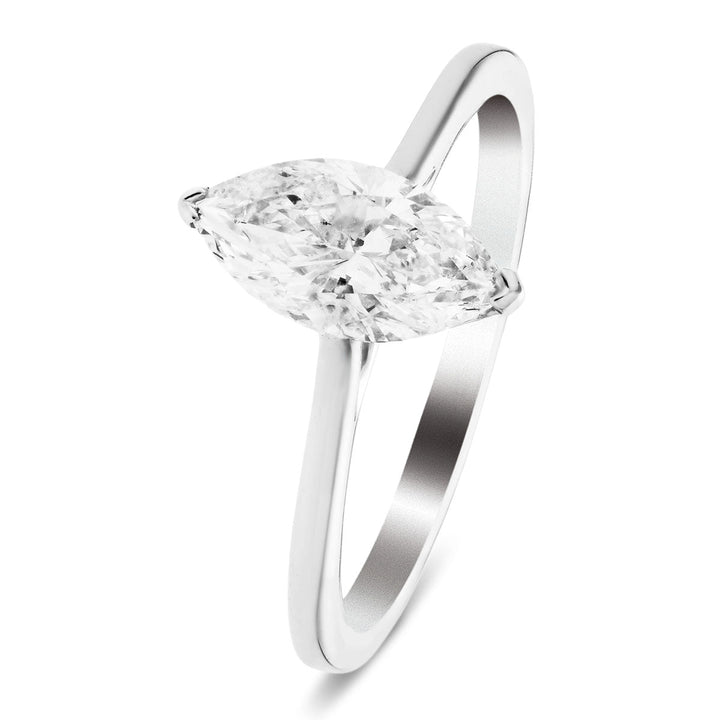
Ava Lab Marquise Diamond Solitaire Engagement Ring 0.70ct G/VS Platinum
£1,005.00
£1,526.00
Experience the luxury of the Ava Lab Marquise Diamond Solitaire Engagement Ring, meticulously crafted in the UK. This ring features a mesmerizing 0.70-carat total weight of G/VS IGI-certified lab-grown diamonds set in platinum, with a marquise-cut diamond at the centre.… read more
How Colour Affects Different Jewellery Styles
Colour does not show itself equally across all types of jewellery. In a ring, especially one with a larger centre stone, the diamond is usually viewed fairly close up and from different angles. That can make body colour easier to notice, particularly in simpler settings that expose more of the stone.
Earrings and pendants are usually seen from a little farther away. As a result, small differences in colour may be less apparent in everyday wear. For many buyers, this creates useful flexibility. A colour grade that feels perfectly bright in earrings may not need to be as high as one selected for a prominent ring.
Setting style also matters. Halo designs, pavé details and white-metal settings can create a bright overall effect that influences how the centre stone is perceived. Yellow and rose gold settings can make a touch of warmth feel harmonious rather than out of place.
In practice, the best colour choice depends not only on the stone itself but also on how the finished piece will be worn, viewed and enjoyed.
Lab Diamond Pear Halo Earrings 1.00ct D/VVS in 9k Rose Gold

£625.00
£1,195.00
Discover the allure of our Lab Diamond Pear Halo Earrings, featuring a stunning total of 1.00ct D/VVS quality diamonds. Each earring centres around a pear-shaped lab diamond, exquisitely framed by sparkling round side stones in a classic claw setting, enhancing… read more
How Clarity Affects Different Diamond Sizes And Shapes
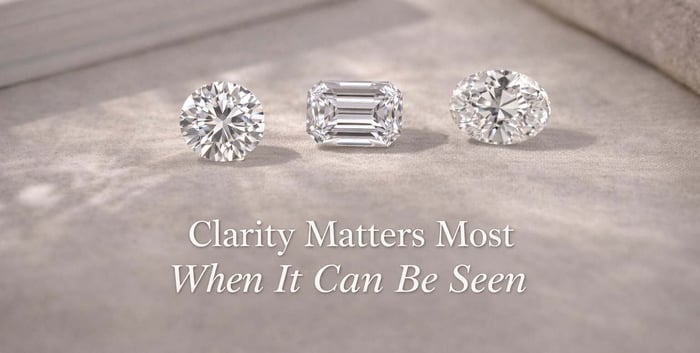
Clarity becomes more relevant when a stone is large enough, or shaped in such a way, that inclusions have more chance of being seen. Round brilliant diamonds are often forgiving because their faceting pattern returns light in a way that helps disguise small internal features.
Step-cut shapes and some elongated stones can be less forgiving. Their broader, more open facets may make internal characteristics easier to notice, especially in larger sizes. That does not mean buyers must aim for very high clarity grades, but it does mean the threshold for what counts as comfortably eye-clean may shift depending on shape and scale.
For smaller stones or jewellery viewed from a greater distance, clarity differences can matter much less. This is one reason broad rules can be misleading. The sensible choice depends on the combination of stone size, cut style and intended piece.
Finding The Sensible Balance Between Budget, Diamond Colour and Clarity
For most buyers, the most satisfying purchase is not the one with the highest paper grades. It is the one that looks beautiful, feels well judged and represents good value. That usually means balancing colour and clarity rather than maximising both.
You might prefer to accept a near-colourless grade in order to choose a larger centre stone. You might decide that an eye-clean clarity is entirely sufficient and use the difference in budget to select a more distinctive design. You might also decide that colour matters more than clarity for the particular piece you want, or vice versa.
None of those choices is a compromise in a negative sense. They are simply examples of informed selection. Buyers tend to feel more confident when they understand which differences are visible, which are mainly technical, and which are worth paying for in the context of their own priorities.
That is the real value of understanding colour and clarity. It gives you a clearer basis for choosing well, rather than simply buying the highest specification your budget will allow.
What Grades Are Often Worth Considering For Most Buyers
There is no universal answer, because the right balance depends on jewellery style, diamond size and personal preference. Even so, many buyers find that near-colourless diamonds offer an excellent mix of brightness and value, particularly in well-designed jewellery where the finished look matters more than laboratory distinction.
The same goes for clarity. For most buyers, an eye-clean diamond is the practical target. Once inclusions are no longer visible in normal wear, paying significantly more for higher clarity can become hard to justify unless rarity itself is part of the appeal.
Put simply, sensible buying often happens in the range where the diamond looks refined and clean without charging a premium for differences that are mainly visible under specialist viewing conditions.
Lab Diamond Infinity Bracelet 0.50ct D/VVS in 18k White Gold

£815.00
£1,395.00
Discover timeless elegance with the Lab Diamond Infinity Bracelet, featuring 0.50ct of ethically sourced, real diamonds in a chic claw setting. Crafted in 18k white gold for a subtle yet sophisticated look, this piece is a testament to ethical luxury.… read more
Common Misunderstandings About Colour And Clarity
- A higher grade does not always mean a visibly better diamond in normal wear.
- Clarity is not the same thing as sparkle. Cut and light performance play a major role there.
- A small degree of warmth is not necessarily obvious or unattractive once a diamond is set.
- The best choice is not always the rarest one on paper. Often it is the most balanced one in practice.
How To Choose With Confidence
If you are comparing diamond jewellery, it helps to think beyond the certificate alone. Consider the overall design, the size of the stone, the shape, the metal, and how closely the piece will usually be viewed. Those factors all affect how colour and clarity are experienced in real life.
For most buyers, confidence comes from understanding enough to make a reasoned choice, not from pursuing technical perfection. A balanced diamond can look elegant, bright and beautifully finished without having the highest possible grades in every category.
That is often the smartest way to buy. You are not lowering your standards. You are applying them more intelligently.
Explore Lab-Grown Diamond Jewellery With A Clearer View
Once you understand how diamond colour and clarity work in practice, comparing jewellery becomes much easier. You can focus on the qualities that genuinely affect what you see, wear and enjoy, rather than paying for specifications alone.
If you are ready to browse, explore our lab-grown diamond jewellery collections with a clearer sense of what matters, where flexibility makes sense, and how to choose a piece that feels both beautiful and well judged.
Browse Our Lab-Grown Diamond Jewellery Collections
Lab Diamond Paperclip Earrings 0.55ct D/VVS in 9k White Gold

£545.00
£935.00
These exquisite Lab Diamond Paperclip Earrings, showcasing a total diamond weight of 0.55ct with an impressive D/VVS quality, are a modern marvel in jewellery design. Each earring is expertly crafted in 9k white gold, featuring a striking two-link design that… read more
Questions Buyers Often Ask About Diamond Colour And Clarity
Which matters more, diamond colour or clarity?
That depends on the piece, but many buyers notice colour before clarity. In practice, inclusions often matter less if the diamond looks clean to the naked eye.
Can you actually see the difference between colour grades?
Sometimes, but not always. Small differences may be visible under grading conditions yet hard to notice once the diamond is set and worn normally.
What does eye-clean mean?
It means the diamond appears clean to the naked eye at a normal viewing distance, even if tiny inclusions can still be seen under magnification.
Is flawless clarity worth paying for?
For most buyers, not necessarily. It often adds rarity and price more than visible beauty in day-to-day wear.
Do larger diamonds show colour and clarity more easily?
Yes, they can. A larger surface area gives the eye more to read, so subtle warmth or inclusions may become easier to notice.
Are lab-grown diamonds graded in the same way as mined diamonds?
Yes. Lab-grown diamonds are generally assessed using the same grading principles for colour, clarity, cut and carat weight.
Are coloured diamonds graded differently from white diamonds?
Yes. Fancy-colour diamonds are valued for the nature and strength of their colour, rather than for the absence of it.