
Quick Answer
Diamond sparkle comes mainly from cut quality. For most buyers, the best way to maximise sparkle is to prioritise an Excellent or Ideal cut, favour a Round Brilliant shape, choose strong symmetry, and keep the diamond clean.
When people talk about a diamond sparkling, they usually mean the overall liveliness of the stone. They want it to look bright, sharp, and full of life when it catches the light. That is entirely reasonable, but it also leads many first-time buyers in the wrong direction. They focus on carat weight first, or on broad quality claims, when the real story is a little more specific.
In practice, sparkle is not one single thing. It is the result of how a diamond handles light. Cut quality matters most because it determines whether light returns to the eye cleanly and beautifully or leaks away before the diamond has a chance to impress. What this means is that two diamonds of similar size can look very different in real life, even before you start comparing colour or clarity.
In This Article
- What Diamond Sparkle Actually Means
- Why Cut Matters More Than Size
- Which Diamond Shape Sparkles Most
- The Role Of Symmetry, Setting, And Cleanliness
- How To Balance Sparkle With Budget
- Practical Advice Before You Buy
- Find A Diamond That Looks Bright In Real Life
- Explore Diamond Jewellery Designed To Catch The Light
- Diamond Sparkle FAQs
What Diamond Sparkle Actually Means
A common question is whether sparkle simply means brightness. Not quite. Jewellers usually break it down into three related effects.
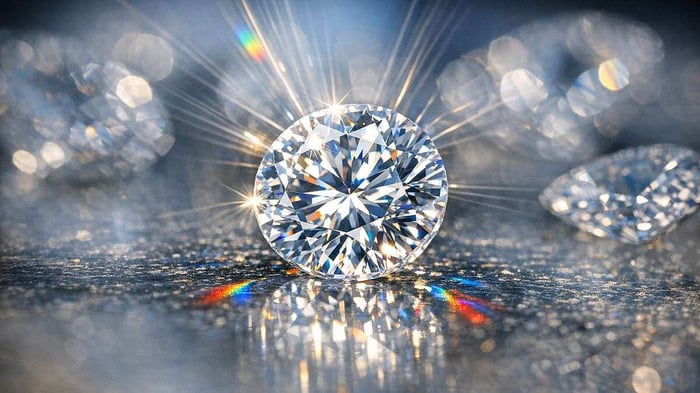
Brilliance is the white light a diamond reflects back to your eye. This is what gives a diamond that crisp, bright look in many lighting conditions. Fire is the coloured light you sometimes see as small rainbow flashes. Scintillation is the pattern of sparkle and contrast you notice as the diamond, the light source, or the viewer moves.
Put simply, sparkle is the combined effect of all three. A diamond that looks lively usually balances brightness, flashes of colour and a sense of movement. That is why a stone can have an impressive size on paper and still look slightly flat if its cut is not doing enough work.
For first-time buyers, this is worth knowing because it shifts the question from “How big is it?” to “How well does it perform in light?” That is usually a much better starting point.
Lily Lab Pear Diamond Solitaire Engagement Ring 0.50ct G/VS 18k White Gold

£855.00
£1,001.00
Enchant her heart with the breathtaking Lily Lab Pear Diamond Solitaire Engagement Ring, a true masterpiece handcrafted in the UK. The pear-shaped diamond is as unique as your love, making this ring the perfect choice for a proposal or a… read more
Why Cut Matters More Than Size
If you only remember one thing from this guide, make it this: cut quality is the biggest driver of diamond sparkle.
A well-cut diamond is proportioned so that light enters the stone, reflects internally, and returns to the eye. A poorly cut diamond may allow much of that light to escape through the bottom or sides. In real terms, that means a larger diamond can easily look less lively than a slightly smaller one with a better cut.
This is one reason buyers comparing stones purely by carat can end up disappointed. Carat measures weight, not visual performance. Sparkle depends much more on how the facets are arranged and how accurately the stone has been cut and finished.
For most buyers, aiming for an Excellent or Ideal cut is the most sensible approach when sparkle is the priority. It is usually the point at which the diamond starts working hard for its appearance. If you are balancing several quality factors at once, it often makes sense to protect the cut quality before making compromises elsewhere.
That same logic sits behind many other buying decisions too. Articles such as our guide to better diamond colour and clarity can help explain where quality differences matter most, but cut is the place to start if visual life is your main concern.
Browse Lab Diamond Rings Chosen For Brightness And Balance
Which Diamond Shape Sparkles Most
Not all diamond shapes handle light in the same way. If pure sparkle is the goal, the Round Brilliant is still the benchmark.
That is not because other shapes are inferior in every respect. It is because the Round Brilliant has been refined over time with light performance in mind. Its facet pattern is designed to return a high level of brightness and lively scintillation, which makes it the safest answer for buyers who want the strongest overall sparkle.
Other shapes can still look beautiful, but they often offer a slightly different visual character. Oval, pear, and cushion cuts can be very attractive and may appear larger face-up for their weight, yet they do not always deliver quite the same consistent sparkle pattern as a well-cut round stone. Emerald and Asscher cuts can look elegant and sophisticated, but they tend to emphasise clarity and hall-of-mirrors flashes rather than intense brilliant sparkle.
This means that the shape should be chosen honestly, reflecting your priorities. If you want maximum fire and brightness, Round Brilliant is the clearest answer. If you care equally about outline, finger coverage, or style, another shape may still be the better personal choice. Shape is not separate from design either, which is why the setting you choose can also influence how the diamond is seen.
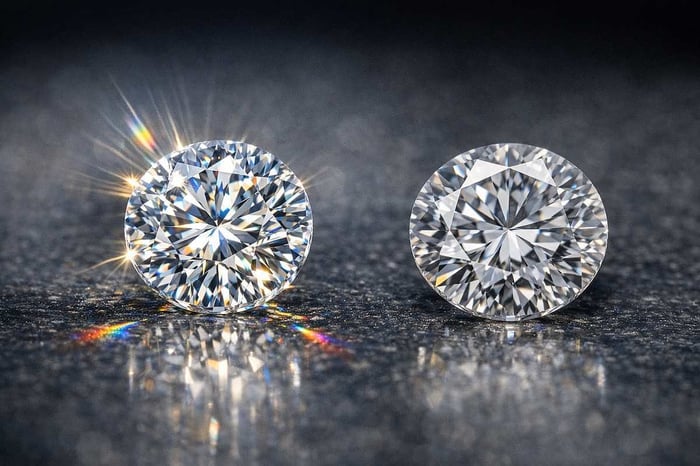 Cut Quality Drives Sparkle in a Diamond
The Role Of Symmetry, Setting, And Cleanliness
Once the cut and shape are in place, a few other factors can make a noticeable difference.
Symmetry matters because the facets need to line up properly for light to behave as intended. High symmetry supports a clean, even pattern of sparkle. It may not be the first thing casual buyers mention, but it helps the diamond look orderly and lively rather than visually confused.
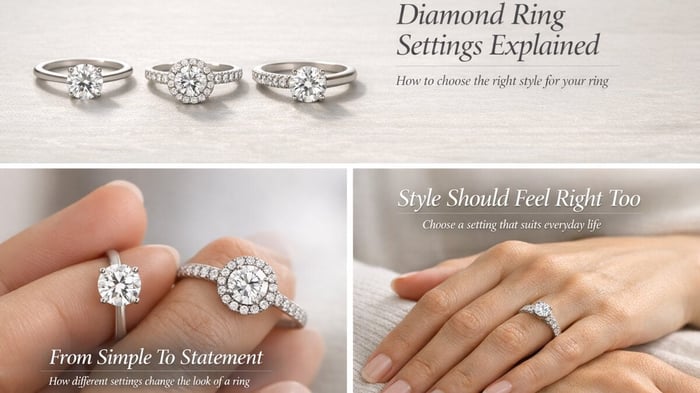
The setting also plays a role. Minimalist settings with thinner bands and smaller prongs can help keep attention on the centre stone. Halo settings can add extra sparkle and make the central diamond look larger overall. Neither is automatically better. The important thing is whether the design supports the look you want.
Cleanliness is often underestimated. Even a very well-cut diamond will lose some of its brightness if oils, lotion, soap residue, or everyday dirt build up on the surface. Diamonds do not need to be filthy to look slightly dull. A quick clean can sometimes make more visual difference than buyers expect.
This is especially relevant if you wear your jewellery frequently. Regular maintenance is one of the easiest ways to preserve sparkle over time, which is why practical care matters just as much as initial buying decisions.
Lab Diamond Solitaire Necklace Pendant 1.50ct D/VVS in 18k Yellow Gold

£2,145.00
£3,596.00
Adorn yourself with the stunning Lab Diamond Solitaire Necklace Pendant. This elegant pendant showcases a round 1.50ct D/VVS IGI-certified diamond set in a claw setting in 18k yellow gold. Expertly crafted in the UK with a lifetime workmanship guarantee and… read more
How To Balance Sparkle With Budget
Many buyers assume that increasing budget automatically increases sparkle. Occasionally it does, but not always in the most efficient way.
If you have a limited budget, the best strategy typically involves spending in the correct order. Prioritise cut first. Then look for a shape that supports your visual goal. After that, aim for a sensible balance in colour and clarity rather than chasing specifications that may not change what you actually see in normal wear.
For example, it can be more rewarding to choose a slightly smaller round diamond with a top cut grade than a larger stone with weaker light performance. In real life, the better-cut diamond may look brighter, sharper, and ultimately pricier. That is often a smarter use of budget than stretching for size alone.
For most buyers, sparkle is about visible beauty rather than technical perfection. You do not need the rarest or most expensive stone to get an attractive result. You need a diamond that performs well, suits its setting, and looks lively in ordinary lighting rather than only under showroom spotlights.
If size is also on your mind, our diamond size guide is a useful companion because it helps put visual impact into context alongside measurements and expectations.
Practical Advice Before You Buy
Before you buy, try to keep your comparisons simple. Too many specifications at once can make the process feel more confusing than it needs to be.
Start by asking what matters most. If the answer is sparkle, lead with cut. Narrow your shape choices early. Look for strong symmetry. Then consider whether you prefer a solitaire, a halo, or another setting style that changes the overall look.
It is also wise to think about how the piece will be worn. A diamond that looks beautiful in an engagement ring may be judged slightly differently in earrings or a pendant. Scale, distance from the eye, and how much movement the jewellery has can all affect how noticeable the sparkle feels.
Finally, remember that photographs do not tell the whole story. A diamond should look bright in real conditions, not just in idealised images. The most satisfying jewellery purchases tend to be the ones that still look right once the initial excitement settles and normal life begins.
Lab Diamond Halo Earrings 0.75ct D/VVS in 9k White Gold

£445.00
£855.00
These exquisite Lab Diamond Halo Earrings embody sophistication and brilliance, featuring a total diamond weight of 0.75ct. Each earring centres around a stunning D/VVS quality round diamond, magnificently encircled by a halo of meticulously set round side stones, enhancing its… read more
Find A Diamond That Looks Bright In Real Life
The best sparkling diamond is not necessarily the biggest or the most technically intimidating. It is the one that looks bright, lively, and well judged when worn in the real world.
That is why the cut matters so much. It provides the diamond its visual energy. Shape influences how that sparkle presents itself. Symmetry, setting, and cleanliness all help support the final effect. Put together, these choices give buyers a more reliable path to beauty than simply chasing carat weight.
For a first-time buyer, that should feel reassuring rather than restrictive. You do not need to know everything. You only need to understand which details make the most visible difference and buy in that order.
Explore Diamond Jewellery Designed To Catch The Light
If you are ready to compare pieces with sparkle, balance, and everyday wearability in mind, browse our collection of lab diamond rings, earrings, necklaces, and bracelets.
Browse Our Lab-Diamond Jewellery Now!
Diamond Sparkle FAQs
What makes a diamond sparkle the most?
Cut quality is the biggest factor. A well-cut diamond returns more light to the eye, creating better brilliance, fire, and scintillation.
Is a Round Brilliant the sparkliest diamond shape?
For most buyers, yes. A well-cut Round Brilliant usually delivers the strongest overall sparkle pattern.
Does a bigger diamond always sparkle more?
No. A larger diamond with a weaker cut can look less lively than a smaller diamond with stronger light performance.
Do halo settings make a diamond look more sparkly?
They can. Halo settings add surrounding sparkle and can also make the centre stone appear larger overall.
Can a dirty diamond lose its sparkle?
Yes. Oils and residue can dull the surface, so regular cleaning helps maintain brightness and fire.