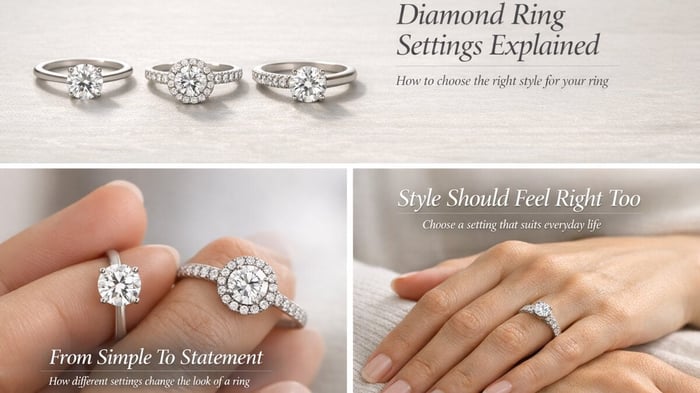

When most people begin looking for a diamond ring, they focus on the diamond first. That is understandable. Shape, size and sparkle tend to dominate the early stages of any search. But in practice, the ring's setting has just as much influence over how a ring looks, feels, and works in everyday life.
The setting is the part of the ring that holds the diamond in place, but it also changes the character of the piece. It can make a ring feel cleaner, bolder, more modern, more decorative or easier to wear day to day. The same diamond can create a very different impression depending on the setting around it.
That is one reason thoughtful buyers often find themselves spending more time on settings than they expected. At After Diamonds, we see such scenarios regularly. Once you move beyond the first stage of simply admiring a ring, the practical questions begin. How secure does it feel? Will it suit everyday wear? Does it look timeless or slightly too busy? Does it feel like the right kind of purchase for the way you actually live?
The good news is that you do not need specialised jewellery knowledge to answer those questions well. Once you understand the main setting styles and what they mean in real terms, choosing becomes much more straightforward.
In This Article
- What A Diamond Ring Setting Actually Does
- The Most Common Diamond Ring Settings Explained
- How The Setting Changes The Look Of The Diamond
- What diamond ring settings look likeSecurity, Comfort And Everyday Wear
- How To Choose The Right Setting For Your Lifestyle And Taste
- What To Notice Beyond The Setting Name
- Choosing Well Is Easier Than It First Seems
- Choosing the diamond ring settings you will choose every dayCompare Ring Settings With A Clearer Sense Of What Suits You
- FAQ
What A Diamond Ring Setting Actually Does
A ring setting does several jobs at once.
First, it secures the diamond. Whether the stone is held by claws, framed by smaller diamonds or enclosed more fully by metal, the setting is doing the structural work of keeping it in place.
Second, it shapes the look of the ring. A solitaire setting gives a very different effect than a halo or a rubover design, even when the centre stone itself is similar. This is why a setting should never be treated as an afterthought. It is central to the identity of the ring.
Third, it affects practicality. Some settings sit higher and create more visual drama, while others sit lower and feel smoother in day-to-day wear. Some are easier to clean. Some feel more decorative. Some look especially clean and modern. What this means is that the setting influences both appearance and ownership.
For most buyers, it helps to think of the setting as the framework that turns a diamond into a finished ring. It is not separate from the buying decision. It is a large part of the project.
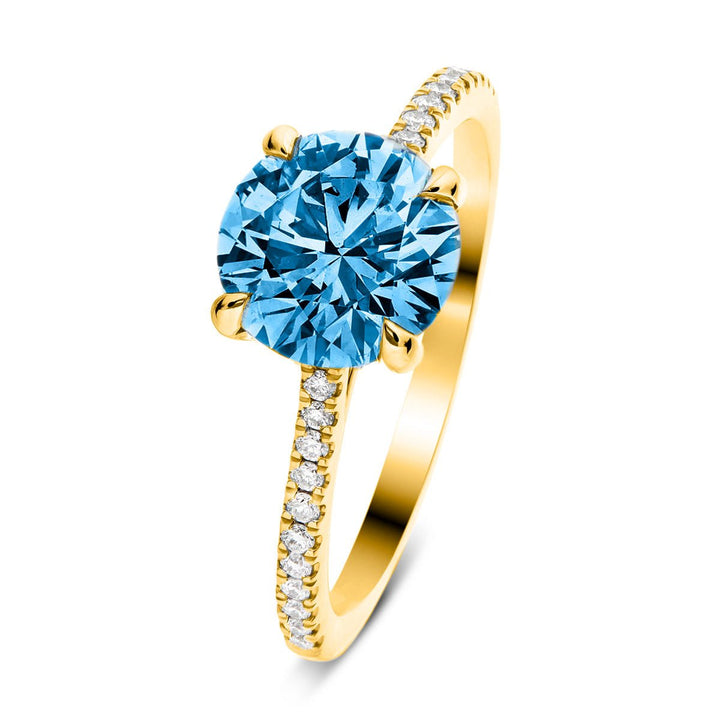
Amelia Blue Lab Diamond Round Side Stone Engagement Ring 3.30ct 18k Yellow Gold
£4,415.00
£8,335.00
The Amelia Blue Lab Diamond Round Side Stone Engagement Ring epitomises refined British craftsmanship. This ring features a breathtaking 3.00ct Vivid Blue VS quality lab-grown diamond as its centrepiece, renowned for its exceptional clarity and intense colour. Complementing this are… read more
The Most Common Diamond Ring Settings Explained
There are many variations in the market, but most buyers will find that a small number of setting styles cover the majority of what they are deciding between.
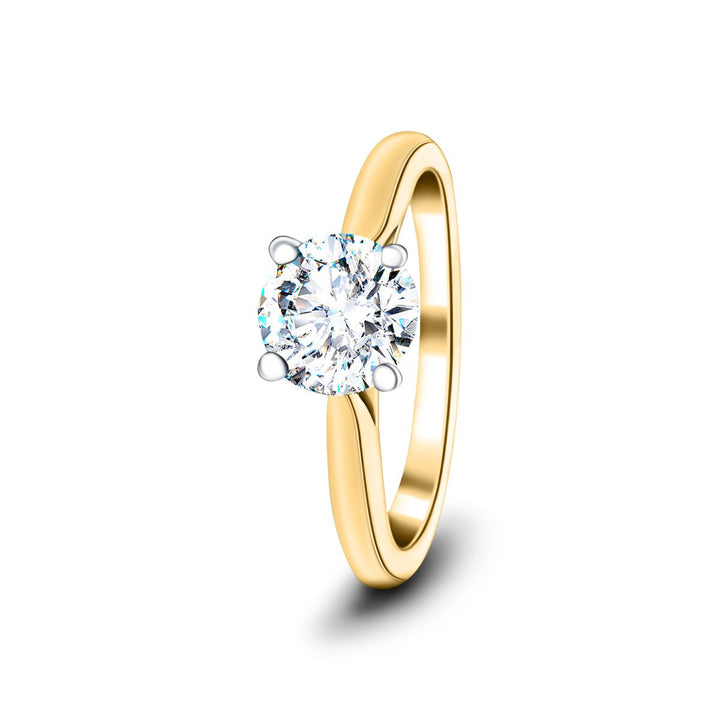
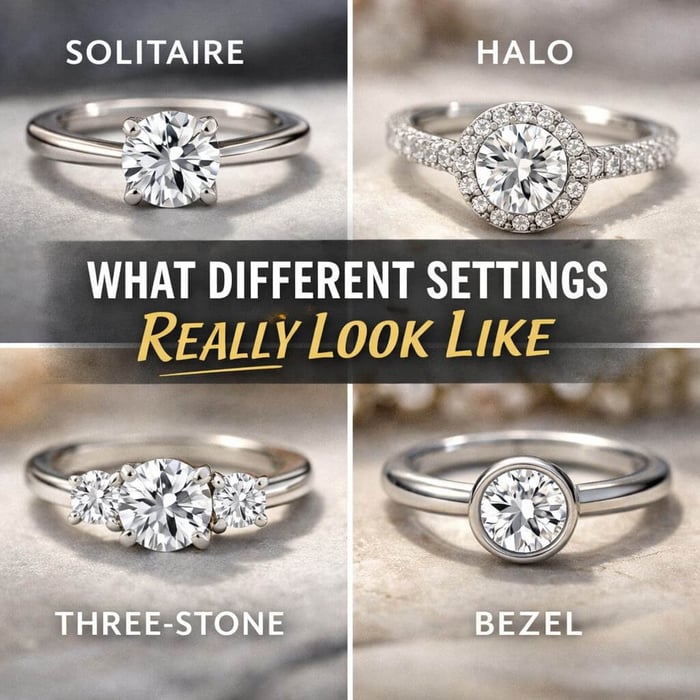
Solitaire
A solitaire is the classic single-stone setting. It keeps the visual focus on the centre diamond and usually avoids extra detailing around it.
This remains a natural choice for buyers who want something timeless, balanced and easy to wear for many years. A solitaire can feel clean and confident without needing to do too much. It also allows the quality and shape of the centre stone to remain the main point of interest.
Worth knowing, not all solitaires look the same. Band width, setting height and claw shape can all alter the effect. Even so, the overall idea remains consistent: simple, diamond-led and enduring.
Ella Lab Diamond Solitaire Engagement Ring 3.00ct D/VVS 18k Yellow Gold
£2,265.00
£10,721.00
Indulge in the luxury and beauty of this Ella Lab Diamond Solitaire Engagement Ring, featuring a 3.00ct D/VVS-graded lab-created diamond set in 18k yellow gold. Handcrafted in the UK with an IGI-certified brilliant round-cut diamond and a lifetime workmanship guarantee,… read more
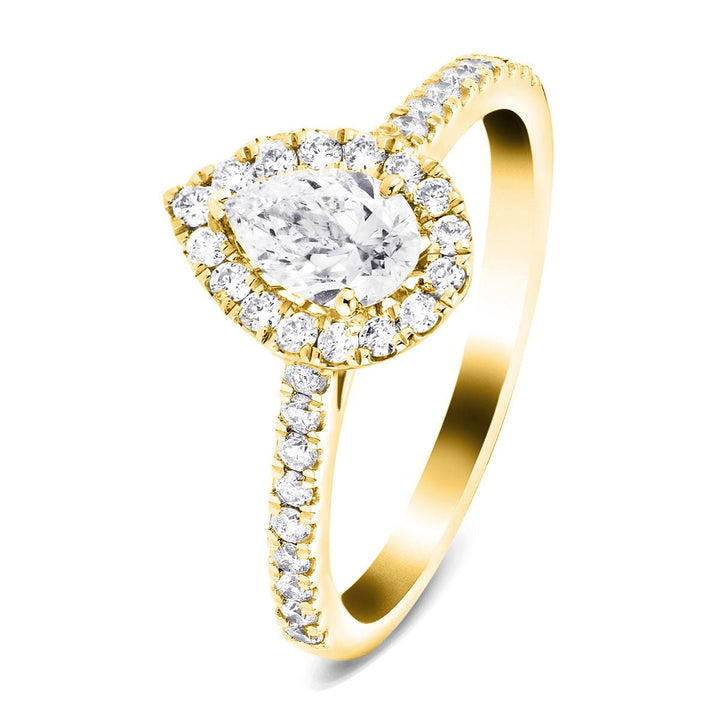
Halo And Cluster-Style Settings
Buyers who desire a more visual presence often choose halo and cluster-style rings.
A halo setting places smaller diamonds around a larger centre stone, creating extra sparkle and often making the overall face of the ring appear larger. Cluster-style settings can create a similar impression, particularly when smaller diamonds are arranged around or alongside a more prominent central stone. In practical terms, the result is usually a fuller, brighter and more decorative look than a simple solitaire.
For many buyers, the difference that matters is not technical classification but overall effect. These styles draw the eye, add brilliance and give the ring a more dressy feel. They can be especially appealing if you want maximum impact for the overall design rather than a very stripped-back look.
At After Diamonds, this is one of the areas where buyers often begin with a general attraction to sparkle; they then refine their choice by deciding how bold or how balanced they want the final ring to feel.
Nancy Lab Diamond Halo Pear Engagement Ring 0.85ct D/VVS in 18k Yellow Gold
£1,385.00
£2,021.00
Embrace the beauty of love with the Nancy Lab Diamond Halo Pear Engagement Ring, crafted to perfection by skilled artisans in the UK. This ring features a beautiful 0.85-carat total weight of diamonds, including a pear-cut diamond of certified D/VVS… read more
Pavé Band
A pavé setting uses small diamonds along the band itself.
This adds extra light and detail beyond the centre stone and can make the ring feel finer or more decorative overall. In some designs, pavé gives just a gentle lift in sparkle. In others, it becomes a more noticeable part of the ring’s personality.
For buyers who want the ring to feel a little more elaborate than a plain band, pavé can be a very effective middle ground. It keeps the centre diamond as the focal point while giving the whole design more presence.
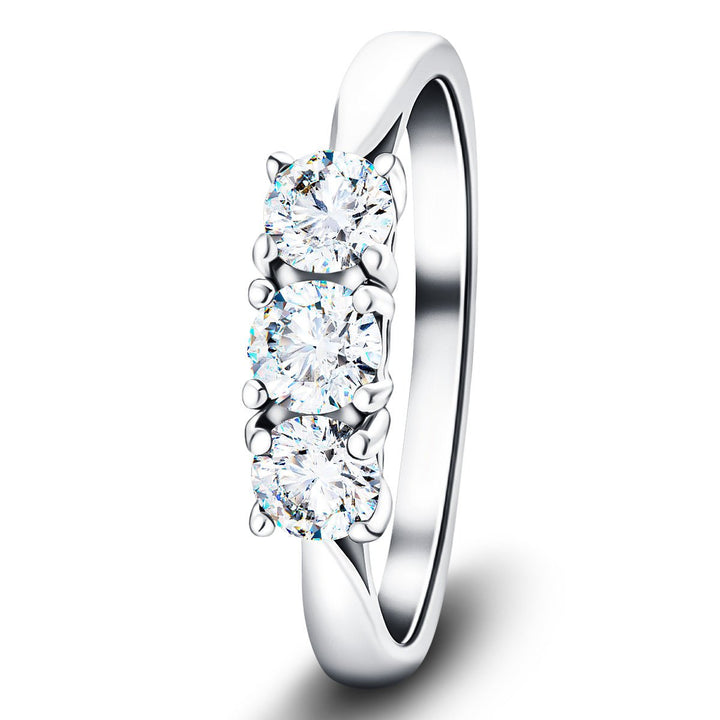
Three-Stone
A three-stone setting features a central diamond with one stone on either side.
This creates a broader look across the finger and often feels balanced, substantial and classically composed. Some buyers like the symbolism attached to three-stone rings, while others are simply drawn to the proportions and the extra presence they offer.
In real terms, this style can work well for buyers who want more than a single-stone design but prefer a more structured and less overtly decorative look than a halo-style ring.
Molly Three Stone Lab Diamond Engagement Ring 1.50ct G/VS in 9k White Gold
£1,035.00
£1,736.00
Declare your love with the enchanting Molly Three Stone Lab Diamond Engagement Ring, beautifully handcrafted in the UK. This stunning ring features a total of 1.50 carats of G/VS IGI-certified lab-grown diamonds set in lustrous 9k white gold. With a… read more
Bezel And Rubover Settings
A bezel setting surrounds the diamond with a rim of metal rather than holding it with exposed claws. In many collections, you will also see the term 'rubover setting' used for this enclosed or partially enclosed style of finish.
This kind of setting creates a neat, modern look and often feels especially secure and wearable. Because the edges of the stone are better protected, bezel or rubover styles can appeal to buyers who value smoothness, simplicity, and day-to-day practicality.
They do create a different visual effect from claw-set rings. More metal is visible around the stone, which gives the ring a more defined, framed appearance. Some buyers prefer the openness of claws. Others like the cleaner, more contemporary finish of a bezel or rubover design. Neither is inherently better. It depends on the look and feel you want from the ring as a whole.
Maya Lab Diamond Bezel Solitaire Engagement Ring 4.00ct D/VVS 18k Yellow Gold

£3,035.00
£18,041.00
Celebrate your love with the luxurious Maya Lab Diamond Bezel Solitaire Engagement Ring. This exquisite ring features a 4.00 carat D/VVS-graded lab-created diamond, bezel-set in 18k yellow gold. This ring is certified by IGI and UK hallmarked, with a round… read more
How The Setting Changes The Look Of The Diamond
A setting can alter the way a diamond is perceived more than many first-time buyers expect.
Halo and cluster-style designs tend to make the ring look bigger and brighter by spreading the light out more. A solitaire, by contrast, usually creates a cleaner focal point, drawing attention directly to the centre stone. A pavé band adds extra shimmer around the ring, while a bezel or rubover setting creates a more graphic and contained appearance.
The setting also influences the mood of the ring. A solitaire often reads as timeless and composed. A halo or cluster-style design may feel more expressive. A three-stone ring can feel balanced and substantial. A bezel or rubover style often leans more modern and understated.
Put simply, a buyer is not only choosing how a ring is built. They are choosing how it presents itself. That is why it helps to think beyond the setting name and focus on the overall effect. The better question is rarely, “Which setting is best?” It is usually, “Which setting gives me the kind of ring I actually want to wear?”
 What diamond ring settings look likeSecurity, Comfort And Everyday Wear
A ring can look excellent in photographs and still prove less suitable in daily life. That is why wearability matters.
Higher settings can create more visual drama and help a diamond stand out clearly on the hand. They can also be a little more noticeable in practical use and sometimes more prone to catching on clothing or hair. Lower-profile rings often feel easier and more natural for everyday wear.
Detailed settings may require a little more attention when cleaning. Halo, cluster-style and pavé designs can have more small surfaces and gaps, simply because there is more going on in the design. Again, this is not a negative. It is just part of understanding ownership properly.
Comfort matters as well. A ring may look appealing from above but feel less natural if the proportions are not right for the wearer’s hand or routine. For most buyers, the most successful ring is not the one that wins in isolation under perfect lighting. It is the one that still feels right when worn regularly.
This is one of the reasons After Diamonds takes a calm, guidance-led approach to buying. The right ring is not only about first impressions. It is about choosing a piece that continues to make sense once the excitement of the first look has passed.
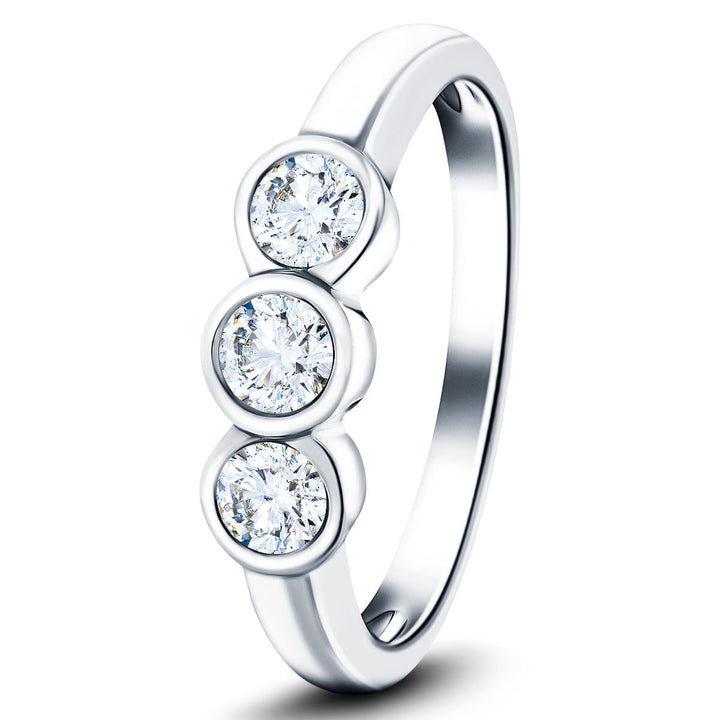
Zara Three Stone Bezel Lab Diamond Engagement Ring 0.25ct D/VVS 9k White Gold
£405.00
£755.00
The Zara Three Stone Bezel Lab Diamond Engagement Ring epitomises chicness and femininity, featuring 0.25ct of genuine D/VVS quality diamonds that sparkle with unmatched clarity and brilliance. Set in a secure bezel setting on a 2.5mm wide band, this ring… read more
How To Choose The Right Setting For Your Lifestyle And Taste
A common question is whether there is a safe or sensible default. In practice, there are useful starting points, but the right answer depends on what you value most.
If you want something timeless and uncluttered, a solitaire is often the natural place to begin. It keeps the focus on the centre diamond and usually feels easy to live with stylistically over time.
If you want maximum visual impact, halo and cluster-style settings are well worth considering. These designs create brightness and presence, which many buyers enjoy.
If you prefer a more contemporary look, bezel or rubover settings may feel more aligned with your taste. They often appeal to buyers who like cleaner lines and a more modern finish.
If practicality is high on your list, think carefully about how high the ring sits, how smooth the setting feels and how naturally it will fit into everyday wear. A ring that looks ideal in a product image is not always the one that proves most comfortable in real life.
If you are buying as a surprise, it often makes sense to lean towards a setting that feels classic, balanced and broadly wearable, unless you are very confident about the recipient’s preferences.
What To Notice Beyond The Setting Name
The style of the setting matters, but so does how well it is made.
Even a simple ring should look balanced, secure and properly finished. If the ring has claws, they should appear neat and even rather than irregular or heavy-handed. If it includes smaller accent stones, these should look consistently set and carefully placed. The ring should also look coherent from the side as well as from above.
This does not mean you need to inspect a ring like a jeweller. It simply means looking beyond the headline description. Two rings may both be described as solitaire, cluster-style or bezel set, yet still differ in how refined and reassuring they feel.
These details may seem subtle, but they contribute to the buyer’s confidence. A well-made setting tends to feel more considered, more comfortable and more convincing over time. For a thoughtful buyer, that matters.
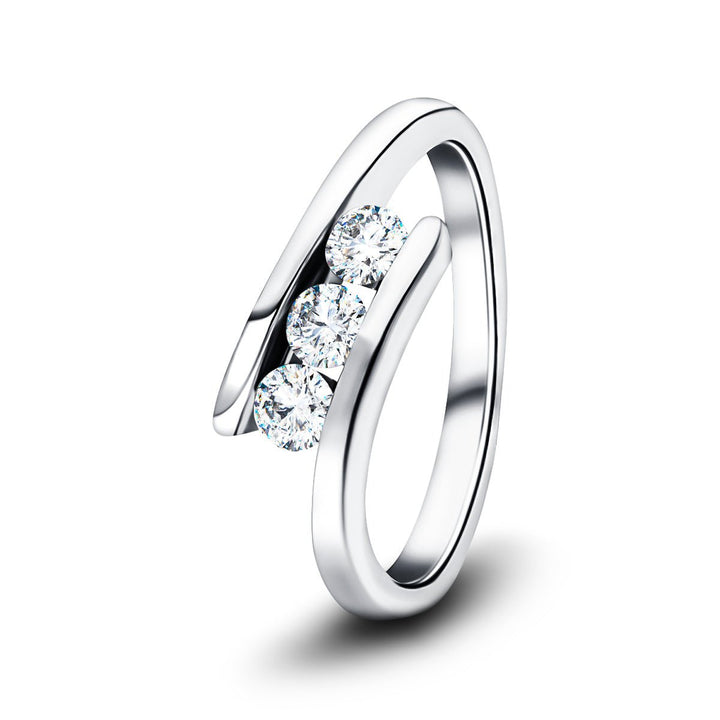
Channel Set Three Stone Lab Diamond Ring 0.33ct D/VVS in 9k White Gold
£385.00
£715.00
Introducing the epitome of modern elegance and ethical luxury: the Channel Set Three Stone Lab Diamond Ring, featuring 0.33ct of real diamonds that shimmer with a commitment to both beauty and ethics. These gems are meticulously set in a channel… read more
Choosing Well Is Easier Than It First Seems
Ring settings can sound more technical than they really are. Once the main options are clear, much of the uncertainty falls away.
You do not need to know every specialist term. You do not need to master every variation. What matters is understanding the small number of setting styles most buyers are actually choosing between and knowing what each one means in terms of appearance, wearability and overall character.
For some people, the right answer will be simplicity. For others, it will be extra presence, a more modern finish or a design that feels especially easy to wear every day. The important thing is that the ring feels right as a whole.
That is the real aim of a successful purchase. It's not just something that catches the eye at first glance, but something that feels well judged, comfortable, and genuinely satisfying to own.
 Choosing the diamond ring settings you will choose every dayCompare Ring Settings With A Clearer Sense Of What Suits You
Once you understand how different settings work, it becomes much easier to browse with purpose. Explore the After Diamonds collection of lab diamond rings to compare styles, proportions, and setting details with greater confidence.
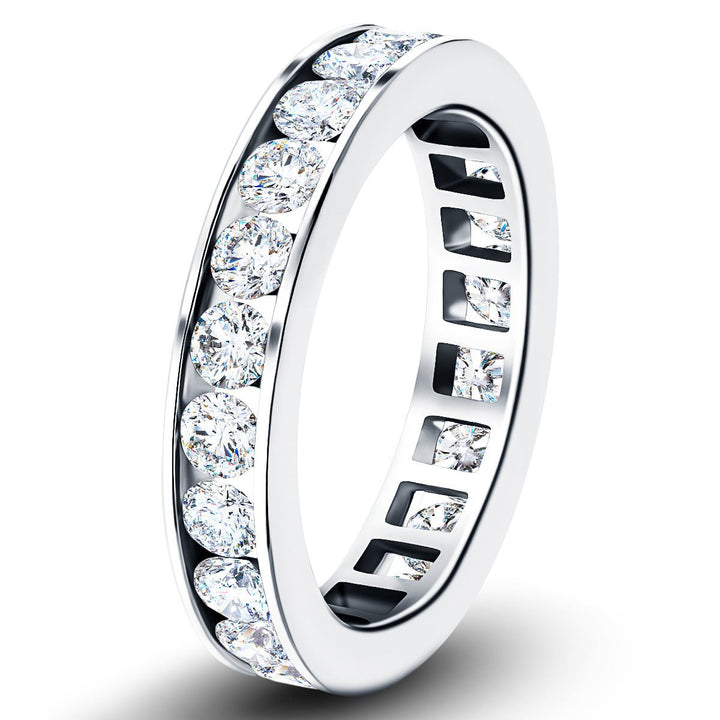
2.00ct Channel Set Lab Diamond Full Eternity Ring D/VVS in Platinum
£1,595.00
£3,095.00
Experience timeless elegance with the 2.00ct Channel Set Lab Diamond Full Eternity Ring, a substantial and striking testament to enduring love. This exquisite piece features real diamonds, meticulously channel-set around the entirety of the platinum band, ensuring a seamless display… read more
FAQ
What is the most popular diamond ring setting?
For many buyers, the solitaire remains the most popular because it is timeless, versatile and keeps the focus on the centre diamond.
What is the difference between a halo and a cluster-style ring?
Both create a fuller, brighter look around a centre stone. In broad buying terms, they often appeal to the same kind of buyer, even if the exact design structure differs.
Which setting makes a diamond look bigger?
Halo and cluster-style settings are often chosen for this reason, as they can create more visual spread and extra sparkle around the centre stone.
Is a bezel setting the same as a rubover setting?
They are closely related terms. Rubover is often used to describe a setting where the stone is enclosed or partly enclosed by metal in a bezel-like way.
Which setting is best for everyday wear?
For most buyers, lower-profile and smoother settings are worth considering if practicality is a priority.
Does the setting affect sparkle?
Yes. The setting changes how the diamond is presented and how the ring performs visually as a whole.