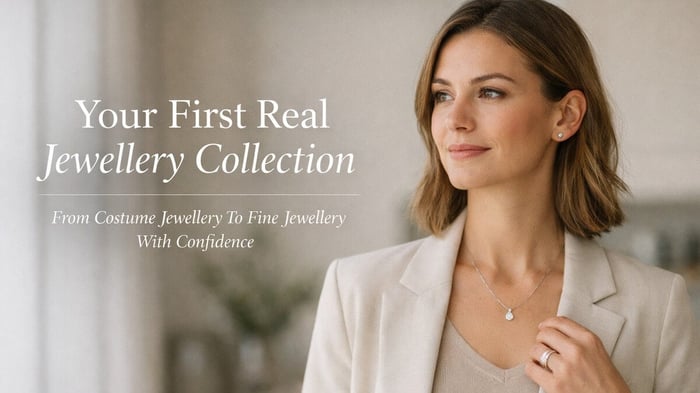

There comes a point when costume jewellery no longer feels quite enough. It may still be fun, still useful, still part of your wardrobe, but you start wanting something more lasting. Something made from better materials. Something you can wear for years rather than seasons. Something that feels less temporary. For many buyers, that is the real start of a jewellery collection. It's not when they become experts or spend recklessly, but when they start buying with purpose.
That shift can feel slightly uncertain at first. Fine jewellery has often seemed like a different world, one associated with big budgets, major life events, or a level of confidence that many first-time buyers do not yet feel they have. In practice, that is one reason laboratory diamond jewellery has become so appealing. It gives buyers a more realistic route into fine jewellery, with the materials, longevity, and sense of occasion they want, but with fewer barriers at the start.
If you're building your first real jewellery collection, the goal is not to buy everything at once. It is to choose well, begin sensibly, and end up with pieces you genuinely enjoy wearing.

In This Article
- Why Many Buyers Reach A Turning Point
- What Changes When You Move Into Fine Jewellery
- Why Lab Diamonds Make That Move Easier
- Start With Pieces That Earn Their Place
- Build A Collection Around Real Life, Not Fantasy
- What To Prioritise When Buying Your First Fine Jewellery
- A Sensible First Collection Could Start Like This
- Mistakes That Can Slow The Transition
- Practical Advice Before You Buy
- Jewellery Collection FAQs
- Begin Your Fine Jewellery Collection With Confidence
Why Many Buyers Reach A Turning Point
A common question is, 'Why does someone who has happily worn fashion jewellery for years suddenly start looking at fine jewellery instead?' Usually, the answer is not one dramatic reason. It is a gradual change in priorities.
You may want pieces that keep their finish and structure better over time. You may be dressing differently now than you did a few years ago. You may be marking a birthday, a promotion, a relationship milestone, or simply a stage of life at which you want your jewellery to feel more considered. Put simply, there is often a point where buying for the moment gives way to buying for the long term.
That does not mean rejecting everything you already own. A costume jewellery collection has a place. It can be expressive, trend-led, and enjoyable in a way that more permanent jewellery does not always need to be. But fine jewellery answers a different need. It is about durability, value, and the pleasure of owning pieces you can return to again and again.
Seen in that light, your first everyday diamond jewellery collection is not about becoming a different person. It is about recognising that your taste, your lifestyle, and your buying habits may have matured.
What Changes When You Move Into Fine Jewellery
The biggest difference is not simply price. It is materials, construction, and mindset.
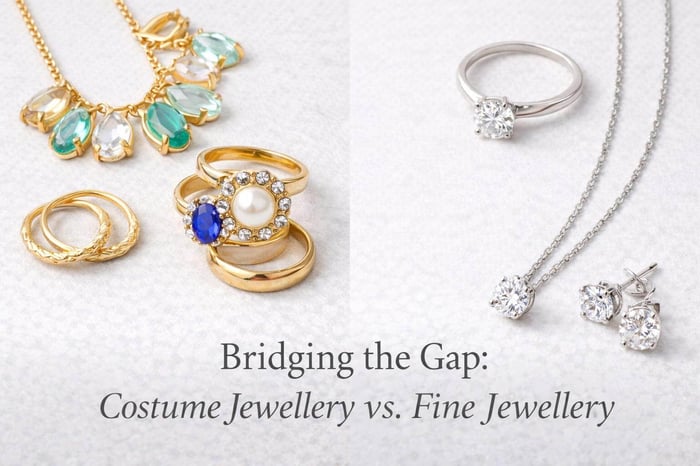
Costume jewellery is often designed with appearance in mind. That can mean plated metals, imitation stones, trend-led styling, or pieces intended to be worn hard for a period and then replaced. There is nothing inherently wrong with that. It serves a purpose. But it is not usually designed around decades of wear.
Fine jewellery is different. It is made with precious metals such as gold or platinum and with stones that carry real material value and permanence. What this distinction means is that the purchase tends to be slower and more deliberate. You are not just asking whether something looks appealing today. You are asking whether it will still feel right next year, whether it works with your life, and whether it earns its place in your collection.
That is why the move to fine jewellery often feels significant, even when the first purchase is modest. A small pair of diamond studs in gold can represent a much bigger change in buying behaviour than a drawer full of cheaper impulse pieces. You are choosing something with staying power.
For first-time buyers, that can be reassuring rather than intimidating. You do not need to know everything. You simply need to understand that the rules are a little different. Versatility matters more. Quality matters more. Wearability matters more. Random purchases matter less.
Channel Set Three Stone Lab Diamond Ring 0.33ct D/VVS in 9k Yellow Gold
£385.00
£715.00
Discover the chic allure of our Channel Set Three Stone Lab Diamond Ring, featuring 0.33ct of D/VVS quality genuine diamonds. Nestled within a sleek channel setting, this ring showcases a trio of brilliant diamonds on a 2.1mm wide band of… read more

Why Lab Diamonds Make That Move Easier
For many people, lab diamond jewellery is the point at which the idea of fine jewellery becomes genuinely realistic.
Traditional fine jewellery buying has often involved a fairly steep jump from fashion pieces to natural diamond jewellery. For some buyers, that jump feels too large to justify at the start. They may like the idea of fine jewellery but not feel ready to spend at that level on a first purchase. As a result, they stay in the costume jewellery category for longer than they really wanted.
Lab diamonds change that equation. They offer a practical route into fine jewellery by allowing buyers to choose real diamond jewellery in precious metal with stronger overall value for the budget available. In real terms, that may mean better colour and clarity, a larger diamond, a more refined setting, or simply the confidence that the piece feels substantial enough to be a real step forward.
That is why it makes sense to think of lab diamonds as a bridge from costume jewellery into fine jewellery. Not because they sit somewhere between the two, but because they help buyers cross from one buying mindset into another. You are no longer buying something temporary. You are buying something intended to last.
For a first collection, that can be precisely the right entry point. It allows you to buy something meaningful and well-made without feeling that you have to overreach financially just to get started.
Start With Pieces That Earn Their Place
The smartest first fine jewellery purchases are usually not the most dramatic ones. They are the pieces that fit easily into your life and get worn often enough to justify themselves.
For most buyers, that means starting with simple, versatile categories rather than statement pieces. Diamond stud earrings are often an excellent first choice because they work with almost everything. A pendant necklace is another strong option, especially if you want something visible enough to feel special but easy enough to wear regularly. A ring can also be a very good starting point, provided it suits your day-to-day routine and does not feel too precious to enjoy properly.
Worth knowing, the best foundation pieces tend to be the ones that disappear naturally into your style rather than dominating it. That does not make them boring. It makes them useful. A collection built on a few well-chosen basics is often more satisfying than one built around occasional pieces that spend most of their time in a box.
This is especially true if you are moving up from costume jewellery. The temptation can be to make the first fine jewellery purchase look dramatically different from everything that came before it. In practice, that is not always necessary. Often, the real shift is in quality and longevity, not in loudness.
Build A Collection Around Real Life, Not Fantasy
One of the easiest mistakes to make is buying for the life you imagine rather than the life you actually live.
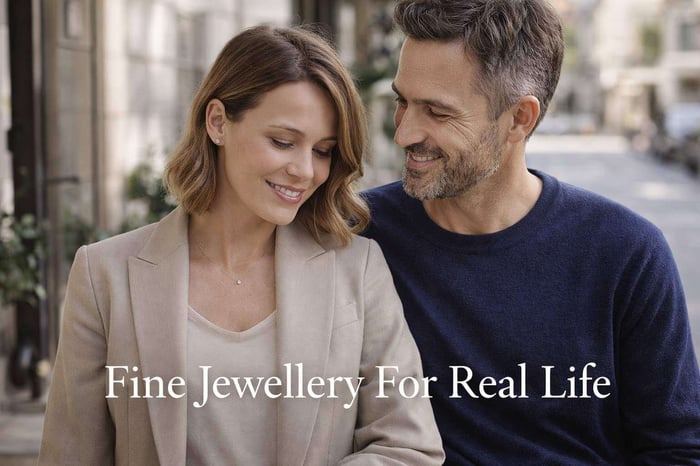
If most of your week is spent in simple knitwear, tailoring, denim, workwear, or clean everyday outfits, then your first fine jewellery pieces should probably work comfortably within that world. If you buy something that only makes sense with eveningwear or very polished dressing, it may not become the reliable foundation piece you hoped for.
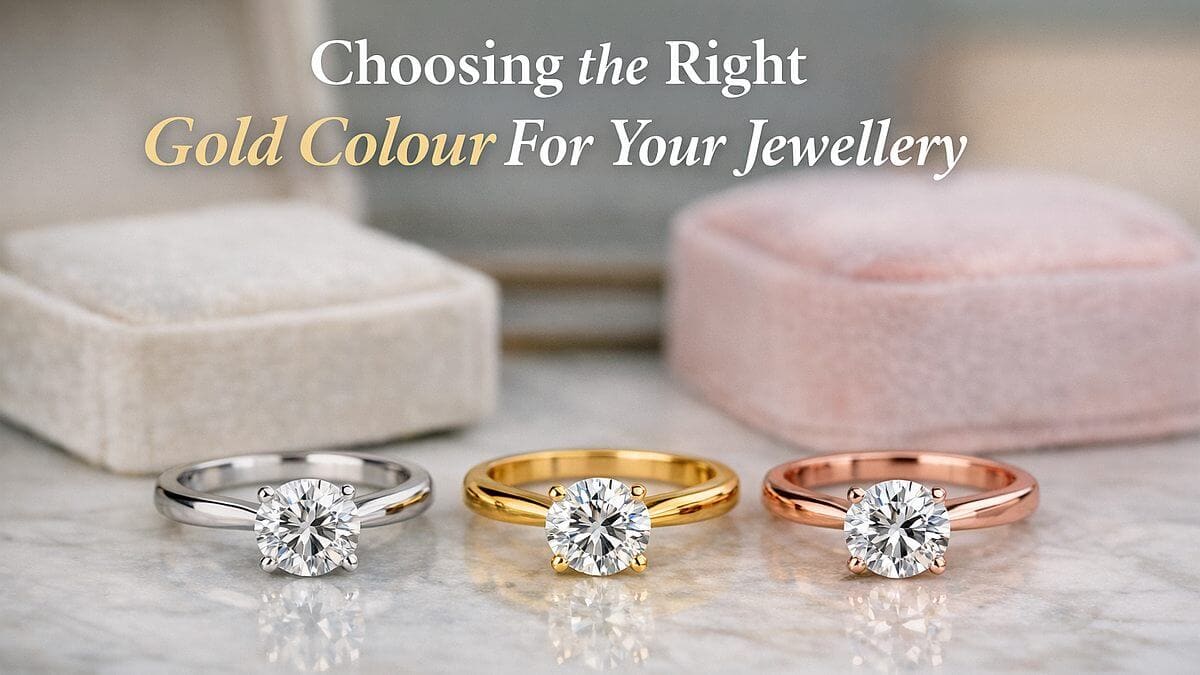
This is where metal colour, scale, and styling matter. Yellow gold often feels warm, classic, and slightly more noticeable. White gold and platinum can feel cleaner and more understated. Smaller stones and simpler settings tend to be easier for everyday wear. Slightly bolder designs may suit buyers who already know they enjoy more visible jewellery.
Put simply, your first real jewellery collection should support your wardrobe, not fight it. A good test is to ask whether you can picture the piece with the clothes you wear most in an ordinary month. If the answer is yes, it is likely a sensible candidate. If it only works for a version of you that appears three times a year, it may be better as a later addition.
What To Prioritise When Buying Your First Fine Jewellery
First-time buyers often focus heavily on size because it feels like the easiest thing to compare. But size alone is not what makes a piece satisfying to own.
In practice, the strongest first purchases are usually those that feel balanced. That means the design suits the diamond, the setting feels secure and well judged, the proportions are right, and the piece is comfortable enough to wear often. A slightly smaller diamond in a better overall design can feel much more convincing than a larger diamond in something less coherent.
That is also why it helps to think beyond headline specifications. Diamond quality matters, of course, but for many buyers the practical goal is not to chase perfection on paper. It is to choose a diamond that looks bright, lively, and attractive in normal life. The setting quality matters because it affects both appearance and security. The metal matters because it shapes how the piece wears over time.
For most buyers, the smart approach is to prioritise pieces that look good in daylight, feel comfortable when worn, and still seem right once the initial excitement has passed. That is a far better basis for a collection than choosing purely by carat weight or trend value.
A Sensible First Collection Could Start Like This
There is no single correct formula for a first real jewellery collection, but there are sensible starting points.
One route is the everyday collection. This might include a pair of diamond studs, a simple pendant necklace, and a slim ring that works comfortably from day to evening. This kind of collection is often the easiest to build because every piece has obvious repeat-use value.
Another route is a slightly dressier but still versatile collection. That could mean elegant earrings with a little more presence, a refined necklace, and a ring that feels more distinctive without becoming difficult to wear. This works well for buyers who want their jewellery to be noticeable, but not overpowering.
A third route is the modern minimal collection. In this case, the focus is on clean lines, understated settings, and pieces that feel polished rather than decorative. A solitaire pendant, neat studs, and a pared-back ring can create a very contemporary foundation.
The key point is that you do not need ten pieces to have a collection. Three carefully chosen pieces can already represent a real shift into fine jewellery. What matters is that they work together, suit your life, and feel like they belong to you rather than to a passing trend.
Lab Diamond Solitaire Necklace Pendant 0.50ct G/VS in 9k White Gold
£475.00
£955.00
Make a statement with this stunning lab diamond solitaire necklace pendant. Handcrafted in the UK with a beautiful 0.50ct diamond, this pendant will surely sparkle and shine. The diamond is IGI-certified as G/VS quality and is set in a gorgeous… read more

Mistakes That Can Slow The Transition
The first is spreading your budget too thinly. Buying several lesser pieces can seem productive, but one genuinely good piece often does more to establish a collection than three forgettable ones.
The second is buying something that is too trend-led too soon. Trend pieces can be enjoyable, but they are usually not the strongest foundation for a first collection. It usually makes more sense to build around classic, flexible designs and add more personality later.
The third is assuming fine jewellery must be reserved for special occasions. If a piece is so precious in your mind that you never wear it, it is not doing much work for your collection. Real jewellery should usually be lived with, not merely stored.
Finally, many buyers overestimate how dramatic the first step needs to be. Your first fine jewellery purchase does not have to be the biggest item you will ever own. It just has to be good enough to change how you feel about what you are wearing.
Practical Advice Before You Buy
Before buying your first piece, ask yourself one simple question: what would I actually wear most over the next twelve months?
If the answer is earrings, start there. If you wear open necklines and like visible jewellery, perhaps start with a necklace. If a ring feels more personal and meaningful, begin with that. The right answer is usually the piece that fits most naturally into your existing life.
It also helps to think in stages. Your first purchase does not need to complete your collection. It only needs to begin it well. Once you have worn that first fine jewellery piece for a while, your next decision becomes easier. You learn what feels right, what suits you, and what is still missing.
That is the real advantage of approaching a collection calmly. You are not trying to create a finished jewellery wardrobe overnight. You are building something more personal, one sensible step at a time.
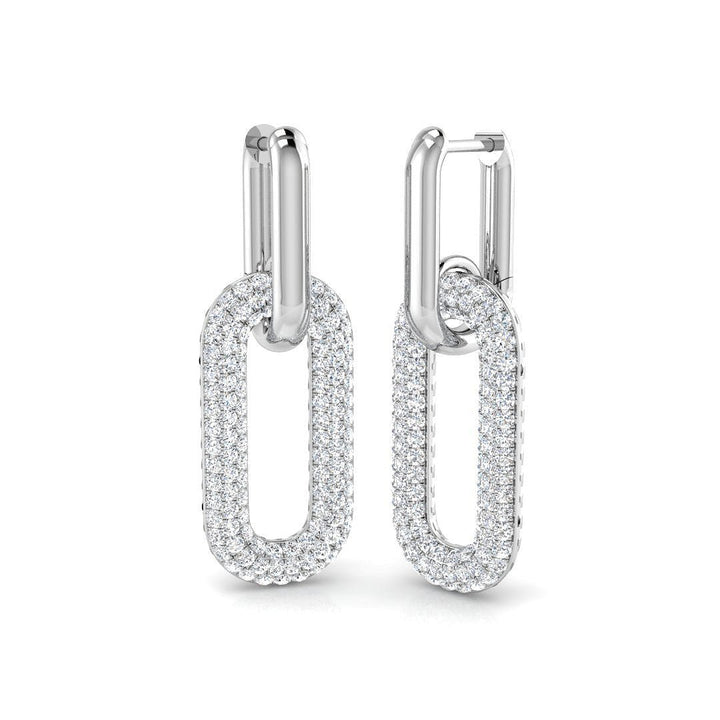
Pave Set Lab Diamond Paperclip Earrings 1.50ct D/VVS in 925 Silver
£828.00
£1,495.00
These exquisite Pave Set Lab Diamond Paperclip Earrings, boasting a total diamond weight of 1.50ct, epitomise modern elegance and craftsmanship. Each lab diamond, meticulously selected for its D/VVS quality, sparkles in a pave setting, enhancing the striking design. Crafted with… read more
Jewellery Collection FAQs
What is the best first fine jewellery piece to buy?
For most buyers, diamond stud earrings or a simple pendant necklace are the easiest places to start. They are versatile, easy to wear, and useful across a wide range of outfits and occasions.
Can lab diamonds be considered fine jewellery?
Yes. When set in precious metals such as gold or platinum, lab diamond pieces sit firmly within fine jewellery. The key difference is not whether the jewellery is “real”, but the materials, workmanship, and intended longevity.
Is lab diamond jewellery a good step up from costume jewellery?
Yes, for many buyers it is an ideal step up. It offers a practical route into fine jewellery, with better materials and longer-term wearability, while remaining more accessible than many traditional natural diamond purchases.
Should I start with earrings, a necklace, or a ring?
Start with the category you are most likely to wear often. Earrings are usually the simplest choice; necklaces suit buyers who want visible everyday jewellery, and rings work well when you want something more personal that is constantly worn.
How many pieces do I need for a real jewellery collection?
You do not need many. Even two or three well-chosen fine jewellery pieces can form the basis of a real collection if they are versatile, durable, and genuinely suited to your style.
Is it better to buy one good piece or several cheaper ones?
In most cases, one good piece is the better starting point. It usually gives more long-term satisfaction, gets worn more often, and sets a stronger standard for the rest of your collection.
Begin Your Fine Jewellery Collection With Confidence
Your first real jewellery collection does not need to be large, complicated, or built in a rush. The aim is simply to start with pieces that feel right for your life now and are good enough to stay with you for years.
Browse our collection of lab diamond rings, earrings, necklaces, and bracelets to begin building a fine jewellery collection with clarity and confidence.