
Quick Answer
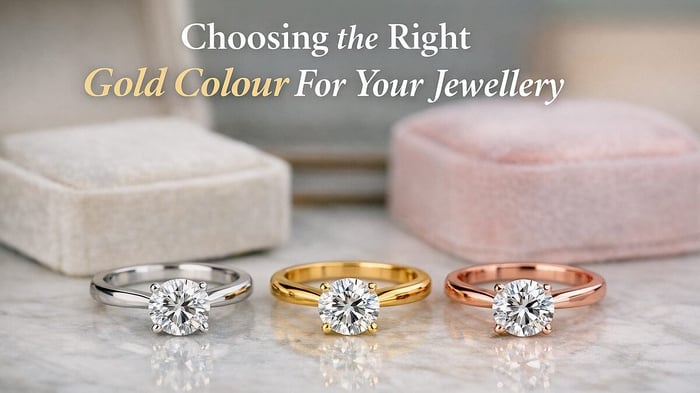
For most buyers, choosing the right gold colour comes down to your personal colouring, the look you prefer day-to-day, and how much maintenance you are comfortable with. White gold feels crisp and understated, yellow gold feels classic and warm, and rose gold feels softer and more distinctive.
Choosing jewellery is often presented as though there must be one correct answer. In reality, gold colour is one of the more personal decisions you can make. The diamond may draw the eye first, but the metal sets the tone. It shapes how the piece feels on the hand, against the skin, and in everyday wear.
That matters even more for first-time buyers. If you are buying your first serious piece of diamond jewellery, you want it to feel right straight away, but also right six months from now. Put simply, the goal is not to choose the most fashionable gold colour. It is to choose the one you will still be pleased to wear when the novelty has gone.
The good news is that this choice becomes much easier once you know what each colour is really doing. White, yellow, and rose gold each have a distinct character. Karat also changes how rich the colour looks, how durable the metal is, and, to some degree, how the price feels.
In This Article
- How Gold Gets Its Colour
- The Main Difference Between White, Yellow, And Rose Gold
- Karat Matters As Much As Colour
- How To Match Gold Colour To Skin Tone And Wardrobe
- Which Gold Colour Is Best For Different Jewellery Types
- Practical Things Buyers Often Overlook
- So, Which Gold Colour Should You Choose?
- Find A Gold Colour That Feels Like You
- FAQs
How Gold Gets Its Colour
Pure gold is naturally yellow. What changes its colour is the mix of other metals added to it.
White gold is created by combining gold with white-toned alloys, then usually finishing the surface with rhodium plating for a bright white look. Rose gold derives its blush tone from copper in the alloy. Yellow gold keeps more of gold’s natural warmth, though the exact shade still depends on purity and alloy mix.
This means that colour is not just a surface preference. It is built into the jewellery's composition. That is why 9ct yellow gold and 18ct yellow gold do not look exactly the same and why rose gold can shift from a peachier tone to a richer pink depending on karat.
A common question is whether the diamond itself looks different in different gold colours. The answer is yes, slightly. The effect is usually subtle, but it matters. White gold tends to emphasise a cool, bright, crisp appearance. Yellow gold gives a warmer, more traditional feel. Rose gold softens the overall look and can feel more contemporary or romantic, depending on the design.
If you want a broader introduction to metal choices, our guide to the precious metals we use to create your jewellery is a useful place to continue afterwards.
The Main Difference Between White, Yellow, And Rose Gold
White Gold
White gold is often the easiest choice for buyers who want a clean, modern, diamond-led look. It is bright, neat, and familiar, especially in engagement rings and classic diamond pendants. Because the surface is usually rhodium plated, new white gold looks sharply white and highly polished.
In practice, this is a very good option if you like jewellery that feels understated and versatile. It also pairs well with cooler wardrobes, monochrome dressing, and a more minimal aesthetic.
The point worth knowing is maintenance. White gold usually needs replating over time because the rhodium finish gradually wears away, especially on rings. That does not make it a poor choice. It simply means it is the gold colour most likely to need occasional refreshing.
If you already like cooler metal tones, you may also enjoy our older piece on white gold beauty and comparison.
Lab Diamond 0.25ct Cluster Ring D/VVS Quality in 9k White Gold

£325.00
£595.00
Discover the timeless beauty of the Lab Diamond 0.25ct Cluster Ring, crafted in 9k white gold. This exquisite piece features a cluster of 0.25ct of D/VVS quality genuine diamonds, meticulously claw set to capture and reflect light from every angle.… read more
Yellow Gold
Yellow gold is the most traditional of the three, but that does not mean old-fashioned. It has been enjoying a long revival because it looks warm, confident, and easy to wear. It can make a simple solitaire feel more characterful and can look particularly strong in vintage-inspired or minimalist designs.
Higher karat yellow gold tends to show a richer, deeper yellow. Lower karat yellow gold usually looks slightly paler and can be harder-wearing. For many buyers, yellow gold feels like the most recognisably gold choice, which is part of its appeal.
For first-time buyers, yellow gold often works well if you want something timeless but not overly formal. It has more visual presence than white gold, yet still feels highly wearable.
Channel Set Three Stone Lab Diamond Ring 0.33ct D/VVS in 18k Yellow Gold

£555.00
£915.00
Introducing the Channel Set Three Stone Lab Diamond Ring, a testament to modern elegance and luxury. This exquisite piece features 0.33ct of real diamonds, each carefully selected for its D/VVS quality, ensuring both ethical sourcing and exceptional brilliance. Set in… read more
Rose Gold
Rose gold tends to attract buyers who want something a little softer or less obvious. It has warmth, but of a different kind. Rather than the classic richness of yellow gold, it has a pinker, coppery undertone that can feel modern, flattering, and slightly more individual.
For most buyers, rose gold is appealing because it stands out without shouting. It can be especially effective in slim rings, delicate pendants, and jewellery that is meant to feel feminine without becoming overly sweet.
Its drawback is not durability so much as taste. Rose gold is more style-specific. If you love it, it can be perfect. If you are unsure, it is worth asking whether you genuinely like the tone or simply like it in photographs.
If rose tones appeal, you may also want to look at our earlier article on rose gold jewellery.
Lab Diamond Channel Half Eternity 0.50ct D/VVS in 18k Rose Gold

£945.00
£1,375.00
Embrace timeless elegance with the Lab Diamond Channel Half Eternity Ring, featuring 0.50ct D/VVS quality lab diamonds in an 18k rose gold channel setting. This chic, on-trend piece showcases a 3.5mm band with 40% diamond coverage, presenting round-shaped stones that… read more
Browse Our Lab Diamond Engagement Rings
Karat Matters As Much As Colour
Gold colour and karat are closely linked. Karat tells you how much pure gold is in the alloy, and that affects not only purity and price but also the richness of the colour and how the metal wears.
Gold Purity At A Glance
- 9ct: 37.5% gold. Paler tone, harder wearing, and usually the most budget-friendly for everyday jewellery.
- 14ct: 58.5% gold. A balanced middle ground, with more colour depth than 9ct and excellent durability.
- 18ct: 75.0% gold. A richer colour, a more elevated feel, and a popular choice for fine jewellery and engagement rings.
- 22ct: 91.6% gold. A strong yellow colour, but softer and less practical for frequently worn diamond jewellery.
- 24ct: 99.9% gold. Very pure and intensely yellow, but too soft for most wearable jewellery.
For UK buyers, 9ct and 18ct are the most relevant day-to-day. 9ct is popular because it is durable, more affordable, and well suited to frequent wear. 18ct is chosen when buyers want higher purity, a richer tone, and a more overtly fine-jewellery feel.
Put simply, if you want a practical first piece, 9ct can make a great deal of sense. If you want something that feels more elevated and you are comfortable with the step up in cost, 18ct often feels more special.
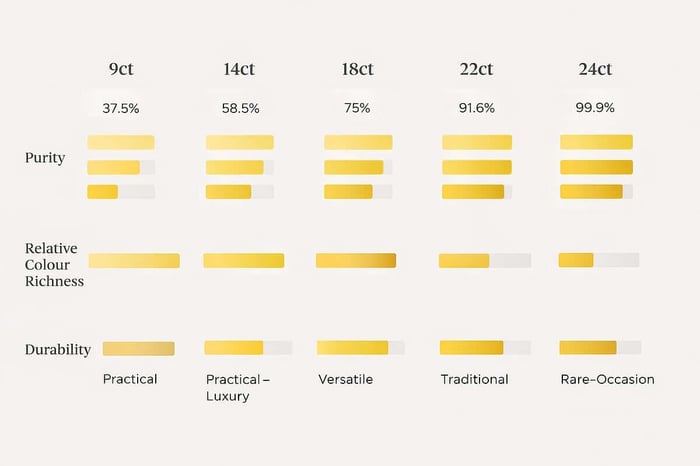
A simple visual guide to gold purity, comparing 9ct to 24ct across colour, durability, and typical jewellery use.
How To Match Gold Colour To Skin Tone And Wardrobe
There is no perfect formula here, but some patterns are useful.
White gold often works well on cooler complexions or on people who already prefer silver-toned accessories. It suits black, grey, navy, white, and cleaner modern dressing particularly well.
Yellow gold often flatters warmer skin tones beautifully and pairs naturally with cream, camel, brown, olive, and richer seasonal colours. It can also look excellent as a deliberate contrast on cooler colouring if that warmth is exactly what you enjoy.
Rose gold tends to be surprisingly adaptable. It can flatter many skin tones because it sits between warmth and softness rather than reading as strongly yellow. It often works especially well with blush, taupe, soft neutrals, and understated tailoring.
That said, wardrobe matters just as much as colouring. If most of your jewellery, watches, buckles, and daily accessories already belong to one metal family, shopping in that direction can make life easier. If your style is more mixed and flexible, you have more room to choose purely on preference.
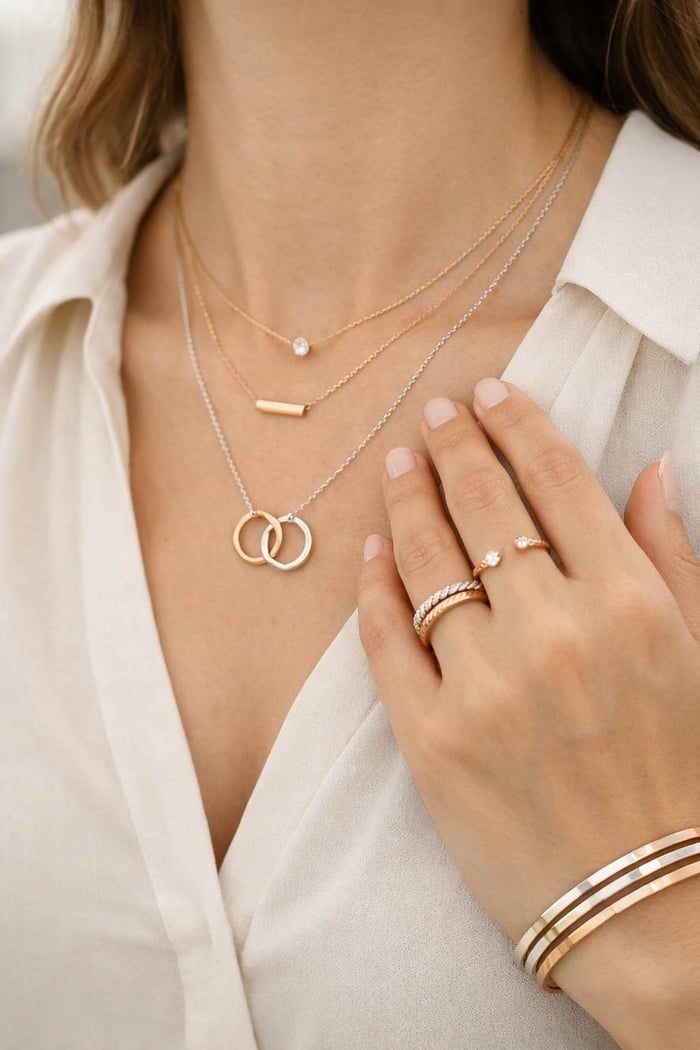 Mixed-metal jewellery in everyday wear, layered with ease and a quiet sense of modern luxury.
Which Gold Colour Is Best For Different Jewellery Types
For engagement rings, white gold remains a very popular choice because it keeps the focus on the diamond and feels bright and classic. Yellow gold has become increasingly popular for buyers who want more warmth and personality. Rose gold appeals to those who want something softer and a little less standard.
For pendants and necklaces, the decision can be more wardrobe-driven. A necklace is worn closer to the face and often against clothing, so the metal tone becomes highly visible. If you are buying a pendant, it is worth checking how the gold colour works with the necklines and colours you wear most often. Our related guide on choosing the right necklace length can help you think about proportion as well as metal choice.
For earrings, skin tone and hair colour can have a greater influence. White gold can look neat and bright, yellow gold can feel more expressive, and rose gold can bring a softer finish. If you are new to diamond jewellery, our article on buying your first lab diamond stud earrings is a useful next step.
Practical Things Buyers Often Overlook
One is maintenance. White gold needs more attention over time because of rhodium plating. Yellow and rose gold do not need that same replating routine, though all fine jewellery benefits from sensible care.
Another is how much the setting style changes the overall effect. A delicate solitaire in yellow gold can feel very different from a halo ring in yellow gold. The same is true of white and rose gold. The metal colour matters, but the design does just as much. If you are comparing ring styles, our guide to diamond ring settings may help.
The final point is not to overthink correctness. Jewellery is worn, seen, and lived with. A choice that suits your real life and feels immediately natural is usually a better choice than one that looks theoretically perfect in a guide.
So, Which Gold Colour Should You Choose?
For most buyers, the simplest answer is this:
Choose white gold if you want a crisp, bright, modern look and do not mind occasional replating.
Choose yellow gold if you want warmth, tradition, and a classic jewellery feel with more visible character.
Choose rose gold if you want softness, individuality, and a slightly more distinctive finish.
If you are still uncertain, look first at the jewellery you already wear the most. Your existing habits often tell you more than trend reports ever will. The right gold colour should feel like an extension of your taste, not a test you're trying to pass.
A well-made piece in the right metal can quietly become part of you. That is the real goal. Not just choosing jewellery that looks good in the box, but choosing something that feels right once it is yours.
Find A Gold Colour That Feels Like You
Whether you prefer the crisp brightness of white gold, the warmth of yellow gold, or the softer character of rose gold, the best choice is the one that feels natural in everyday wear.
Browse our UK handcrafted lab diamond jewellery collections, with a 30-day return and exchange policy, a lifetime workmanship guarantee, and the reassurance of buying from a specialist jeweller focused on well-considered, well-made pieces.
FAQs
Is white gold better than yellow gold for diamond jewellery?
Not inherently. White gold creates a brighter, cooler overall look, while yellow gold feels warmer and more traditional. The better option is the one that suits your style and wardrobe.
Does 18ct gold look different from 9ct gold?
Yes. In yellow gold especially, 18ct usually looks richer and deeper in colour, while 9ct tends to look a little paler and more practical for everyday wear.
Does white gold need maintenance?
Yes. White gold is usually rhodium plated, and that finish can wear away over time, particularly on rings, so occasional replating is worth expecting.
Is rose gold still a good choice if trends change?
Yes, if you genuinely like it. Rose gold works best when chosen as a personal preference rather than simply because it is fashionable at the time.
What is the best gold colour for first-time buyers?
For most first-time buyers, the best option is the one that already fits their everyday style. White gold is often the safest modern choice, yellow gold the classic choice, and rose gold the softer, more individual one.