
In This Article
- A First-Time Buyer's Guide to Lab-Grown Diamonds and Diamond Jewellery
- What Lab-Grown Diamonds Actually Are (And What They Are Not)
- Why Lab Diamonds Have Become The Modern Default For Many Buyers
- The Practical Buying Guide: How To Choose Well On Your First Purchase
- Will It Feel Real? Confidence Checks That Buyers Quietly Want Answered
- A Simple Takeaway Checklist
- Browse, Compare, And Choose At Your Own Pace
- FAQs
A First-Time Buyer's Guide to Lab-Grown Diamonds and Diamond Jewellery
Buying your first piece of diamond jewellery is unusually emotional.
Even if you are a practical person, there is usually a moment where you pause and think, 'This is meant to last.' Not just in physical terms, but in meaning. It is a marker. A gift. A promise. Sometimes a quiet reward to yourself.
Lab-grown diamonds have become part of that story because they fit the way people live and buy now. We still want romance, but we also want clarity. We want something beautiful, but we do not want to feel taken for a ride. We want to choose well, without turning it into an exam.
If you’re a first-time buyer searching for clarity on lab-grown diamonds in the UK, this guide will walk you through what they are and how to choose confidently.
This guide is here to make the modern version easier. You will learn what lab diamonds are (and what they are not), why they have become so popular, and how to buy confidently the first time.
What Lab-Grown Diamonds Actually Are (And What They Are Not)
Put simply, a lab-grown diamond is a real diamond, created in a controlled environment rather than mined from the earth. The structure is the same. The hardness is the same. The sparkle is the same kind of sparkle because it comes from the same material.
That matters, because first-time buyers often get tripped up by wording.
A lab-grown diamond is not:
Cubic zirconia (CZ)
Moissanite
Glass or crystal
A “diamond simulant”
Those are different materials designed to look similar. A lab-grown diamond is a diamond.
Pave Set Lab Diamond Paperclip Earrings 1.50ct D/VVS in 9k Rose Gold

£1,035.00
£1,895.00
The Pave Set Lab Diamond Paperclip Earrings exude modern elegance with their sleek design. Featuring an impressive 1.50ct of lab-created diamonds, these earrings boast a D/VVS diamond quality, ensuring both brilliance and clarity. Expertly crafted in 9k rose gold, they… read more
How Are Lab Diamonds Made?
You will see two main methods mentioned:
HPHT (High Pressure High Temperature)
This approach recreates the conditions under which diamonds form naturally, using pressure and heat.CVD (Chemical Vapour Deposition)
This approach grows a diamond layer by layer in a chamber, starting from a tiny diamond “seed”.
Worth knowing: most buyers do not need to choose a method. What matters more is the quality of the finished diamond and the grading report that confirms it.
What This Means For Everyday Wear
If you are buying a ring you plan to wear often or earrings you will barely take off, you want to know the stone will cope with real life. Lab-grown diamonds are as suitable for daily wear as mined diamonds. They are still diamonds, with the same toughness and resistance to scratching.
In practice, the setting and craftsmanship matter just as much as the stone. A well-made setting protects the diamond and keeps it secure, so the piece stays beautiful over time.
Why Lab Diamonds Have Become The Modern Default For Many Buyers
There was a time when lab-grown diamonds felt like a niche choice. That is no longer the case. For a lot of UK buyers, they are simply the sensible option, especially for a first “proper” diamond piece.
Here is why.
1) You Can Buy The Look You Actually Want
In real terms, lab diamonds often give you more presence for your budget. That might mean:
A larger centre stone in a ring
Higher clarity or colour within the same spend
Better matching stones for earrings
More freedom to choose a design you love, rather than compromising
For many people, that is the point. Jewellery is visual. It should look the way you imagined, not like the version you settled for.
Lab Diamond Channel Set Bangle 3.00ct in D/VVS 18k White Gold
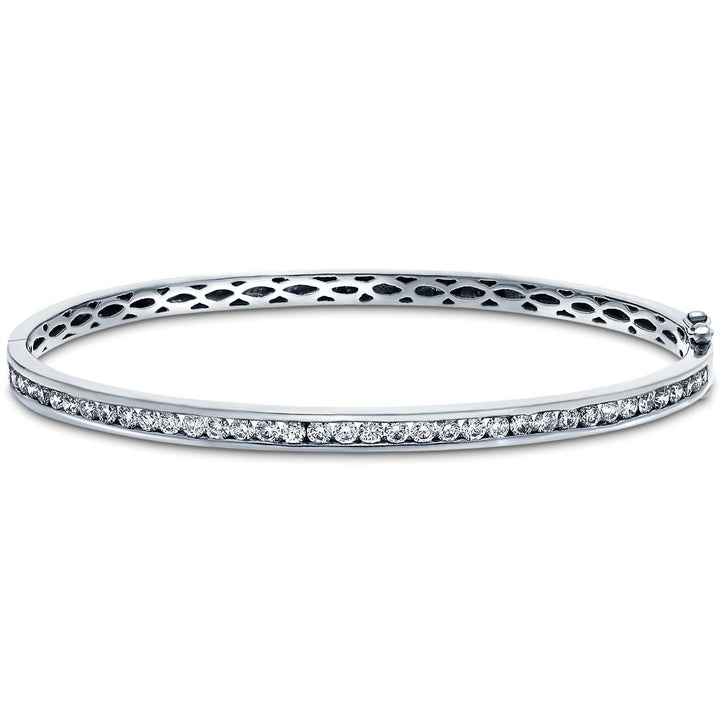
£4,725.00
£9,395.00
Introducing the epitome of elegance: the Lab Diamond Channel Set Bangle, featuring a breathtaking 3.00ct of real diamonds in a sleek, modern design. Each diamond is meticulously channel-set within a band of lustrous 18k white gold, measuring 5.0mm in width,… read more
2) You Can Compare Like-For-Like, Calmly
Lab diamonds are usually sold with clear grading information and certificates, which makes it easier to compare stones objectively.
A common question is, How do I know what I’m getting? The answer is that you can read the specification, check the certificate, and make a decision that feels grounded.
3) The Ethics Conversation Becomes Less Loaded
A lot of first-time buyers care about impact and traceability but do not want to be dragged into a moral argument at the checkout.
Lab-grown diamonds tend to appeal because they reduce certain concerns while still letting you buy something traditionally “diamond” in its symbolism.
The key is to keep it balanced. No purchase is perfect. The goal is not moral purity. It is an informed decision you feel comfortable with.
The Practical Buying Guide: How To Choose Well On Your First Purchase
If you take only one idea from this article, make it this one:
Start with the piece, not the spec sheet.
A diamond is not bought in a vacuum. It is bought to be worn.
Step 1: Choose The Jewellery Type That Fits Your Life
For most first-time buyers, one of these makes the best starting point:
Stud earrings
The easiest “everyday luxury” piece. They work with casual outfits and dressy ones, and you will get a lot of wear from them.A pendant necklace
A soft, flattering way to wear diamonds daily. Also a brilliant gift, because sizing is simpler than a ring.A ring
The most emotionally loaded choice, and the one people overthink the most. Wonderful, but do consider how often it will be worn and what kind of setting suits your lifestyle.
Once you know the piece, the rest gets easier.
Step 2: Understand The 4Cs In Plain English
You will see the 4Cs everywhere: cut, colour, clarity, and carat. They matter, but not equally.
Cut: The One You Should Not Skimp On
Cut is about how well the diamond handles light. A well-cut diamond looks bright and lively even if the other grades are not “perfect”.
What this means is: prioritise the cut quality first. If the diamond looks dull, no amount of carat weight will save it.
Colour: What You Will Actually Notice
Colour grading can feel intimidating. Most buyers do not need the highest colour grade for a diamond to look white once it is set.
If you like a crisp, bright look, aim for a range that looks white to the eye in normal lighting. If you like warmth, you may prefer something a touch softer, especially in yellow gold.
Lab Diamond Channel Set Bangle 1.50ct in D/VVS 9k Rose Gold

£1,615.00
£3,195.00
Discover elegance with the Lab Diamond Channel Set Bangle, featuring 1.50ct of D/VVS quality real diamonds in a sleek channel setting. Crafted in 9k rose gold, this bangle offers a width of 4.0mm, blending sophistication with modern style. Each diamond… read more
Clarity: The Art Of Not Paying For What You Cannot See
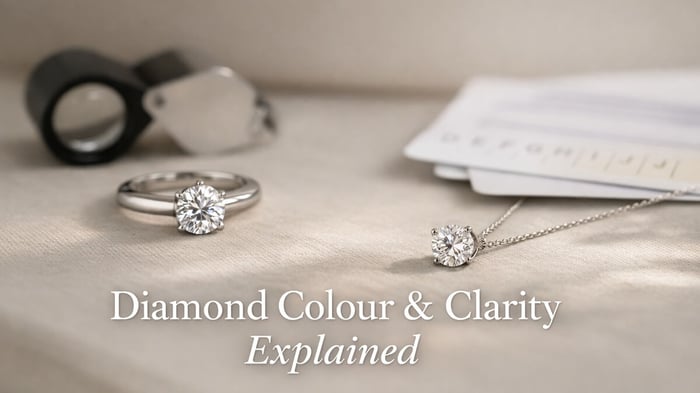
Clarity refers to tiny internal features. Many of them are invisible without magnification.
For most buyers, the sweet spot is “eye-clean”, meaning it looks clear without a jeweller’s loupe. Paying for extreme clarity can be satisfying, but it is often not the best use of budget in visual terms.
Carat: Size Is Part Of The Story, Not The Whole Story
Carat is weight, not a direct measure of size, although the two are related.
First-time buyers often fixate on carat as a marker of value. It is understandable, but it can lead to poor trade-offs. A slightly smaller diamond with a better cut can look more beautiful, more refined, and more expensive.
If you’re comparing lab and natural, try this simple test
Set one budget, then explore two versions of the same piece: natural diamond and lab-grown. In many cases, the lab-grown option lets you step up in size or quality without stepping up in cost. For first-time buyers, that can mean the difference between “lovely” and “exactly right” in real-life wear.
And it is worth saying plainly: value is not a compromise. Buying wisely is part of modern confidence, and jewellery should feel good every time you put it on.
Step 3: Pick A Shape That Suits Your Style
If you are not sure where to begin, these are the most popular shapes and what they tend to communicate:
Round: classic, bright, versatile
Oval: elegant, elongating, often looks larger for its weight
Emerald: clean, architectural, sophisticated, shows clarity more
Princess: crisp, modern, slightly more angular sparkle
Pear: romantic, distinctive, flattering on the hand
There is no “best” shape. There is only the shape you will still love in two years.
Step 4: Choose A Setting That Protects The Stone
A ring setting is not just style. It is engineering.
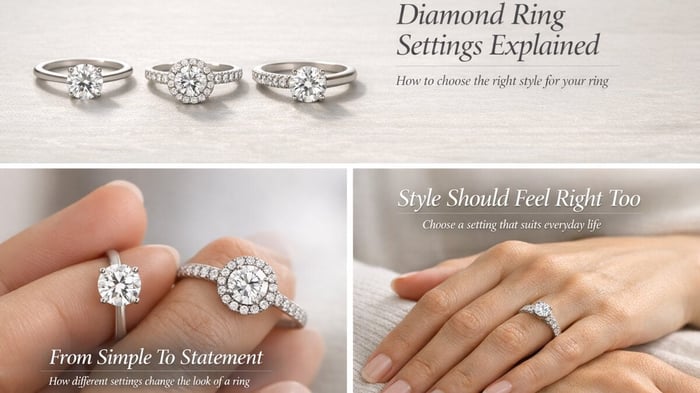
Solitaire settings show off the stone and feel timeless.
Halo settings can add presence and sparkle.
Bezel settings feel modern and protect the edges well.
Prong settings can look delicate but rely on good workmanship.
If you are buying for everyday wear, especially if you use your hands a lot, a slightly more protective setting is often the smartest choice.
Nancy Lab Diamond Halo Pear Engagement Ring 0.85ct D/VVS in 9k Yellow Gold
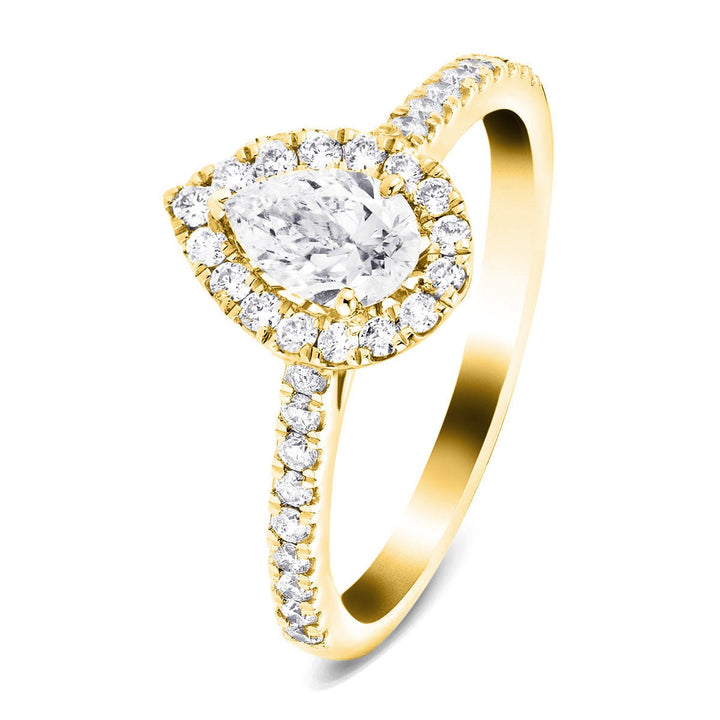
£905.00
£1,496.00
Experience the magic of love with the Nancy Lab Diamond Halo Pear Engagement Ring, handcrafted to perfection with the finest materials. This ring features a stunning 0.85-carat total weight of diamonds, including a D/VVS certified, pear-cut diamond at the centre… read more
Step 5: Think About Metal Colour And How It Changes The Look
Metal choice is not just preference. It affects how the diamond reads.
Yellow gold: adds warmth and contrast, often flattering and timeless
White gold: bright, modern, tends to emphasise a crisp look
Platinum: naturally white, durable, weighty, a premium feel
If you love yellow gold, do not feel pressured into white metals for “whiteness”. In practice, yellow gold can make diamonds look even brighter by contrast.
Step 6: Certificates, Grading, And What To Look For
For a first-time buyer, certificates are your calm anchor.
Look for a reputable grading report and ensure key details are clearly stated:
The 4Cs
Measurements (helpful for understanding spread and presence)
Any notes on fluorescence or other characteristics
If you feel yourself spiralling into micro-details, step back. The practical goal is a diamond that looks beautiful to you, fits your budget, and comes with clear grading information.
Will It Feel Real? Confidence Checks That Buyers Quietly Want Answered
First-time buyers often have questions they do not always say out loud. Let’s answer the main ones.
Will People Be Able To Tell It Is Lab-Grown?
In normal wear, no. Lab-grown diamonds look like diamonds because they are diamonds.
If someone knows your stone is lab-grown, it is because you told them or because the topic came up, not because they could spot it.
Will It Feel Meaningful, Or Will It Feel Like A Compromise?
This is where the modern love story really sits.
Meaning comes from what the piece represents, not from a supply chain detail. For many people, the thoughtfulness of choosing well is part of the romance. It says, I cared enough to do this properly.
What About Long-Term Value And Resale?
An honest answer helps here.
Most fine jewellery should be bought to wear and love, not as an investment. Resale values vary widely, and they are affected by brand, design, condition, and market demand.
Lab Diamond Cluster Pendant Necklace 0.25ct D/VVS in 9k Rose Gold

£385.00
£645.00
This exquisite Lab Diamond Cluster Pendant Necklace, featuring a total diamond weight of 0.25ct, is a testament to fine British craftsmanship. Each lab-created diamond is meticulously chosen for its D/VVS quality, ensuring both brilliance and clarity. Set in luxurious 9k… read more
Lab-Grown Diamonds Vs Natural Diamonds: A Simple Budget Comparison
If you are deciding between lab-grown and natural diamonds, it helps to hold the budget steady and compare what that budget buys in the finished piece.
With lab-grown, the same spend will often let you step up in size or improve the visible grades (particularly colour or clarity), while keeping the overall design and craftsmanship at the standard you want.
It is also worth remembering that the diamond is only part of the cost. Precious metal, design, setting work, and finishing all cost broadly the same whether the stone is lab-grown or mined. So the real comparison is not “stone vs stone”, but “final jewellery piece vs final jewellery piece”.
How Do I Keep It Looking Good?
Diamonds can attract oil and residue from everyday life, which can dull their sparkle temporarily. A gentle clean now and then makes a big difference.
Also, store pieces separately if you can. Diamonds can scratch other jewellery, and other jewellery can damage settings if they knock together in a box.
A Simple Takeaway Checklist
If you want to feel confident quickly, use this as your guide:
Choose the piece you will genuinely wear, not the one you think you should buy
Prioritise cut for sparkle and overall beauty
Aim for eye-clean clarity rather than paying for microscopic perfection
Pick a setting that suits your lifestyle and protects the stone
Buy from a retailer that makes comparison easy and keeps the process calm
Lily Lab Pear Diamond Solitaire Engagement Ring 0.50ct D/VVS Platinum

£885.00
£1,196.00
Celebrate your love with the Lily Lab Pear Diamond Solitaire Engagement Ring, crafted in the UK with exquisite attention to detail. This IGI-certified ring features a stunning 0.50-carat D/VVS lab-grown diamond, set in platinum and hallmarked in the UK. The… read more
Browse, Compare, And Choose At Your Own Pace
If you are at the stage where you want to see real options, the best next step is simply to browse.
Spend a moment with After Diamonds’ collections and notice what you are drawn to, whether that is understated studs, a clean solitaire ring, or something more expressive. When you view pieces side by side, your preferences usually become clear quite quickly.
Explore our collection of lab-grown diamond jewellery and let your personal style inspire you.
FAQs
Are Lab-Grown Diamonds Real Diamonds?
Yes. Lab-grown diamonds are real diamonds with the same crystal structure, hardness, and sparkle as mined diamonds. The difference is origin: one is grown in a lab, the other is mined.
How Can You Tell If A Diamond Is Lab-Grown Or Natural?
To the naked eye, you usually cannot. The reliable way is documentation and inspection. A grading report will typically state whether the diamond is lab-grown, and lab diamonds are often laser-inscribed on the girdle with a report number.
Do Lab-Grown Diamonds Hold Their Value In The UK?
Lab-grown diamonds are best bought for beauty and wear, not as an investment. Resale values vary widely for all diamond jewellery and depend on factors like design, condition, and demand. If long-term value is a major concern, focus on buying a piece you will love and wear often.
Are Lab-Grown Diamonds Ethical And Sustainable?
Many buyers choose lab-grown diamonds because they offer strong traceability and avoid mining. That said, sustainability also depends on energy sources and manufacturing practices. If this matters to you, look for clear information on sourcing, certification, and responsible production.
What Is The Best Lab-Grown Diamond Quality For A First-Time Buyer?
Most first-time buyers do best by prioritising cut for sparkle, then choosing a colour and clarity that look beautiful in real life rather than paying for microscopic perfection. Aim for an eye-clean diamond, a well-made setting, and a piece you will genuinely wear.