Quick Answer: Start with the wearer’s routine, a total budget and three clear priorities. Use reference photographs to explain individual features, then ask which changes are feasible. Agree the final specification, costs and approval points before work begins.
A folder of beautiful ring photographs can be a useful beginning. It is rarely a complete brief. One image might appeal because of its diamond shape, another because of the band, and a third because of how low it sits. Asking a jeweller to combine them all can create a ring quite different from the one you imagined.
A good custom engagement ring design starts by making those preferences understandable. The aim is not to specify every technical detail yourself. It is to explain what the ring must do, what you like and where you are willing to compromise.
Whether you are considering a small change to an existing design or something more individual, a clear brief makes the conversation more productive. It also helps you recognise when a standard design already meets your needs.
Table Of Contents
- Begin With The Person Who Will Wear It
- Separate Essentials From Preferences
- Explain What Each Reference Photograph Contributes
- Ask Whether You Need A New Design At All
- Agree The Specification And The Approval Points
- A Short Brief You Can Take To The Conversation
- Start With A Ring You Can Explain
- Frequently Asked Questions
Begin With The Person Who Will Wear It
Write down an ordinary week before describing the ring. Does the wearer use gloves, work with their hands, wear delicate knits or often remove jewellery? Would a prominent setting delight them or quickly become inconvenient?
Those habits do not dictate a single correct style. They tell the jeweller which trade-offs need discussion. A high setting, for example, deserves a conversation about catching and comfort. A very fine band deserves questions about its suitability for the intended wear, not just its appearance in a close-up photograph.
If the ring is a surprise, do not confuse keeping the proposal secret with keeping every design decision secret. You might agree on broad preferences beforehand, choose together after the proposal or ask someone who knows the wearer’s taste. A custom design magnifies the importance of getting that taste right.
Separate Essentials From Preferences
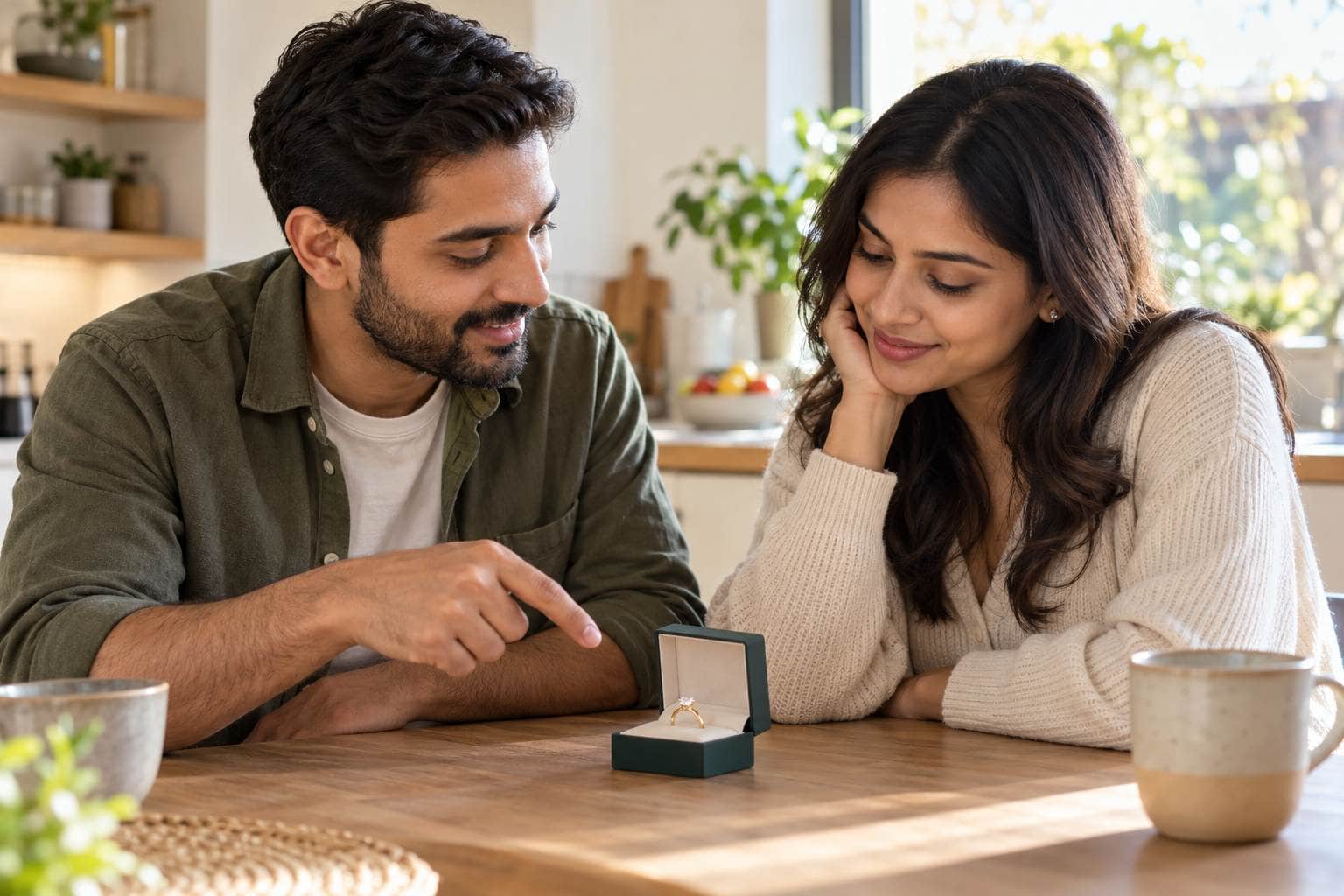
Choose up to three priorities you would be disappointed to lose. They might be an oval centre stone, yellow gold and a setting that feels unobtrusive. Then list preferences that could change, such as the exact claw shape or a small detail beneath the stone.
State the total budget you are comfortable spending. Avoid giving only a diamond budget if the ring must also cover metalwork, setting and any design charges. Ask which costs are included in the quotation and which are separate.
Keep an actual deadline separate from an aspirational date. A jeweller needs to know whether you are planning around a proposal, but only the seller can confirm the feasible production and delivery schedule. Do not build a plan around a general website timescale without checking the proposed changes.
Use Existing Designs To Test Your Priorities
Compare solitaire and trilogy rings to see which features you want to keep before asking about alterations.
Explain What Each Reference Photograph Contributes
For each image, add one sentence: “I like the rounded band, not the halo”, or “This is the setting height I prefer, but I want a different diamond shape.” That turns a mood board into usable information.
Avoid instructions such as “make it exactly like this” for a ring you have seen elsewhere. References are helpful for discussing broad features and proportions; a jeweller should advise on a suitable design rather than promise a reproduction of someone else’s work.
Read our guide to diamond ring settings if you need language for the features you are noticing. You do not have to master bench terminology. “I want it to feel smooth against neighbouring fingers” can be a more useful instruction than an unfamiliar technical term.
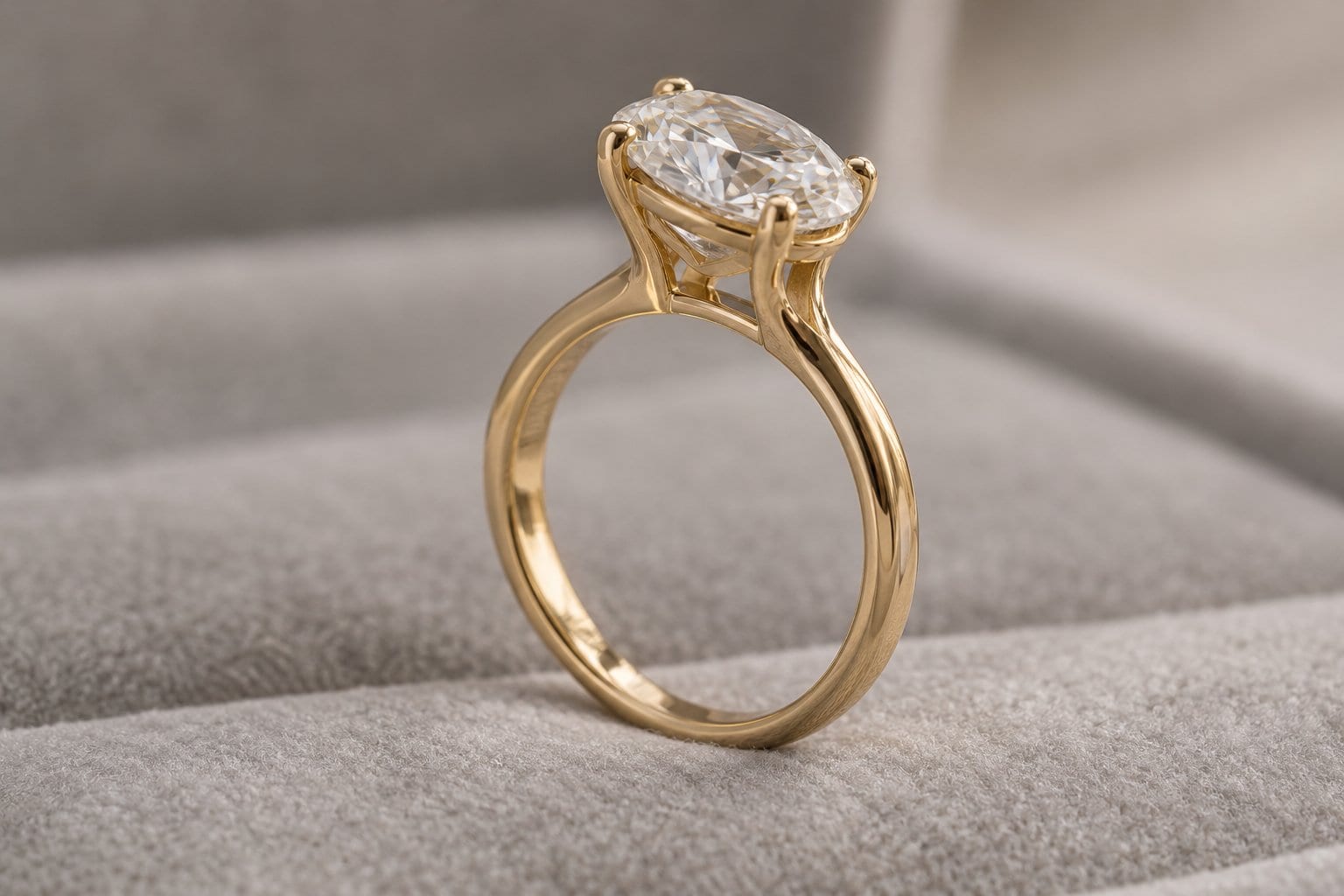
Ask to see the proposed ring from the side as well as above. A front view can hide height, the underside of the setting and how a wedding band might meet it. If wearing two rings together matters, put that in the brief before approving the engagement ring.

Name The Setting Feature You Like
Maya Lab Diamond Bezel Solitaire Engagement Ring 0.50ct G/VS 18k Yellow Gold
Maya pairs a 0.50ct G/VS lab diamond with a bezel setting in 18ct yellow gold. It gives you a specific feature to discuss if you prefer a metal rim around the stone. Ask about dimensions and profile rather than assuming a photograph establishes comfort.
Ask Whether You Need A New Design At All
There is a difference between choosing an available variant, requesting an alteration and commissioning a new design. The boundaries and costs depend on the seller and the ring.
Changing a metal or stone option may be straightforward where the design already supports it. Changing the centre-stone shape or the setting height may require more extensive work. Ask the jeweller to explain the actual scope rather than assuming every change is a simple swap.
After Diamonds’ existing custom engagement ring feature describes customisation options and inviting a conversation. Treat that as a starting point for an enquiry, not a promise that every reference design, inherited stone or requested alteration can be accommodated.
A standard ring that meets the brief is a valid outcome. Personal meaning comes from the wearer and the occasion as well as from the number of changes made. Keep customisation where it improves something important.

Test The Brief Against An Existing Design
Grace Lab Princess Diamond Solitaire Engagement Ring 0.50ct G/VS 18k White Gold
Grace combines a 0.50ct G/VS princess-cut lab diamond with 18ct white gold. It shows how shape and metal can define an existing design before any changes are requested. If you want a different detail, ask the jeweller to confirm feasibility and a quotation.
Agree The Specification And The Approval Points
Before authorising work, ask for the agreed design and quotation in writing. Record the metal, ring size, diamond shape, relevant weight and quality description, setting details and any engraving. Make sure you understand whether the quoted weight is the centre stone’s or the total for the ring.
If an individual grading report is part of the agreement, identify which diamond it covers and what will be supplied. Accent stones may be selected to a stated grade specification without separate individual reports. Do not ask the jeweller to imply otherwise merely to make the paperwork look more complete.
Ask how the design will be presented for approval. Drawings or computer renders can help communicate proportions, but they are not the finished object. Request clarification of dimensions and finishes that matter to you rather than inferring scale from an enlarged image.
Also agree when changes can be made, what they might cost and when the design becomes committed to production. Confirm the terms applicable to that particular order, including deposits, cancellation, returns, resizing and aftercare. Do not assume the terms for an unaltered stock item also govern a personalised piece.

Make The Whole-Ring Specification Clear
Molly Three Stone Lab Diamond Ring 0.60ct D/VVS in 9k Yellow Gold
Molly uses a three-stone arrangement in 9ct yellow gold, with 0.60ct total of D/VVS lab diamonds. That is the combined diamond weight, not 0.60ct per stone. Use it to discuss the overall arrangement and the band, then put the agreed details into your brief.
A Short Brief You Can Take To The Conversation
Your brief can fit on one page. It needs enough information to guide the jeweller, not enough to replace them.
- Wearer and routine: what the ring needs to accommodate in normal use.
- Three priorities: the features that matter most and why.
- Flexible preferences: features you like but could adjust.
- Budget and date: the comfortable total spend and any genuine deadline.
- References: one clear note explaining the useful feature in each photograph.
- Questions to settle: feasibility, specification, approval stages and order terms.
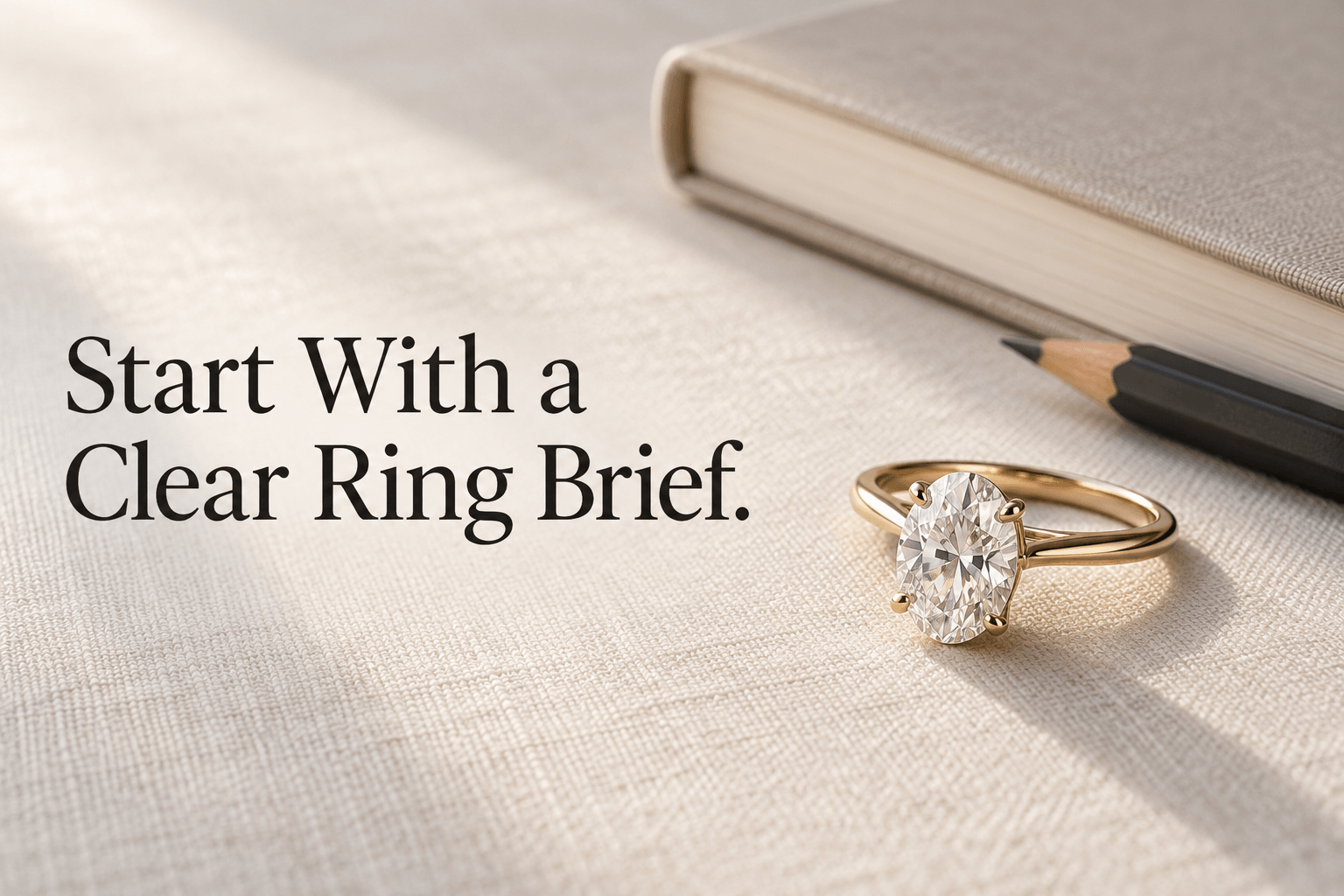
For example: “An oval lab diamond in yellow gold, with a smooth band and a relatively low profile. Comfort is more important than a large-looking centre. We want to discuss whether a wedding band can sit alongside it. The budget is for the complete ring, and we can adjust decorative details.”
That is a direction a jeweller can respond to. The conversation can then focus on what is workable and what needs changing. A successful brief leaves room for expertise while protecting the preferences that made you want the ring in the first place.
Start With A Ring You Can Explain
Browse the engagement collection and note the features that suit the wearer. For a proposed change, ask After Diamonds to confirm feasibility, quotation and order terms before committing.
Frequently Asked Questions
Do I need drawings before speaking to a jeweller?
No. A short written brief and a few annotated reference photographs are a useful start. Ask how the jeweller will communicate the proposed design.
Is customisation always more expensive than a standard ring?
No universal rule applies. The cost depends on the design and the work involved. Compare a written quotation with a standard design that meets the same priorities.
Can I change the design after approving it?
Ask before ordering. Feasibility and charges depend on the stage of work and the agreed terms. Get the change process in writing.
Will a computer render show the exact finished ring?
It helps explain the design, but it is not a finished-object photograph. Confirm dimensions, metal finish and any details that affect comfort.
Can an inherited diamond be used in a new ring?
Do not assume it can. Ask the jeweller whether it offers that service and what examination, suitability checks and risks would need to be discussed.