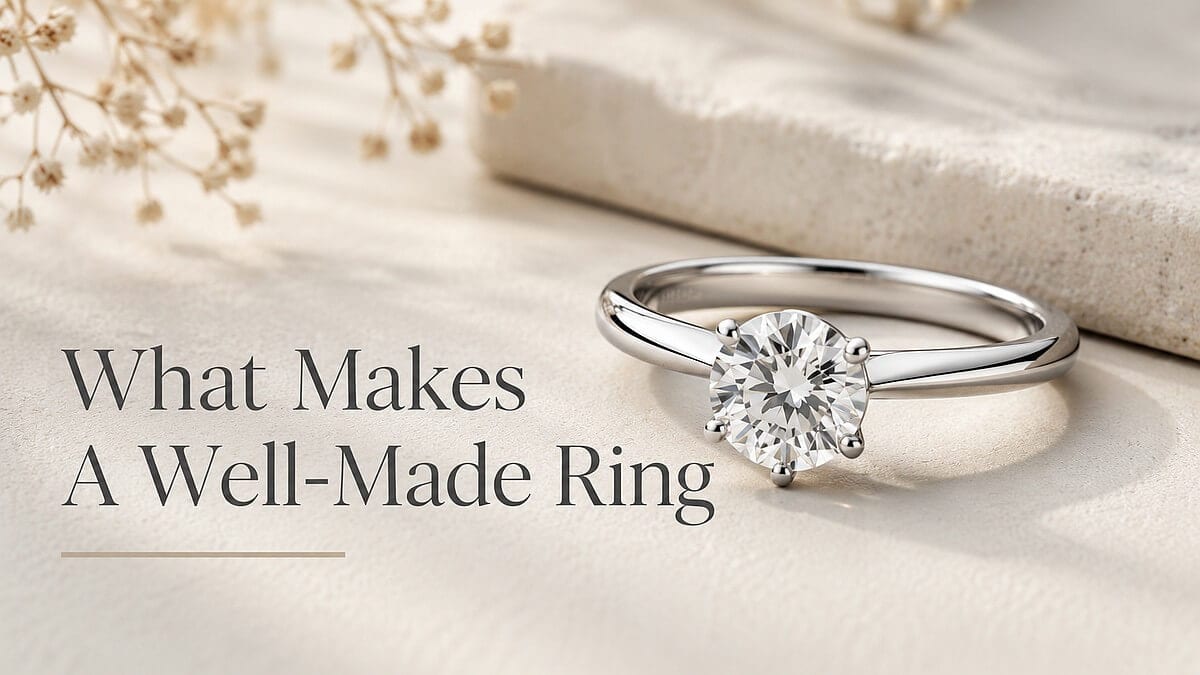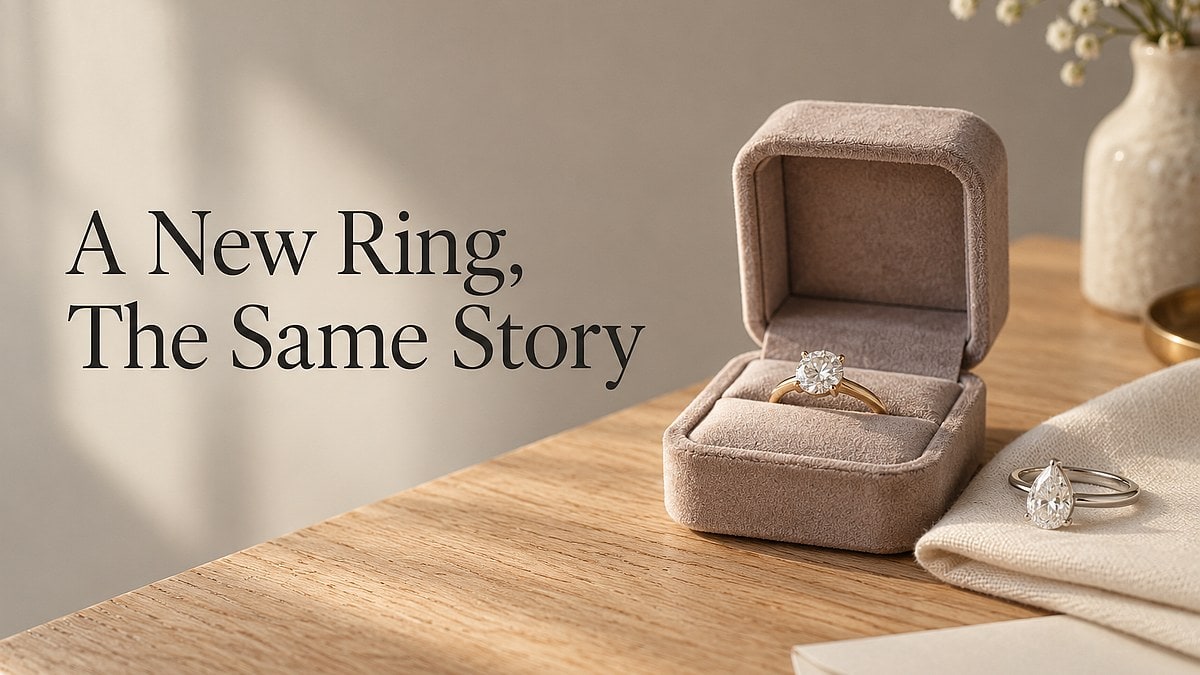

You can love the moment a ring represents and still find that the ring itself no longer feels quite right. Perhaps it is uncomfortable. Perhaps the shape that appealed years ago no longer suits your taste. Perhaps you can now choose a design that was out of reach at the time.
None of those feelings cancels the first one. Yet upgrading your engagement ring can seem to ask a larger question than buying another piece of jewellery: are you changing an object, or rewriting its meaning?
It helps to make the decision smaller. Start by identifying what you want to keep and what you would genuinely enjoy changing. A new purchase is only one possible answer, and a larger diamond is only one possible change.
Table Of Contents
- Name What Has Changed Before Choosing A New Ring
- Decide What Must Stay Yours
- Choose A Different Design, Not Simply A Bigger Number
- Turn Your Preference Into A Clear Jeweller’s Brief
- Consider An Addition Instead Of A Replacement
- Make The Decision Together Where That Matters
- Explore The Next Chapter At Your Own Pace
- Frequently Asked Questions
Name What Has Changed Before Choosing A New Ring
Try finishing the sentence, “I would wear and enjoy my ring more if…” Be specific. “It fitted comfortably” leads to a different conversation from “I preferred the shape” or “I wanted something to mark this anniversary”. Without that distinction, it is easy to shop for a replacement when you are really looking for an adjustment or a separate milestone piece.
Comfort deserves attention without being dressed up as a style failure. Start with a professional fit and condition check when the problem is how the ring feels. What can be altered depends on the actual design and its condition, so a general promise of resizing or resetting is not enough.
Appearance deserves the same clarity. A ring that looks dull may need attention before you decide you have outgrown it. GIA explains how a build-up of oil and dirt can affect a diamond’s appearance. Ask about an appropriate clean and inspection, particularly if you have any concern about the setting.
And sometimes nothing is wrong. Your taste has simply changed. You do not have to invent a defect in the original ring to give yourself permission to enjoy another design.
Decide What Must Stay Yours
There are several different things you might mean by “keeping my engagement ring”. You may mean preserving the exact object, keeping its original diamond in a different setting, retaining a recognisable design detail or keeping the memory while choosing something new. Those are all legitimate, but they are not the same instruction to a jeweller.
If the original object is what matters, keeping it intact may be the simplest choice. It can remain your engagement ring even if you wear it less often, or differently, later. There is no requirement to trade it in, dismantle it or make it fund the next purchase.
If it is the stone that matters, ask whether that particular diamond can be reused safely in a suitable new design. The answer needs an assessment of the stone and proposed setting. A photograph of a new ring is a reference for the conversation, not evidence that your diamond will fit it.
Take photographs and make a note of any engraving or detail you would miss. This is not an argument against change. It is a way to notice what might otherwise disappear from the brief when the excitement of choosing a new ring takes over.
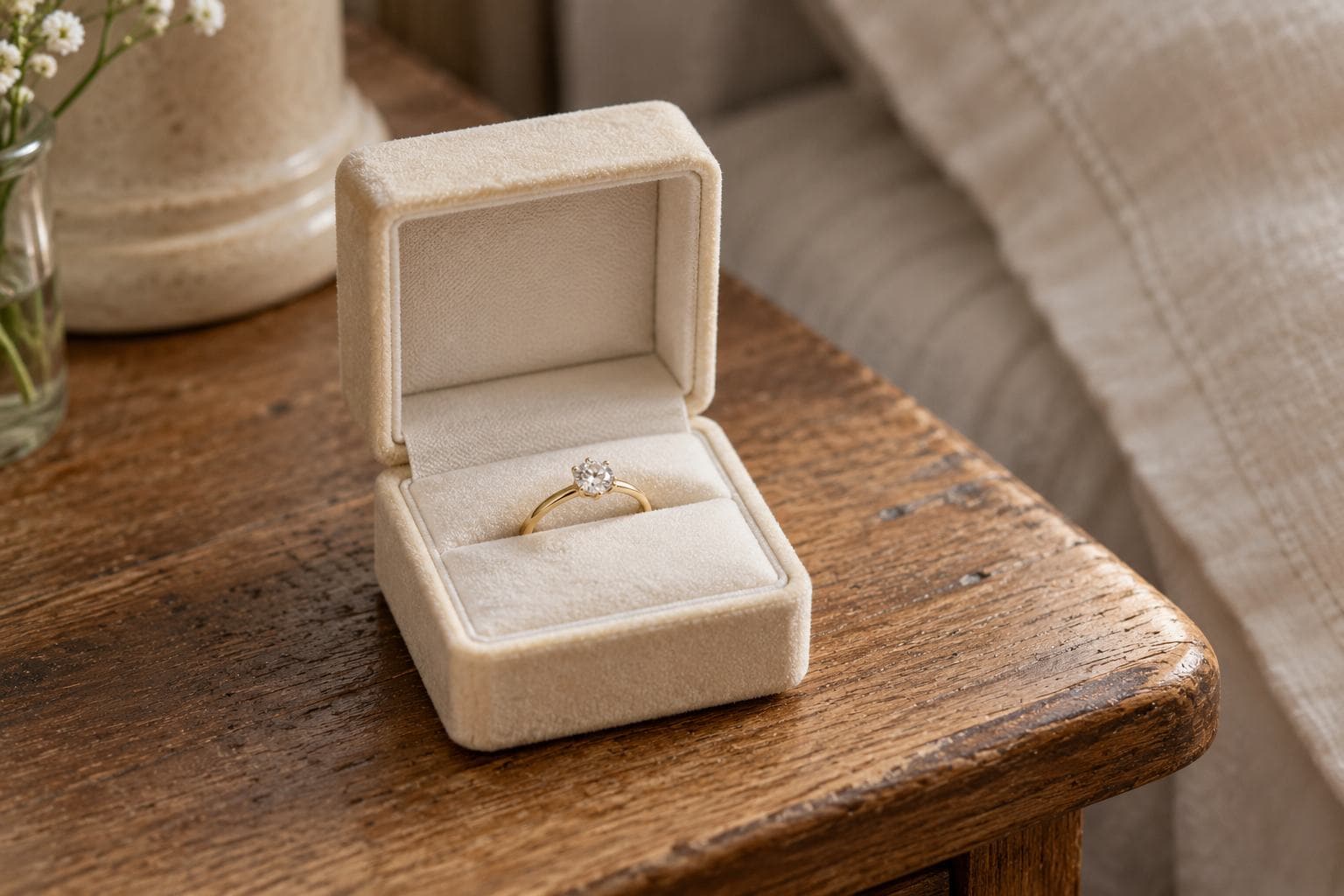
Explore The Change You Have In Mind
Look at different outlines and settings as conversation starters. You do not need to settle on a larger diamond, or on a replacement, before you browse.
Choose A Different Design, Not Simply A Bigger Number
Once you know what you want to preserve, consider what sort of change would feel worthwhile. It could be a different diamond outline, a different metal colour or less visual detail around the main stone. Each changes the character of a ring without turning the decision into a size competition.

Change The Outline
Lily Lab Pear Diamond Solitaire Engagement Ring 0.50ct G/VS Platinum
The Lily ring is listed with a 0.50ct pear-shaped lab-grown diamond in platinum. It is a reference for someone whose taste has moved towards a different outline, not an instruction to choose a larger diamond. This is a complete new ring; the listing does not establish whether your existing stone could be reset into this design.
A design reference is most useful when you can say what appeals to you. “I like the pear outline” is an instruction a jeweller can discuss. “I want this exact ring, but made from mine” may conceal questions about the existing diamond, the setting and whether reuse is possible at all.
Look at side views as well as the view from above. Ask about the dimensions and how the design sits on the hand. The front photograph may capture the feature that attracted you, while leaving unanswered the practical question that brought you here.
Our guide to diamond ring settings can help you put a name to the designs you are comparing. Use those names to communicate your preferences, not as shortcuts to promises about comfort or durability.
Turn Your Preference Into A Clear Jeweller’s Brief
Before agreeing to work, separate the desired outcome from the method. You may want a clearer outline or a ring that suits a particular routine. The jeweller then needs to explain which construction, alteration or new design could achieve it, and which options are unsuitable.

Change The Setting Language
Zara Three Stone Bezel Lab Diamond Engagement Ring 0.55ct D/VVS 9k Yellow Gold
Zara combines three round lab-grown diamonds in bezel settings with 9k yellow gold and a listed 2.5mm band. Its 0.55ct figure is the total diamond weight, not the weight of the centre stone. Use it to discuss the outline and feel you prefer; the setting style alone cannot establish the ring’s height, fit or suitability for your routine.
For any proposed reuse, ask what happens to the original setting, whether all the original stones can be retained and what will be returned to you. For a new ring, ask what the quoted specification covers and whether any changes you request alter the design, timescale or terms. Put the agreed answers in writing before irreversible work begins.
Set a budget for the whole proposal rather than only for a new centre diamond. Request an itemised quote for the work and materials involved, and separate that from any offer for the existing ring. A trade-in figure, where offered, is one part of the decision; it should not determine whether you are comfortable parting with the original.
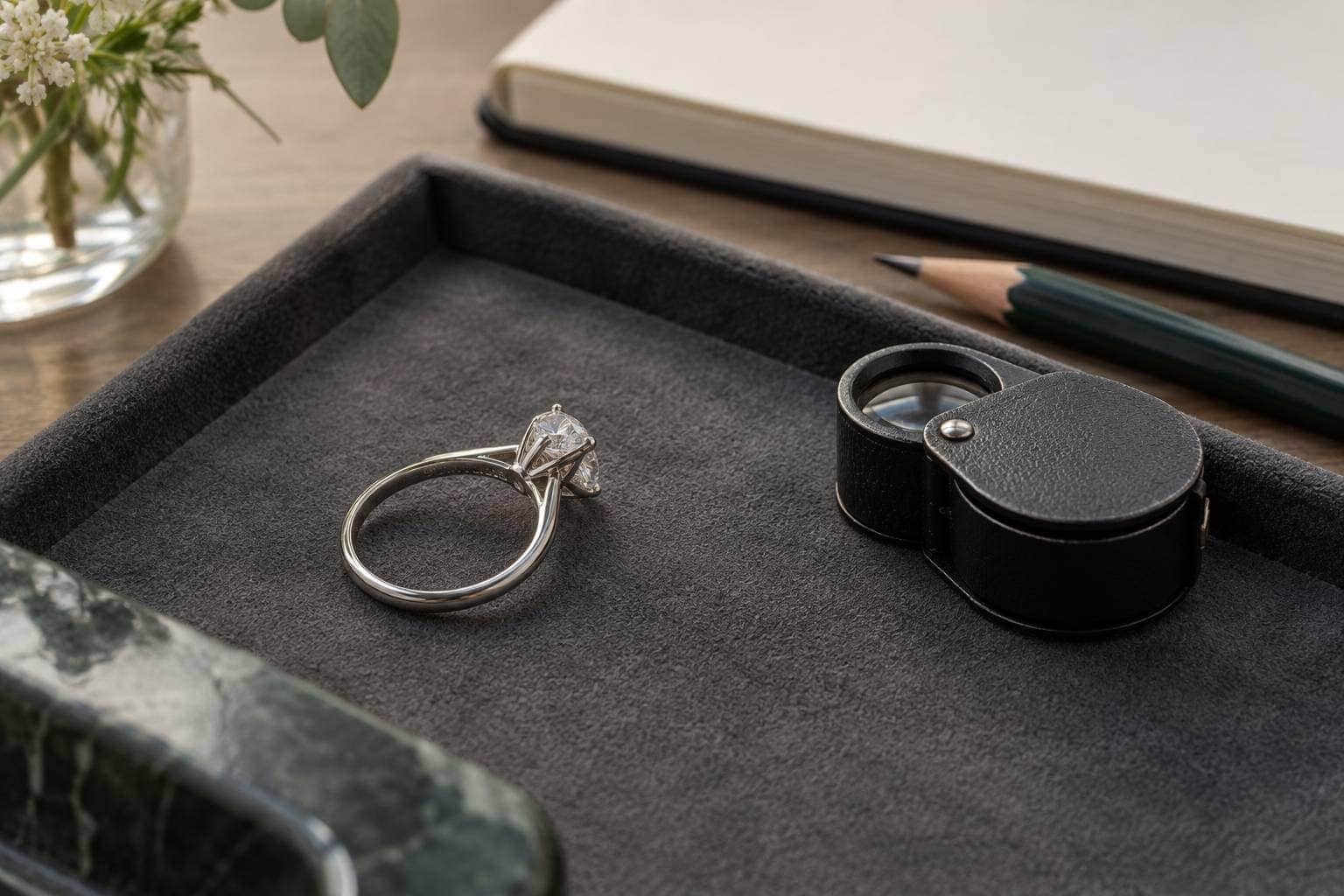
The rings shown here are complete catalogue designs, not a promise that After Diamonds can remodel any existing ring into them. Ask about the particular work you need. A clear “not suitable” can be more helpful than an attractive but unexplained assurance.
Consider An Addition Instead Of A Replacement
Sometimes the wish to upgrade is really a wish to mark the present. An anniversary, a change in circumstances or simply the passage of time can make a new piece feel appropriate. That does not mean the engagement ring must take on the entire job.

Mark A Milestone Without Replacing
Lab Diamond 16 Stone Half Eternity Ring 0.15ct D/VVS in Platinum
This platinum band is listed with 16 diamonds totalling 0.15ct and a 1.7mm band width. It offers a different route: add a piece to mark the present while keeping the engagement ring unchanged. It can be considered for a separate finger or hand; wearing it beside another ring would need an individual fit and contact check.
A separate ring can sit on another finger or hand, with the original left exactly as it is. That can be especially appealing when the first ring’s proportions are familiar and cherished, but you also want to choose something that reflects your taste now.
This is not a compromise you have to accept instead of the ring you really want. It is a different answer to the question. Replacement changes what you wear as an engagement ring; an addition lets the jewellery mark another chapter alongside it.
Try not to let the word “upgrade” make the first purchase sound inadequate. A new piece may be more suitable for your present preferences without making the old one a mistake.
Make The Decision Together Where That Matters
If the ring was chosen by a partner, lead with what remains important. “I love what this ring means, and I would like to discuss how I wear it now” opens a different conversation from presenting a finished shopping decision. You are explaining a preference, not issuing a retrospective review of the proposal.
There is room for different feelings. One person may attach meaning to the exact ring; another may attach it to the commitment, regardless of which ring is worn. Neither has to be dismissed as irrational. Naming the difference can make a practical solution easier to find.
Give yourself time between choosing an option and committing to an irreversible change. Keeping the original intact, asking for a condition assessment or trying on a different outline may resolve the uncertainty without forcing the whole decision at once.
The right result need not be the most dramatic one. It is the one you can enjoy wearing without feeling that something important was hurried out of the story. That may be a refreshed original, an agreed reset, a new ring or the quiet decision to leave it alone.
Explore The Next Chapter At Your Own Pace
Use these collections to compare complete new designs, or to identify what you would like to discuss. The decision about preserving your original ring comes first.
Frequently Asked Questions
Does Upgrading An Engagement Ring Have To Mean A Larger Diamond?
No. The desired change may involve fit, setting, metal colour, diamond outline or a simpler design. Start with what you would like to improve rather than a target carat weight.
Can I Keep My Original Diamond In A New Setting?
Possibly, but a jeweller needs to assess the actual stone and proposed design. Do not assume that an existing diamond will fit a catalogue setting, or authorise work before the scope and risks have been explained.
Do I Have To Trade In My Original Engagement Ring?
No. Keeping it intact is an option. Treat any trade-in offer separately from the price of a new ring, and decide whether you are comfortable parting with the original before making it part of the budget.
Could I Buy An Anniversary Ring Instead?
Yes. A separate piece can mark a milestone while leaving the engagement ring unchanged. It can be worn on another finger or hand; any plan to wear rings beside each other needs a specific fit and contact check.
What Should I Agree Before A Ring Is Altered?
Confirm the intended design, what will be retained, the work and materials included, and what will be returned to you. Ask for the cost, timing and applicable terms in writing before irreversible work begins.