
Quick Answer
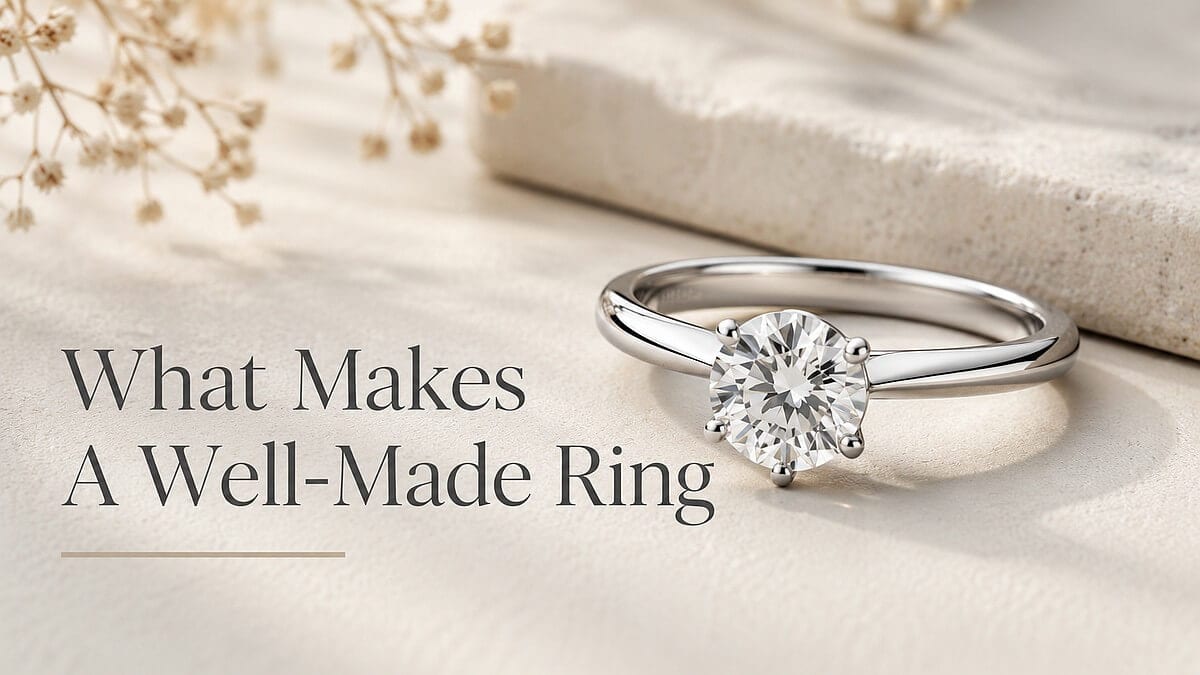
A well-made ring combines strong structure, secure stone setting, suitable precious metal, careful finishing, and clear reassurance around hallmarks, certification, and sourcing. It should look attractive, but it should also feel comfortable, hold its shape, protect the diamond, and suit long-term wear.
A ring can look beautiful in a photograph and still be poorly made. It may sparkle under bright lighting, but have weak claws, a thin band, rough finishing, or proportions that make it uncomfortable to wear every day. In this article, we answer the question, "What makes a well-made ring?"
For a first-time buyer, that can make ring shopping feel more uncertain than it needs to be. The good news is that ring quality is not mysterious. You do not need to become a jeweller to understand the difference between a ring that has simply been made to look appealing and one that has been designed to last.
A well-made ring is a balance of design, engineering, materials, and finish. The diamond matters, of course, but the ring around it matters just as much. The band has to support the setting. The setting has to protect the stone. The metal has to suit regular wear. The finish has to feel smooth and considered, not just shiny from a distance.
Put simply, a well-made ring should feel secure, comfortable, balanced, and honest. It should give you confidence not only on the day you buy it, but every time you wear it.
See What Goes Into a Well-Made Ring
A brief visual guide to the details that help distinguish a well-made ring, from setting security and hallmarks to comfort and long-term wear.
In This Article
- Why Ring Quality Is About More Than First Impressions
- The Structure Of The Ring: Strength, Balance And Wearability
- How The Setting Should Protect The Diamond
- Metal Quality, Hallmarks And Diamond Certification
- Finishing: The Detail You Feel As Much As See
- Responsible Making And Clear Information
- Practical Checks Before You Buy
- Choosing With Confidence
- Choose A Ring Made For Real Life
- FAQ
Why Ring Quality Is About More Than First Impressions
What Buyers Usually Notice First
Most buyers naturally start with appearance. You notice the diamond, the shape of the setting, the colour of the metal, and the overall style of the ring. Those choices matter, but they do not tell the whole story.
A ring is a small object doing a difficult job. An engagement ring or everyday diamond ring may be worn thousands of times over many years.
That means construction matters.
Where Quality Really Shows
A well-made ring should look good from the top, but also from the side, underneath, and inside the band. The areas most buyers do not immediately notice are often where quality becomes clearest.
- the curve and strength of the band
- the junction where the setting meets the band
- the smoothness inside the ring
- the way the claws or setting edges hold the diamond
- whether the stone sits straight and securely
A lower-quality ring may still look attractive at first glance. The difference appears in the details: thin metal, uneven claws, sharp edges, visible joins, rough polishing, or a setting that feels slightly out of proportion to the stone.
In real terms, good craftsmanship is not only about beauty. It is about reducing risk. A well-made ring is less likely to bend, snag, loosen, or feel uncomfortable.
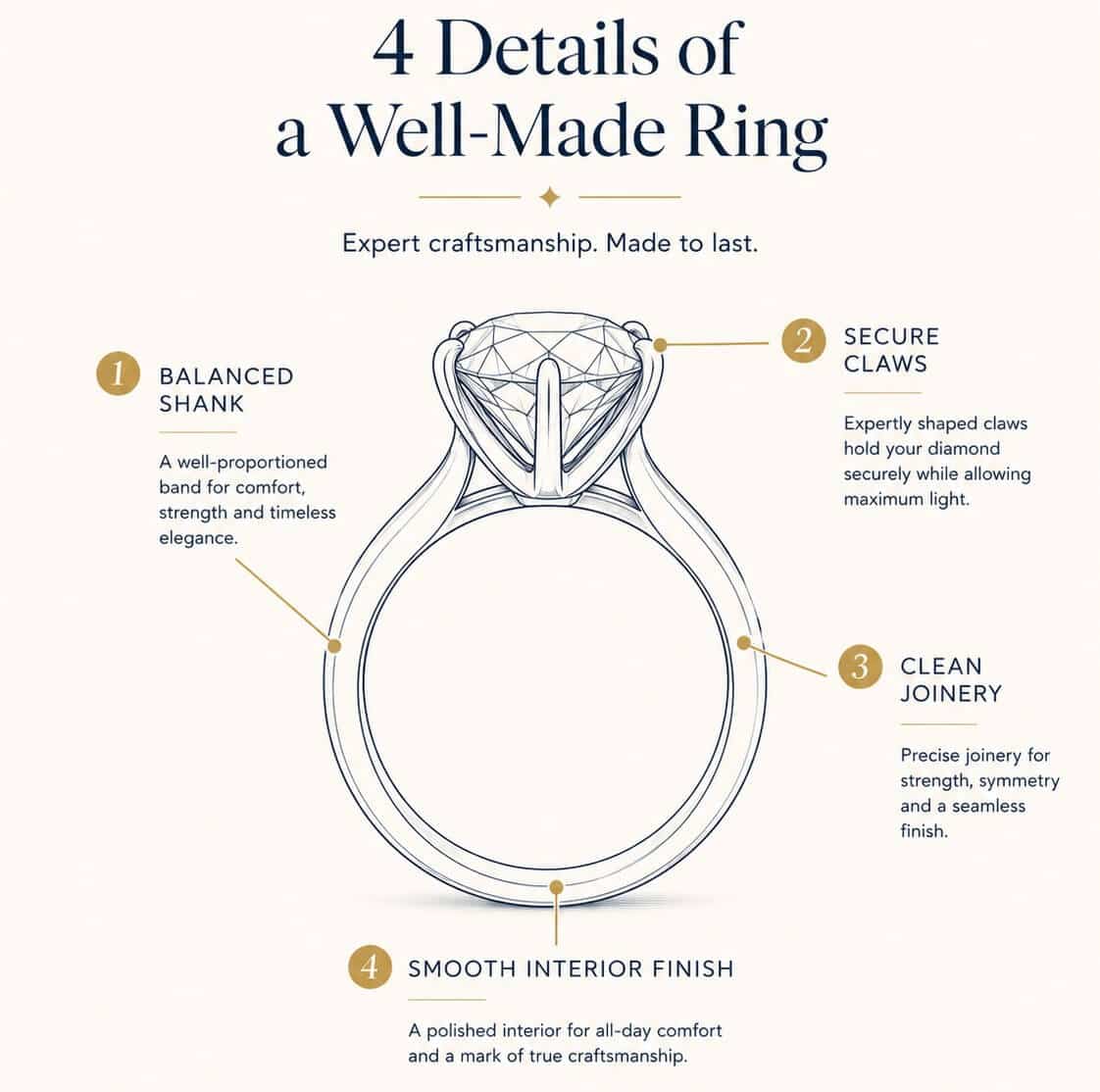 The Four Most Important Items to Check When Choosing a Ring
The Structure Of The Ring: Strength, Balance And Wearability
The Band Should Not Feel Flimsy
The shank, or band, does much of the everyday work. It holds the ring in shape, supports the setting, and affects how the piece feels on the hand.
If the band is too thin or too light, the ring may feel delicate in the wrong way. A fine band can look elegant, but there is a difference between refined and underbuilt. Thin metal is more vulnerable to bending, especially at the back of the ring, where pressure is often greatest.
A useful general guide is to look for a band with enough depth and width to support the design. Around 1.8mm to 2.0mm thickness is a sensible comparison point for many quality everyday rings, especially when comparing similar styles.
35 Stone Lab Diamond Full Eternity Ring 0.50ct D/VVS in 9k White Gold
£475.00
£795.00
The 35 Stone Lab Diamond Full Eternity Ring epitomises elegance, subtlety, and delicate craftsmanship. This exquisite piece features a total diamond weight of 0.50ct, with each ethically sourced lab diamond meticulously set in a classic claw setting, ensuring 100% band… read more

Balance Matters As Much As Weight
A heavier ring is not automatically better. Poor design can still waste metal, and a chunky ring can still be uncomfortable. What matters is whether the ring has enough metal in the right places.
A ring with a large head and a very light band may twist on the finger or feel top-heavy. A well-judged ring should sit naturally, without making the wearer feel that the diamond is pulling everything off centre.
Quick Quality Check: Ring Structure
Band thickness
Look for enough depth and width for the design. This helps prevent bending.
Balance
The setting and band should feel proportionate. This helps reduce twisting.
Side view
The setting should look properly supported. This shows structural coherence.
Overall feel
The ring should feel substantial but not clumsy. This suggests sensible use of metal.
For more on how different designs hold and present diamonds, read the After Diamonds guide to diamond ring settings.
Choosing a ring for everyday wear?
Look for a design that balances beauty with security. A well-proportioned lab diamond ring should feel comfortable, considered, and suitable for real life.
How The Setting Should Protect The Diamond
The Setting Is Where Beauty Meets Security
The setting affects how much light reaches the diamond, how visible the stone appears, how high the ring sits, and how well the diamond is protected.
In a claw setting, the claws should be even, smooth, and properly shaped around the stone. They should not be so thin that they look fragile, and they should not be so bulky that they distract from the diamond. There should be no obvious gaps between the diamond and the metal. The stone should not rattle, shift, or appear uneven in its seat.
Different settings have different strengths. A bezel or rubover setting surrounds the diamond edge with metal, which can make it very practical. A claw setting can show more of the diamond, but it relies on precise claw work. A channel setting needs stones to sit evenly within the channel, without gaps or rough edges.
Put simply, the best setting is not always the most dramatic one. It is the one that suits the diamond, suits the wearer’s lifestyle, and has been made with enough precision to keep the stone secure.
Think About Height And Daily Wear
If the ring is intended for daily wear, think about height. A high setting can make the diamond more prominent, but it may catch more easily. A lower setting can feel more practical, especially for someone who uses their hands a lot.
The right answer depends on the wearer, but the design should feel intentional rather than awkward. Fine jewellery should be cared for, but it should also be wearable enough to enjoy.
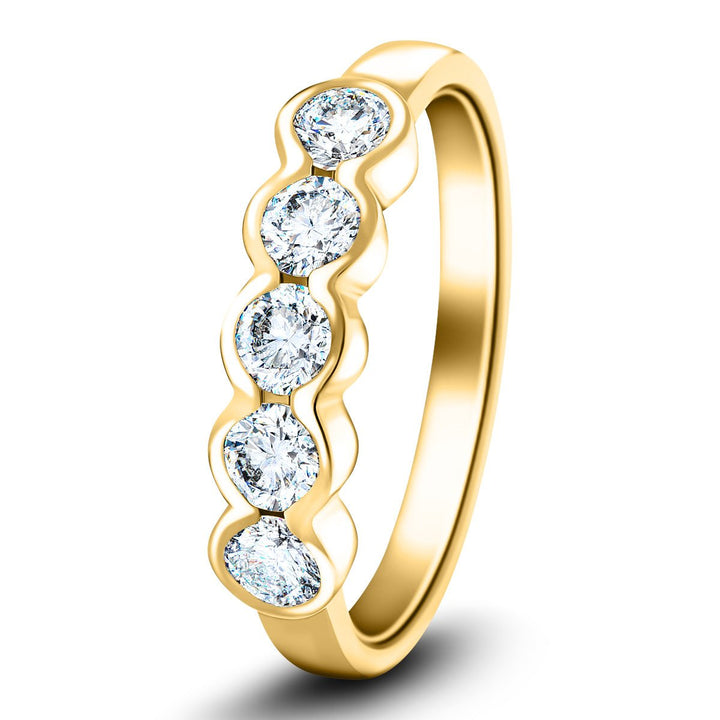
Semi Bezel Five Stone Lab Diamond Ring 1.35ct D/VVS in 18k Yellow Gold
£1,415.00
£2,375.00
Introducing the modern, chic, and striking Semi Bezel Five Stone Lab Diamond Ring, featuring a total of 1.35ct of real diamonds in a D/VVS quality that ensures a dazzling display of brilliance and clarity. This exquisite ring is set in… read more
Metal Quality, Hallmarks And Diamond Certification
Hallmarks Give Metal Reassurance
A well-made ring should be made from suitable precious metal, clearly described, and properly supported by hallmarks and diamond documentation where relevant.
In the UK, hallmarking is one of the most useful forms of reassurance for jewellery buyers. A hallmark confirms that a qualifying precious metal item has been independently tested and marked according to recognised standards. For gold, you may see fineness marks such as 375 for 9ct gold or 750 for 18ct gold. For platinum, 950 is commonly used.
A hallmark does not tell you that a ring is beautifully made. It tells you that the metal has been independently verified. That still matters, because precious metals cannot be judged accurately by eye. The official UK hallmarking guidance gives useful consumer context.
You can also read more about the materials used in After Diamonds jewellery in the guide to precious metals used in jewellery.
Certification Supports Diamond Confidence
For diamond rings, certification adds another layer of reassurance. A grading report from a recognised laboratory records the diamond’s key characteristics, such as carat weight, colour, clarity, cut information, measurements, and other identifying details.
The point is not to turn the purchase into a paperwork exercise. It is to make sure the diamond is described accurately.
If a diamond comes with a report, check that the report number matches the stone and seller documentation. Tools such as GIA Report Check can help buyers verify GIA report details directly.
For lab-grown diamonds, recognised grading documentation is especially useful because it helps separate confident buying from vague claims. For more detail, see After Diamonds’ guide to lab diamond certification.
Finishing: The Detail You Feel As Much As See
Smoothness Matters
Finishing is one of the easiest quality details to underestimate. A ring may look polished in a product image, but a well-finished ring should be smooth, comfortable, and carefully worked even in less visible areas.
Look at the inside of the band. It should feel smooth against the finger, with no roughness, sharp ridges, or uncomfortable edges. The underside of the setting should also look considered. In better-made rings, the transition between the band and the head of the ring feels clean and deliberate.
There should not be obvious solder marks, rough joins, pits, or tiny holes in the metal surface.
Finished From Every Angle
The polish should be consistent. Hard-to-reach areas may not be as mirror-bright as broad surfaces, but they should still look properly finished.
A common question is whether machine-made jewellery can be well made. Yes, it can. Modern jewellery production often uses a combination of digital design, casting, setting, and skilled finishing. The issue is not whether technology was involved. The issue is whether the design and finishing have been properly controlled.
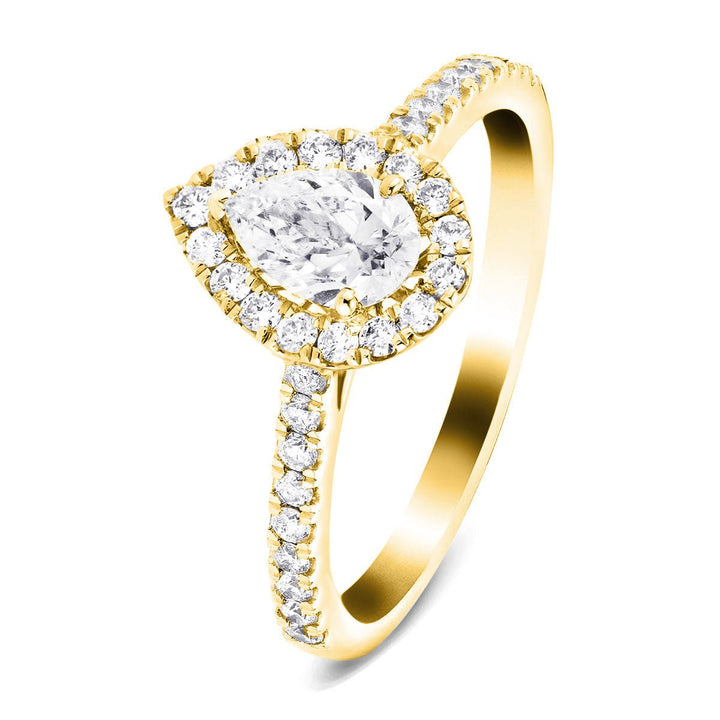
Nancy Lab Diamond Halo Pear Engagement Ring 0.85ct G/VS in 9k Yellow Gold
£875.00
£1,346.00
The Nancy Lab Diamond Halo Pear Engagement Ring in 9k Yellow Gold is a work of art designed to capture the essence of your love. This stunning ring features beautiful 0.85 carats of lab-grown G/VS grade diamonds. A halo of… read more
Responsible Making And Clear Information
Modern quality is not only about what can be seen on the finger. It also includes the clarity of the information given to the buyer, the standards followed by the business, and the integrity of the supply chain.
For lab-grown diamond jewellery, buyers often want to understand what they are buying, why it costs what it costs, and how it compares with other options. That transparency should extend to sourcing, metal choices, certification, and aftercare.
Ethical claims should be handled carefully. Organisations such as the Responsible Jewellery Council provide useful context around responsible business practices in the jewellery supply chain.
For buyers, the practical point is simple. Choose a seller who gives clear information, not just appealing language.
Practical Checks Before You Buy
What To Look At
You do not need specialist equipment to make a better decision. Start with a few simple checks:
- Look at the ring from above, from the side, and underneath.
- Check whether the band looks strong enough for the setting.
- Look for symmetry in the claws or setting details.
- Notice whether the diamond sits straight.
- Feel whether the inside of the band is smooth.
- Ask what metal the ring is made from.
- Check where the hallmark is located.
- Ask whether the diamond has a grading report.
- Think about whether the setting suits everyday wear.
Most importantly, do not judge a ring only by the largest diamond available for the budget. A slightly smaller diamond in a stronger, better-proportioned, better-finished ring can be the more satisfying choice.
The ring is the whole object, not just the stone.
Emily Lab Diamond Round Engagement Ring 0.75ct G/VS 9k Yellow Gold
£845.00
£1,436.00
The Emily Lab Diamond Round Engagement Ring boasts a dazzling 0.50 carat round cut lab-grown centre stone of G/VS quality. This IGI-certified centre stone is accentuated by 0.25 carats of G/VS quality side stones along the band, creating a total… read more

Choosing With Confidence
A well-made ring does not need to shout about itself. It usually reveals its quality through proportion, comfort, precision, and calm reassurance.
This is a useful way to think about quality. You are not trying to inspect every technical detail like a workshop professional. You are looking for signs that the ring has been designed and made with care, not merely styled to look good at first glance.
In real terms, a well-made ring gives you permission to enjoy the purchase. It reduces doubt. It makes daily wear feel easier. It helps the ring become part of life rather than something too fragile, too uncertain, or too poorly explained to feel comfortable.
That is the real value of good craftsmanship. It turns a beautiful object into a piece you can trust.
Choose A Ring Made For Real Life
If you are choosing a lab diamond ring, focus on more than the first sparkle. Look for balanced proportions, secure settings, clear certification, and precious metals that suit your lifestyle. After Diamonds offers considered lab-grown diamond rings designed for buyers who want beauty, value, and reassurance in the same purchase.
Browse the After Diamonds collection of lab diamond rings to find a ring that feels well made from the first look and reliable for the years ahead.
FAQ
What makes a ring well made?
A well-made ring has a strong enough band, a secure setting, suitable metal, smooth finishing, and clear information about hallmarks, certification, and care.
How thick should a ring band be?
It depends on the design, metal, and intended use. Around 1.8mm to 2.0mm thickness is a useful reference point for many everyday rings, though overall structure matters more than one number.
Are lab diamond rings durable?
Yes. Lab-grown diamonds have the same hardness and crystal structure as mined diamonds. The durability of the ring also depends on the setting, metal, craftsmanship, and care.
Is a hallmark the same as a diamond certificate?
No. A hallmark relates to the precious metal. A diamond certificate or grading report relates to the diamond’s characteristics, such as carat weight, colour, clarity, and measurements.
What should I check before buying a diamond ring?
Check the metal, hallmark, diamond report, setting style, comfort, band strength, finishing, and aftercare guidance. Also consider whether the design suits everyday life.
Does a heavier ring always mean better quality?
Not always. A ring should have enough metal in the right places, but weight alone does not prove quality. Proportion, setting security, finishing, and comfort all matter.