
Quick Answer
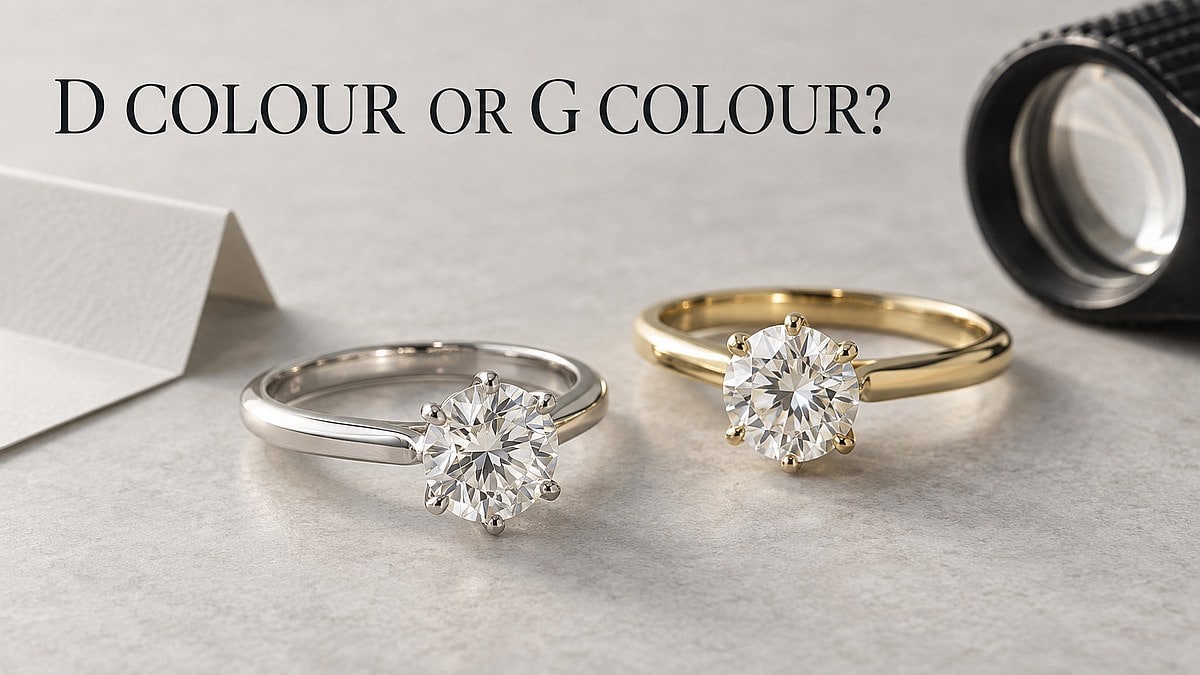
D and G are genuinely different colour grades. D is colourless, while G sits at the top of the near-colourless range. The difference can be visible when comparable loose stones are examined side by side under controlled conditions. In a finished ring, however, size, shape, cut quality, setting metal, accent stones and lighting all affect how noticeable it feels. Choose D when the crispest white appearance or the assurance of the highest colour grade matters to you. Choose G when it looks right in the intended setting and offers a better balance of colour, size, cut and cost.
Table Of Contents
Colour grading looks reassuringly simple on paper. D sits at the top of the scale, while G appears several places below it. It is tempting to assume that D must therefore produce the more beautiful ring.
That is not quite how the decision works.
The useful question is not whether D has the higher grade. It does. The useful question is whether its extra absence of colour will make a worthwhile difference in the particular diamond and setting you are considering. Understanding lab diamond colour grades is useful, but the finished piece still has to be judged as a whole.
This article concerns diamonds in the normal white D-to-Z colour range. Fancy-colour diamonds, including pink and blue lab-grown diamonds, are assessed differently and are not part of this comparison.
What D and G Colour Mean
On the traditional D-to-Z scale, D is the highest colour grade and is classified as colourless. G is classified as near-colourless.
That distinction is real. It is not merely a different label placed on identical stones. Under the controlled conditions used for grading, trained graders can place the diamonds at different points on the scale.
Colour grade is not, however, a complete beauty score. It tells you about the assessed depth of body colour. It does not tell you whether the diamond is well cut, lively, attractively proportioned or well suited to its setting.
A well-cut G can look brighter and more appealing than a poorly cut D. The D still has the higher colour grade, but the finished visual result depends on more than colour. Our broader guide to why diamond colour and clarity matter explains how these grades fit into the overall buying decision.
Controlled Grading and Face-Up Appearance
Laboratories grade colour using loose diamonds, controlled lighting and comparison stones with established grades. Those conditions are designed to make subtle differences repeatable and measurable.
You will usually experience the diamond differently. It will be set in metal, viewed mainly face-up and seen while your hand and the light are moving. Its reflections, sparkle and surroundings will compete with its body colour.
This is why two statements can both be true:
- D and G are objectively different grades.
- The difference may be subtle in normal wear.
It would be equally unhelpful to claim that everyone will notice the difference or that nobody can. Some buyers detect it quickly when comparable stones are placed together. Others see two bright white-looking diamonds and prefer the G once the complete ring and price are considered.
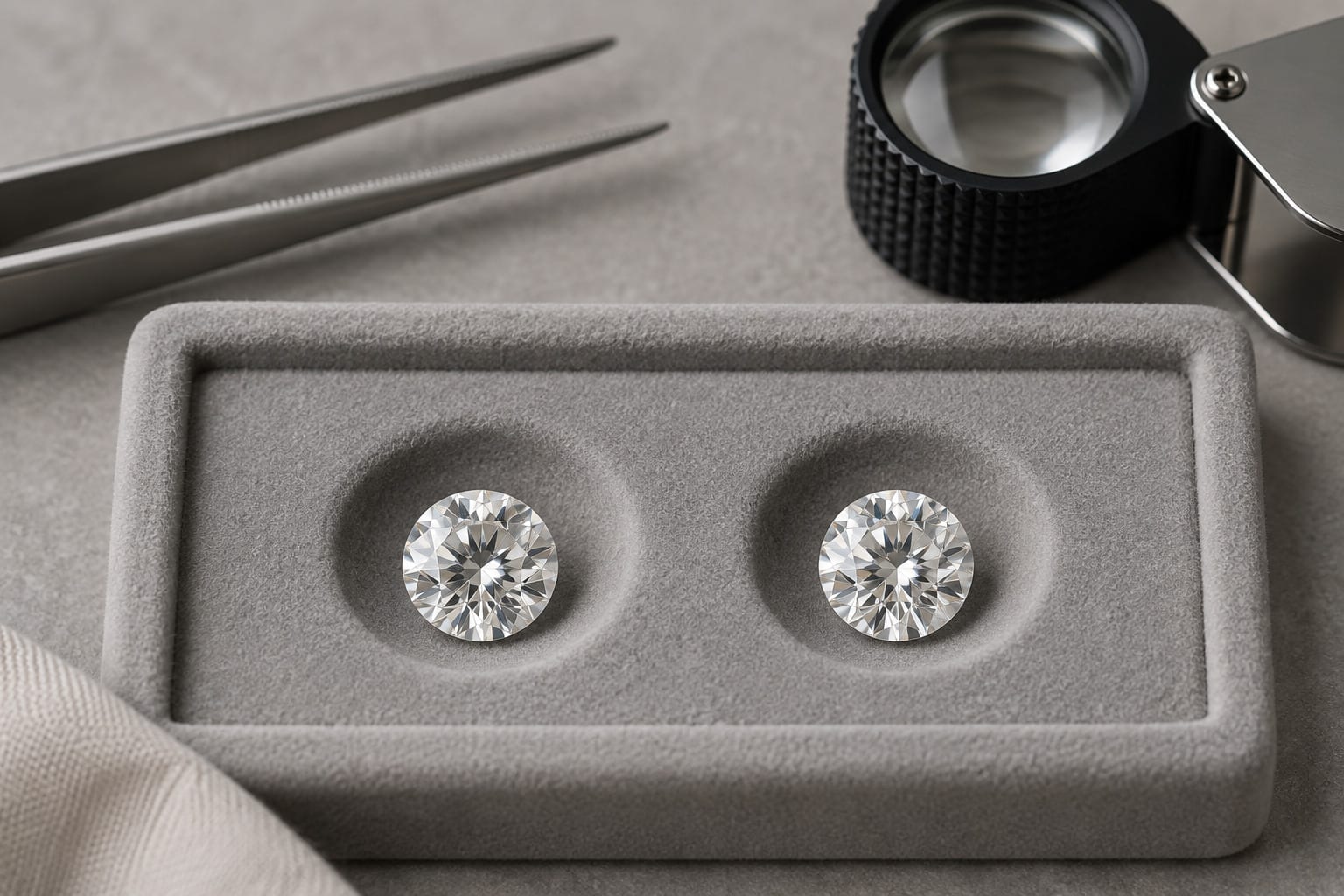
See Colour In A Finished Ring
Compare complete ring designs, where shape, setting and metal provide the context a loose grade cannot show on its own.
What Changes the Visible Difference
1. Diamond Size
As a diamond becomes larger, there is more material through which light can travel. Any body colour may therefore become easier to observe, particularly from an angle or through the side of the stone.
This does not create a fixed carat threshold at which G suddenly looks tinted. Cut and shape still matter. It simply means that colour deserves closer attention as physical size increases.
2. Shape and Cut Style
A well-cut round brilliant returns a great deal of light. Its brightness and pattern of reflections can make a small colour distinction less conspicuous when viewed face-up.
Step cuts, such as emerald and Asscher shapes, behave differently. Their broader facets and more open visual structure may reveal body colour more readily. Elongated brilliant shapes can also concentrate colour in particular areas, depending on their individual proportions and light return.
These are tendencies, not guarantees. Compare the actual stones rather than assuming every diamond of one shape will behave identically.
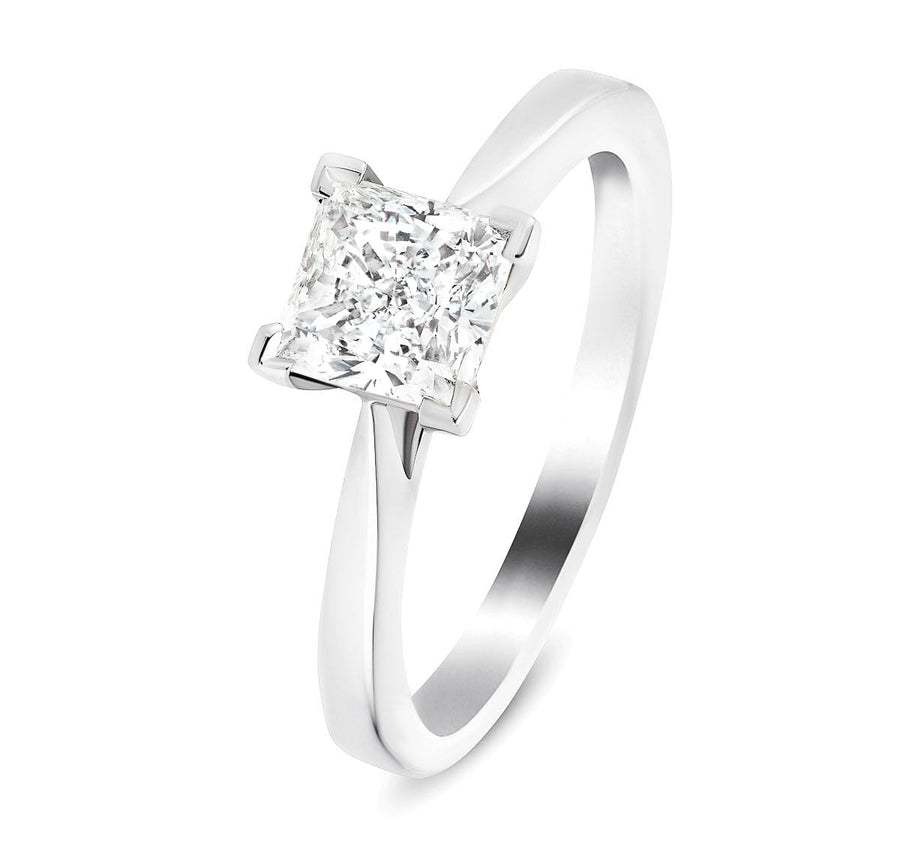
G Colour In A Princess Solitaire
Grace Lab Princess Diamond Solitaire Engagement Ring 0.50ct G/VS 18k White Gold
This 0.50ct G/VS princess-cut solitaire is set in 18k white gold. It is a useful finished example of a near-colourless stone in a cool metal, but it is not a substitute for comparing similar D and G diamonds under the same lighting.
3. Setting Metal
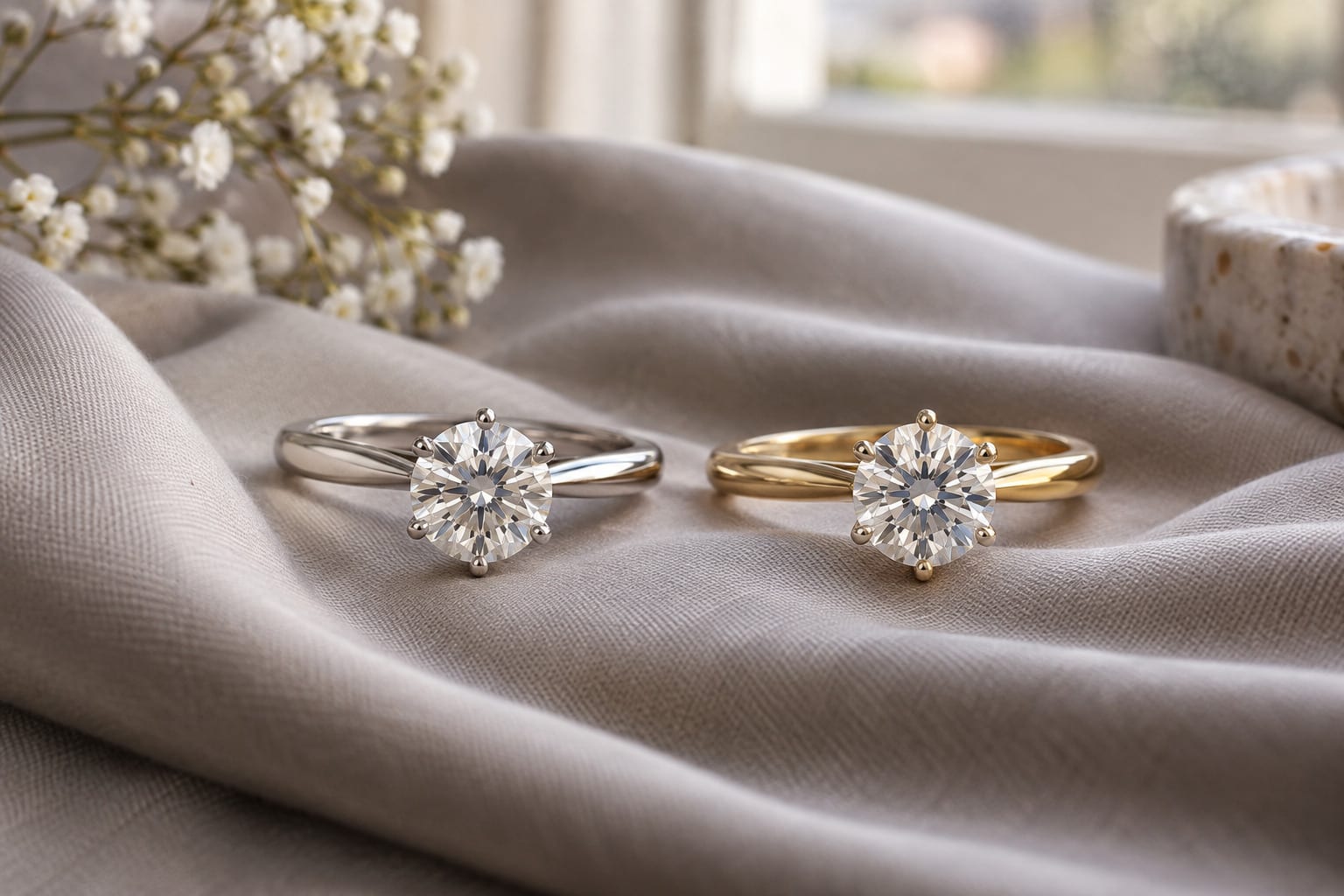
White gold and platinum create a cool, bright frame around the diamond. That can support the crisp appearance of a D, but it may also provide a white reference against which a hint of warmth is easier to detect in some G stones.
Yellow and rose gold create a warmer overall composition. This can make the distinction between D and G feel less important, especially where the stone is surrounded by warm metal. Reflections from the setting can also influence what you think you are seeing.
A yellow-gold band with white-metal claws or a white-metal head can keep a cooler frame immediately around the diamond. If metal is still undecided, our guide to choosing the right gold colour explains the wider visual and practical trade-offs.
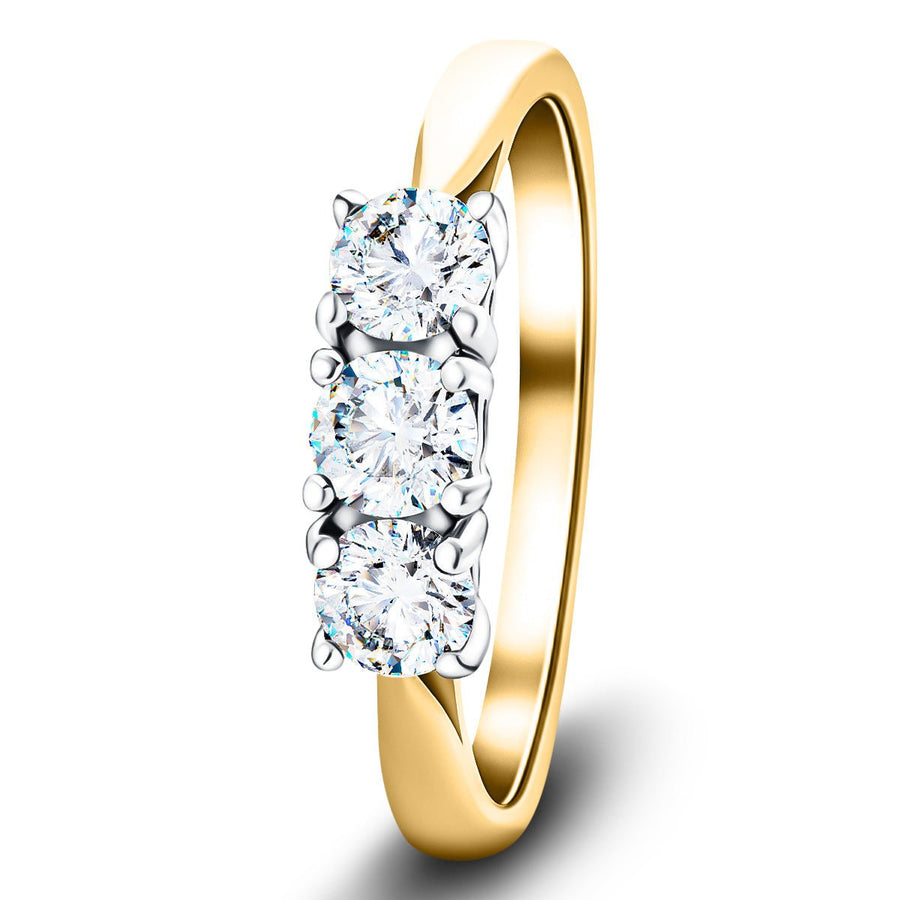
D Colour In Yellow Gold
Molly Three Stone Lab Diamond Ring 0.60ct D/VVS in 9k Yellow Gold
This 0.60ct total three-stone ring uses D/VVS round lab diamonds in 9k yellow gold. It shows how a colourless grade can still sit within a warm overall composition because the metal changes the visual context, not the laboratory grade.
4. Halo and Accent Stones
A solitaire lets you judge one main diamond against its setting. A halo, trilogy or diamond-set shoulder introduces other stones, which can make colour relationships more noticeable.
The important requirement is visual harmony. Accent diamonds do not always need the exact letter grade of the centre stone, particularly because small stones behave differently from a large centre diamond. They should be selected and matched so that the finished piece looks coherent.
Small accent stones are often supplied and described as a matched quality range rather than receiving an individual laboratory report each. That does not mean they were ungraded, carelessly chosen or inherently poor quality.
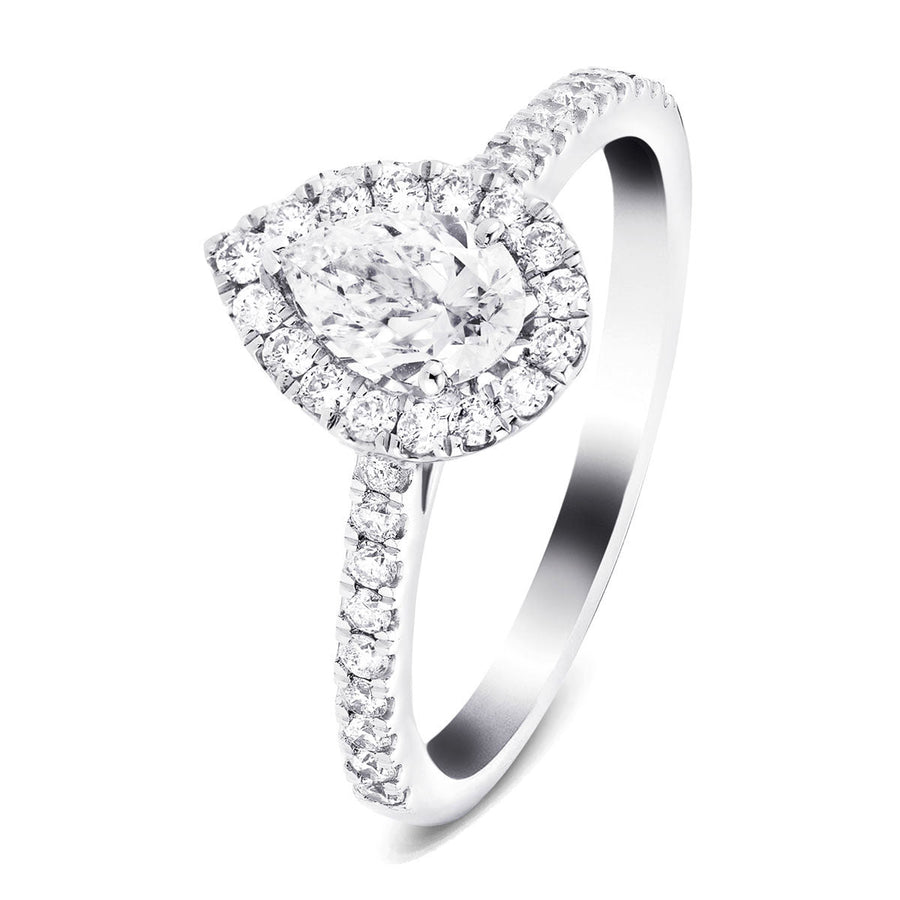
A G Centre With D Accents
Nancy Lab Diamond Halo Pear Engagement Ring 0.85ct G/VS in 9k White Gold
This 0.85ct total pear halo combines a 0.50ct G/VS centre with 0.35ct of D/VVS side diamonds in 9k white gold. It is a useful real-world example of why harmony in a finished design matters more than insisting that every stone carry the same letter grade.
How to Compare D and G Properly
A meaningful comparison controls as many other variables as possible. Try to compare diamonds with:
- the same shape
- similar dimensions and carat weight
- comparable cut quality and proportions
- similar clarity
- the same background and lighting
- the same viewing angle
Make sure both stones are clean. View them face-up first, then at a slight angle and from the side. Look under ordinary indoor light and indirect daylight, not only beneath intense jewellery-shop spotlights.
Do not rely on two unrelated product photographs. Camera exposure, white balance, magnification and image processing can easily create or conceal an apparent colour difference.
If you are buying remotely, ask whether comparable videos can be supplied under the same conditions. Then consider the return arrangements in case the diamond looks different in your own environment.
The same discipline applies when judging the whole stone rather than colour alone. Our guide to comparing lab diamonds provides a broader comparison framework.
Check What the Grading Report Covers
Before making a D-versus-G decision, confirm that the report attached to the diamond actually uses a letter colour grade.
Laboratories and report types do not always present information in the same format. Some reports provide detailed D-to-Z colour grades, while other assessments may use broader descriptions. Read the document attached to the stone and ask the jeweller to explain any terminology that is unclear.
Check that the report number identifies the centre diamond being offered and, where applicable, corresponds with the stone's laser inscription. Our 2026 lab diamond grading guide explains why report formats can differ and what UK buyers should check.
A report for the centre diamond should not be presented as though it separately grades every accent stone in the ring. Unless the documentation expressly says otherwise, treat it as information about the identified stone.
When D or G Is the Rational Choice
D Colour Makes Sense When
- You want the highest colour grade as a preference in its own right.
- You can see and value the cooler appearance in a fair comparison.
- You are choosing a larger diamond or a cut style that reveals body colour more readily.
- The ring uses a cool white setting and very high-colour accents.
- Paying the difference does not require sacrificing cut, proportions or the setting you prefer.
There is nothing irrational about valuing the grade itself. Jewellery is both visual and personal. If knowing that your diamond is D colour adds lasting satisfaction, that benefit is real to you.
G Colour Makes Sense When
- The diamond looks white and balanced in its intended setting.
- You would rather direct more of the budget towards cut, size or craftsmanship.
- You are choosing a lively brilliant cut that performs strongly face-up.
- The design uses yellow or rose gold and the overall warmth suits your taste.
- You cannot identify a meaningful benefit from D under realistic viewing conditions.
G is not a poor grade or a disguised defect. It is a near-colourless grade that can produce a very white-looking finished ring when the stone and setting work well together.
A Simple Decision Process
- Compare the complete diamonds, not colour grades in isolation.
- Remove options with weak cut, unattractive proportions or an unsuitable setting.
- Compare the remaining D and G stones under consistent conditions.
- Decide whether the visible difference, the report grade or both are worth the price difference to you.
If D still looks or feels clearly preferable, choose D. If the G gives you the appearance you want and leaves room for a better cut, larger size or stronger setting, choose G.
The right answer is the one that survives the move from the grading report to the finished ring.
Compare Lab Diamond Engagement Rings
See how different shapes, sizes and settings bring the complete colour decision together.
Frequently Asked Questions
Is a D colour lab diamond always visibly whiter than a G?
D has the higher colour grade and is classified as colourless, while G is near-colourless. The difference may be visible in a controlled side-by-side comparison, particularly with larger stones or certain cut styles. It may be much less obvious face-up in a finished ring. The actual stones, setting and lighting determine how strongly you experience it.
Is G colour good enough for a lab diamond engagement ring?
G can be an excellent choice for an engagement ring. It sits at the top of the near-colourless range and may look bright and white in normal wear, particularly when the diamond is well cut. "Good enough" is not quite the right test. Ask whether the particular G diamond looks right in the chosen setting and offers the balance you want.
Does yellow gold make a G colour diamond look yellow?
Not automatically. Yellow gold creates a warmer visual environment and can reflect into the diamond, especially when yellow-gold claws surround it. That warmth may make the difference between D and G feel less important, but results vary by design. White-metal claws or a white-metal head can maintain a cooler frame around the stone.
Must halo or side stones have the same colour grade as the centre?
No. They should look harmonious, but an exact letter-for-letter match is not always necessary. Small accent diamonds return light differently from a larger centre stone and may be selected from an appropriate quality range. Judge the finished relationship and ask the jeweller how the accents have been matched.
Does the centre diamond's grading report cover every diamond in the ring?
Usually not. A laboratory report normally applies to the specific diamond identified by its report number and, where present, laser inscription. Accent stones may be described collectively or selected from a matched parcel without individual reports. The absence of separate reports does not itself mean those stones were carelessly selected or are poor quality.