
Most diamond necklaces are chosen on a jewellery page and worn in front of a wardrobe.
That small gap explains quite a few disappointing purchases.
A necklace may look perfectly elegant against a plain product background, yet feel too delicate with your favourite clothes, too formal for your normal routine or simply unlike you once it is fastened around your neck.
The solution is not to begin with carat weight, diamond grade or even price. Begin with the effect you want the necklace to create.
Should it add a quiet point of light? Give a simple outfit a focal point? Bring warmth near your face? Or turn a plain black dress into an evening look without requiring much else?
Once you know that, choosing the diamond, setting, metal and chain becomes much easier.
A style-led guide to choosing a diamond necklace that works with your wardrobe, neckline and everyday jewellery habits.
Table Of Contents
- Start With The Effect, Not The Specification
- The Barely-There Solitaire
- When You Want The Diamond To Be Seen
- Let Your Neckline Do Some Of The Work
- Metal Colour Changes The Mood
- Shape Gives A Pendant Personality
- Choose Sparkle That Suits The Way You Move
- The Tennis Necklace Is Not Just For Evening
- Layering Without Losing The Diamond
- Scale And The Full-Length Mirror Test
- Think About Your Real Jewellery Habits
- What To Check Before You Buy
- Choose The Necklace You Can Already Picture Wearing
- Frequently Asked Questions
Start With The Effect, Not The Specification
Before comparing individual necklaces, decide what job yours should do.
You may want:
- a subtle necklace that works almost every day
- a visible solitaire that becomes part of your signature look
- a decorative pendant with shape and personality
- a modern design that gives simple clothes more structure
- a complete line of diamonds that changes the whole outfit
These are different style decisions. None is automatically better than another.
A small solitaire can look beautifully deliberate with a crisp white shirt, a fine knit or a simple scoop-neck top. A larger bezel-set diamond can create a cleaner, more contemporary focal point. A pear-shaped halo feels softer and more decorative. A tennis necklace produces an entirely different effect because the sparkle continues around the neckline rather than sitting at one central point.
Ask yourself one useful question:
Do I want people to notice the necklace, or do I want the necklace to make everything else look slightly better?
Both are excellent answers.
The Barely-There Solitaire
A delicate diamond solitaire is one of the easiest necklaces to live with.
It does not compete with a patterned dress, a tailored jacket or your everyday earrings. It adds light without making the outfit feel dressed up. It can also remain on when your clothes change from office-friendly to relaxed, which is exactly why these necklaces tend to be worn so often.

The style works particularly well with:
- open shirt collars
- crew-neck T-shirts
- fine cashmere or lightweight knits
- simple dresses
- other restrained jewellery
The important thing is not to expect a very small pendant to behave like a statement piece. Its appeal lies in the opposite direction. It is a detail noticed at conversational distance rather than from across a room.
This is also where chain length matters. The diamond should sit within a clear area of skin or fabric rather than disappearing beneath a neckline. Our practical guide to choosing the correct necklace length explains where common chain lengths usually fall and how body proportions can change the result.
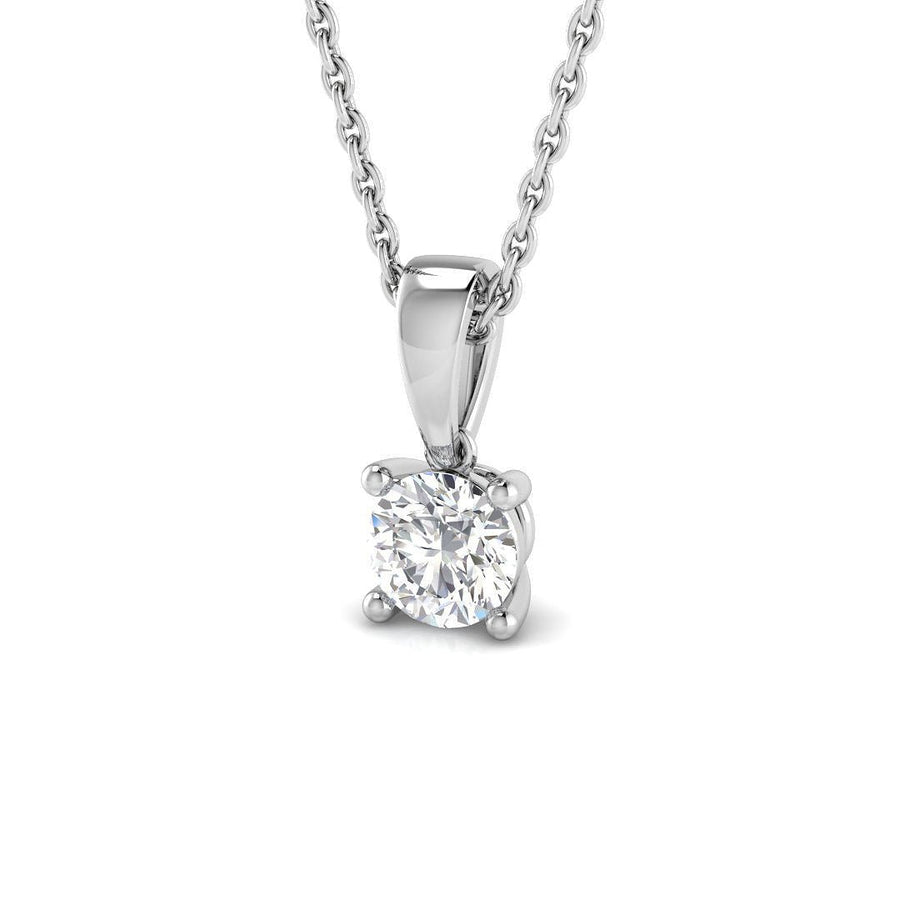
A delicate white-gold solitaire gives the idea in its purest form: one round diamond, a fine chain and very little visual interruption.
Everyday Style
Lab Diamond Solitaire Pendant Necklace 0.25ct in 9k White Gold
A restrained round solitaire that illustrates the barely-there look clearly.
View NecklaceWhen You Want The Diamond To Be Seen
There is a point at which a solitaire stops being a glint and becomes a focal point.
That does not necessarily mean choosing the largest diamond available. Setting style, metal colour and the amount of visible metal around the stone can all change its presence.
A bezel, sometimes called a rub-over setting, surrounds the diamond with a narrow rim of metal. It gives the pendant a smooth outline and a slightly more graphic character than a traditional claw setting.
In yellow gold, the contrast becomes stronger. The diamond remains bright, but the warm frame makes the whole piece more visible against the skin and gives it a confident, modern feel.
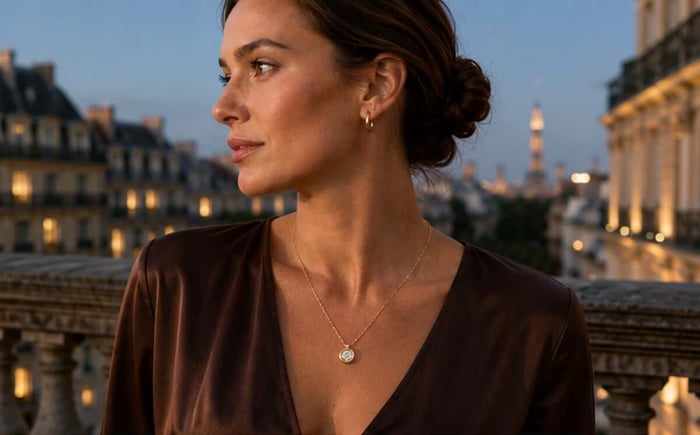
This style is easy to wear with:
- black, navy, chocolate and deep green
- open-neck dresses
- silk or satin blouses
- tailored evening separates
- clean monochrome outfits
It is also a good option for someone who likes simple jewellery but does not want it to disappear.
A one-carat bezel-set pendant demonstrates how a single diamond can have presence without becoming ornate.
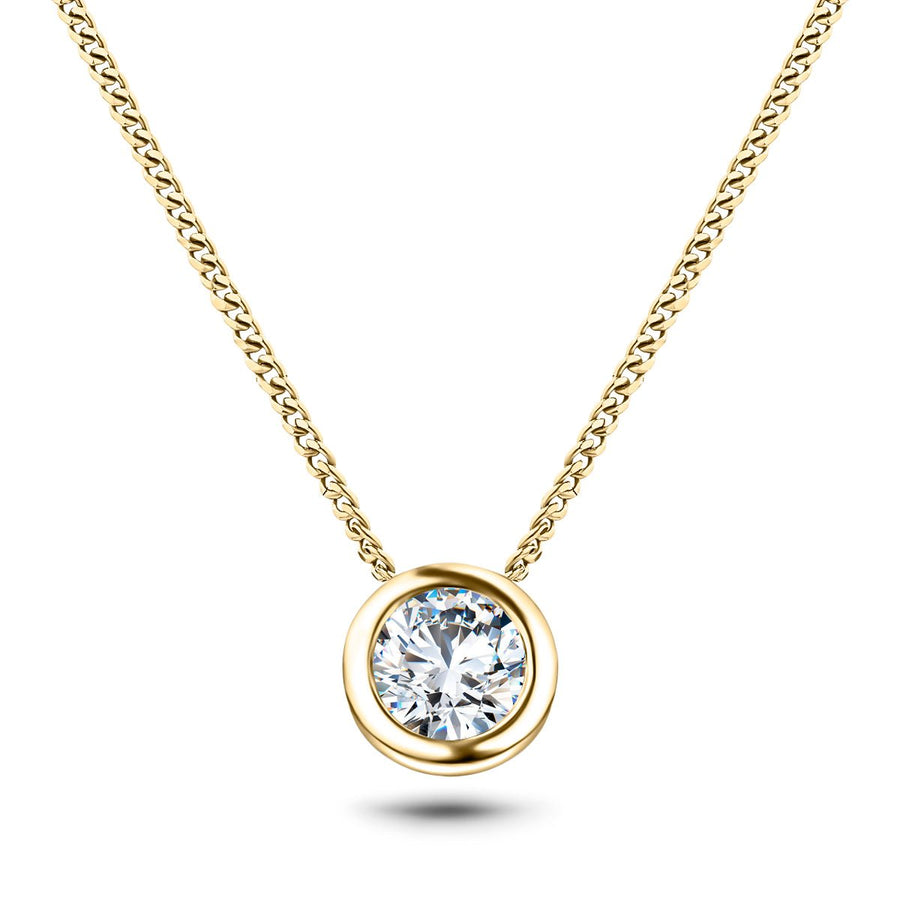
Modern Focal Point
Lab Diamond Solitaire Bezel Necklace Pendant 1.00ct G/VS in 9k Yellow Gold
A warm, graphic solitaire with enough scale to anchor a simple outfit.
View NecklaceLet Your Neckline Do Some Of The Work
A necklace is never worn in isolation. Its nearest neighbour is usually the neckline of your clothes.
The easiest combinations create a little visual space around the jewellery.
A V-neck naturally points towards a pendant. A scoop neck gives a round or pear-shaped design room to sit within the curve. An open shirt collar creates a relaxed frame for a solitaire. A square neckline can make a clean, geometric pendant look particularly intentional.
Higher necklines require a slightly different approach. A pendant worn over a plain knit may need more scale or a longer chain so that it does not look lost. Alternatively, a tennis necklace can sit closely above the neckline and create a bright border between the clothing and the face.
There is no universal rule saying that a pendant must follow the exact shape of the neckline. In fact, a little contrast often looks better. A round solitaire can soften an angular square neck, while a pear-shaped pendant can add length to a wide scoop neckline.
The practical test is simple: put on the clothes you expect to wear most frequently and look at the available space. That space tells you more than a jewellery photograph ever can.
Metal Colour Changes The Mood
White, yellow and rose gold can make the same diamond design feel surprisingly different.
White gold creates the most seamless transition between the chain, setting and diamond. The result is crisp, bright and understated. It works naturally with cool neutrals, black, navy, grey and other white-metal jewellery.
Yellow gold introduces warmth and contrast. It can make a simple pendant feel more noticeable, particularly against black, cream, brown, olive and rich jewel tones.
Rose gold has a softer effect. It works particularly well with muted colours, blush tones, warm grey, taupe and relaxed layered styling.
Your skin tone may influence the result, but it need not dictate it. Your wardrobe and the jewellery you already own are often more useful guides.
Someone who wears yellow-gold earrings, watch details and rings most days will probably find a yellow-gold necklace easier to integrate. Someone whose wardrobe is built around black, white and cool grey may prefer the clean effect of white gold.
For a useful wider comparison, see our guide to the precious metals used to create jewellery.
Find Your Starting Point
Browse by style and metal colour. Begin with the necklaces that resemble something you would already wear, then compare the details.
Explore Diamond NecklacesShape Gives A Pendant Personality
A round solitaire is familiar, balanced and easy to style, but it is not the only answer.
Shape changes how a pendant relates to your clothes and how much visual space it occupies.
A pear shape creates a gentle downward line. It can feel romantic without becoming old-fashioned and works especially well with V-necks, open collars and dresses with a clear central neckline.
A halo adds a frame of smaller diamonds around the centre stone. This increases the visible outline and gives the pendant a more decorative finish. It is useful when you want the necklace to look substantial without relying entirely on one large central diamond.
A paperclip pendant creates a different mood again. Its elongated, graphic shape feels less traditional and can give a plain outfit structure. It works particularly well with tailored clothing, minimal dresses and strong blocks of colour.
The two styles are not competing versions of the same necklace. One is soft and decorative. The other is clean and architectural.
A pear-shaped halo illustrates the romantic approach.
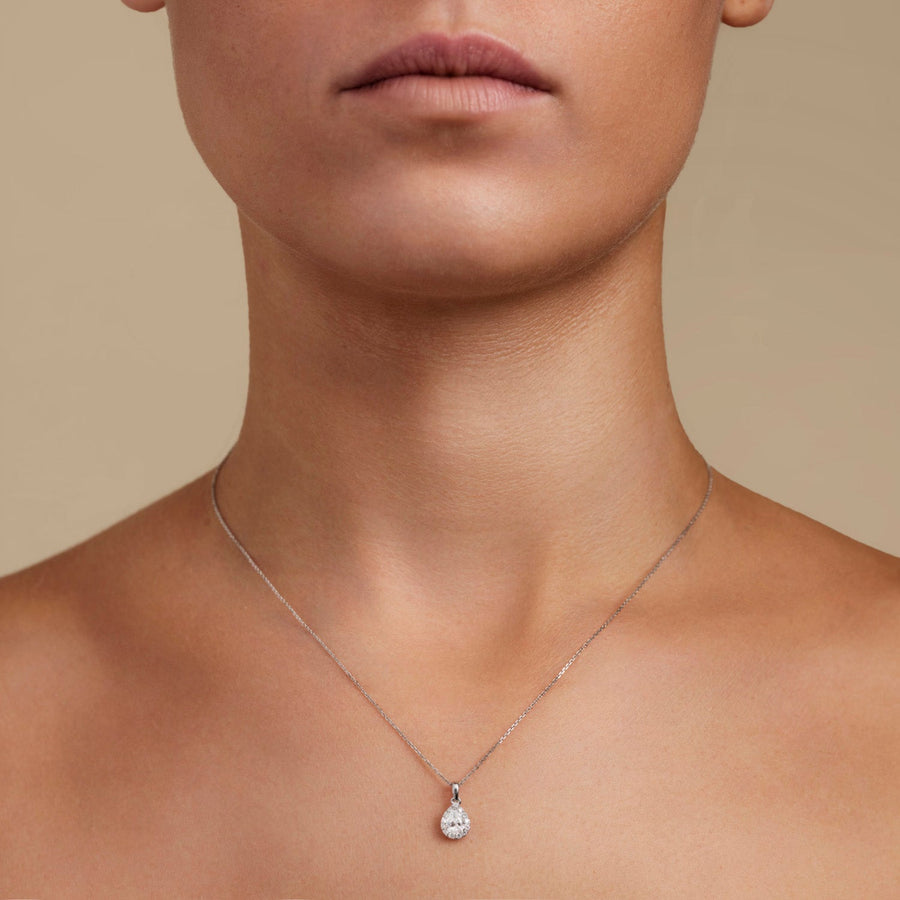
Softly Decorative
Lab Diamond Pear Halo Pendant Necklace 0.50ct D/VVS in 9k White Gold
The elongated pear outline and halo create a clearly visible, feminine focal point.
View Necklace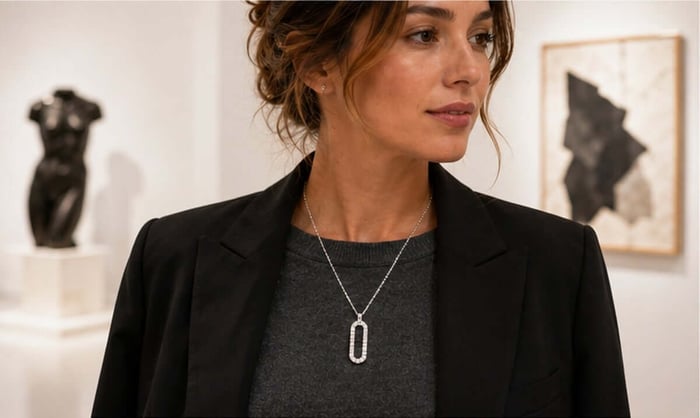
A pavé-set paperclip pendant shows how diamonds can be used in a more graphic, fashion-led design.
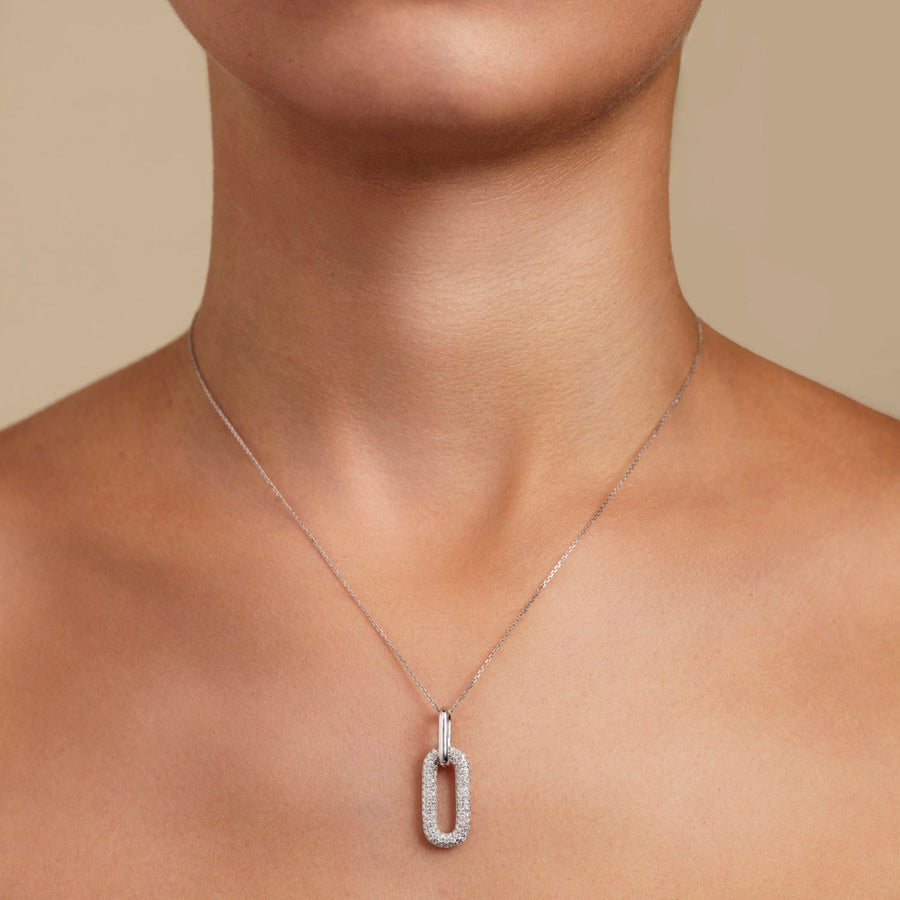
Graphic And Modern
Pavé Set Lab Diamond Paperclip Pendant Necklace 0.70ct in 9k White Gold
An elongated pavé loop with a fashion-led, architectural character.
View NecklaceChoose Sparkle That Suits The Way You Move
Diamond sparkle is affected by cut, setting and light, but the way a necklace moves also matters.
A freely suspended solitaire catches light as you turn your head or move through a room. A pavé pendant produces many smaller flashes. A halo spreads the sparkle across a wider visible area. A tennis necklace creates a continuous sequence of reflections.
This means two necklaces with similar total diamond weights can produce completely different impressions.
For style purposes, think less about which one sparkles “most” and more about the kind of sparkle you enjoy.
Do you like one clear point of light? A textured shimmer? A bright outline around a central shape? Or a complete line of diamonds?
For more on what creates brilliance, fire and movement, our guide to diamond sparkle in white and yellow gold adds useful context.
The Tennis Necklace Is Not Just For Evening
A tennis necklace has obvious impact, but it does not need a red carpet, a formal gown or a very special invitation.
The most modern way to wear one is often with clothes that are simpler than the jewellery. British Vogue has made much the same case for the tennis necklace as an everyday piece, showing how a continuous line of sparkle can elevate wardrobe basics rather than waiting for black tie.
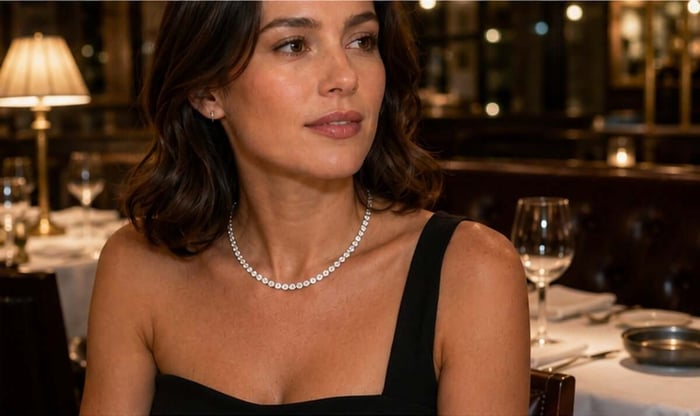
Try it with:
- a black crew-neck dress
- a white shirt with the collar open
- a dark strapless or square-neck top
- a fine black or charcoal knit
- a sharply cut trouser suit
The restraint of the clothing allows the line of diamonds to look confident rather than overdone.
For daytime, keep the rest of the jewellery uncomplicated. Small studs, a plain ring or a simple watch may be all that is needed. In the evening, the same necklace can take stronger earrings or a more polished outfit.
Diamond width also affects the mood. A fine tennis necklace can act almost like a bright thread around the neck. A heavier version becomes a central part of the look.
A 10-carat tennis necklace makes the high-impact version clear. Against simple clothing, the diamonds provide the detail rather than merely adding to it.
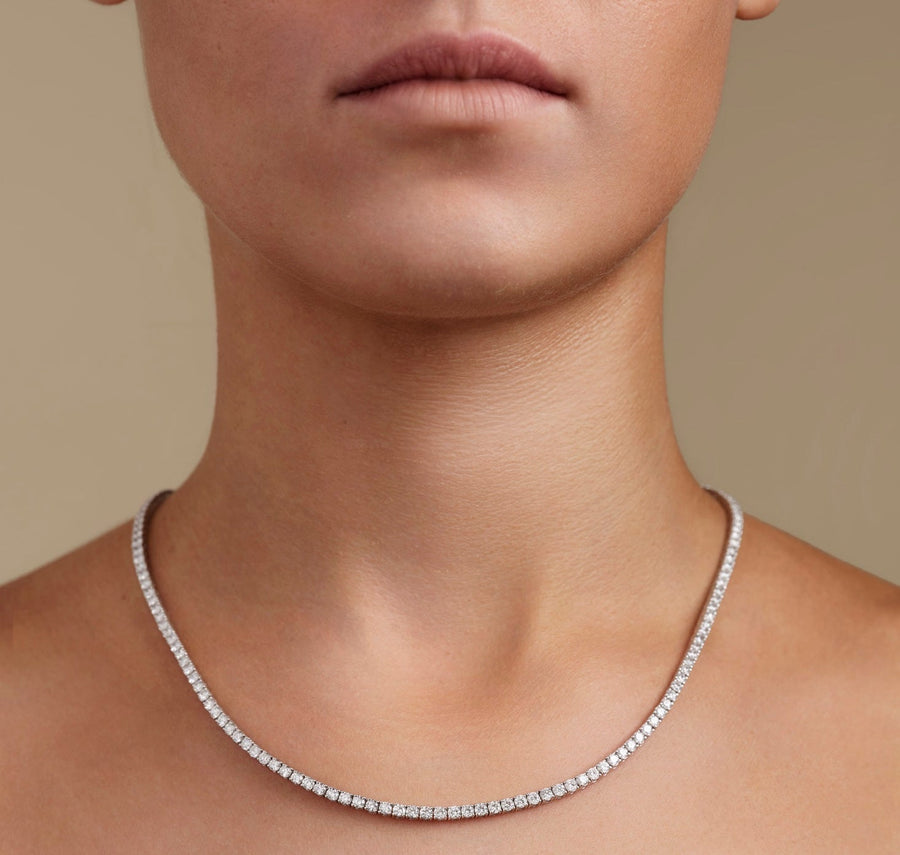
Continuous Sparkle
Lab Diamond Tennis Necklace 10ct D/VVS Quality Set in Silver
A full line of diamonds that turns restrained clothing into a complete look.
View NecklaceOur more detailed guide to lab-grown diamond tennis necklaces covers carat weight, construction and customisation.
Layering Without Losing The Diamond
Layering works best when each necklace has its own space.
The usual mistake is to combine several chains of almost identical length. They overlap, twist together and make the central diamond harder to see.
The strongest everyday necklaces should work both alone and as part of a combination. That same principle runs through Harper’s Bazaar’s selection of designers’ favourite everyday necklaces, where versatility, personal character and easy layering matter more than following one rigid formula.
A simpler approach is to choose one anchor piece and build around it.
For example:
- a short plain chain above a solitaire pendant
- a delicate diamond pendant above a longer paperclip design
- a close-fitting tennis necklace with no second diamond focal point
- a small pendant paired with a longer, unadorned chain
Two necklaces are often enough. Three can work, but only when their lengths and visual weights are clearly different.
Metal mixing is perfectly acceptable, although repeating one element helps the combination feel deliberate. That might be a shared diamond shape, a similar chain texture or one metal colour appearing elsewhere in your outfit.
Layering should make the main necklace more interesting, not make it harder to find.
Scale And The Full-Length Mirror Test
Jewellery is usually examined at very close range. Clothes are not.
That difference can distort your judgement.
A pendant that looks substantial in your hand may seem delicate once it is worn with a jacket, patterned dress or wide neckline. A necklace that feels bold in a close-up photograph may look perfectly balanced when seen as part of the whole outfit.
Before deciding what suits you, consider three viewing distances:
Close up: Can you see and appreciate the diamond and setting?
Conversational distance: Does the necklace add something noticeable near your face?
Full outfit: Does it balance the clothing, or does it disappear or dominate?
This is also why carat weight is only part of the story. A halo or elongated pendant may cover more visible space than a round solitaire of similar weight. A bezel adds a metal outline. A tennis necklace distributes its diamonds across the neckline rather than concentrating them in one place.
The best scale is the one that produces the effect you wanted at the beginning.
Think About Your Real Jewellery Habits
A necklace can be beautiful and still be wrong for your life.
Someone who changes jewellery every morning may enjoy several distinctive pendants. Someone who prefers to fasten one necklace and leave it on will probably value comfort, versatility and a design that works with most of the wardrobe.
Consider:
- how often you expect to wear it
- whether you tend to dress casually or formally
- which necklines you wear most
- whether you layer necklaces
- how much jewellery you normally wear at once
- whether you prefer subtle detail or a visible focal point
The idea of wearing diamonds as part of ordinary life is explored further in The Rise of Everyday Diamonds.
There is no prize for choosing the most impressive necklace if it spends most of its time in a box. The better choice is the one you instinctively reach for.
What To Check Before You Buy
Style should lead the decision, but a few practical checks protect it.
Confirm the chain length and whether alternatives are available. Look at the pendant dimensions as well as the diamond weight. Check whether the chain is included and whether its weight feels appropriate for the pendant.
Consider how the diamond is set. Claw settings allow plenty of the stone to remain visible, while bezel settings give a smoother outline and more enclosed feel. Pavé designs rely on multiple smaller diamonds and create a different texture from a solitaire.
Check the metal, hallmarking information, returns policy and any jewellery guarantee. For larger or more valuable pieces, think about insurance after purchase.
Our earlier guide to choosing a diamond pendant provides more detail on settings and practical buying considerations.
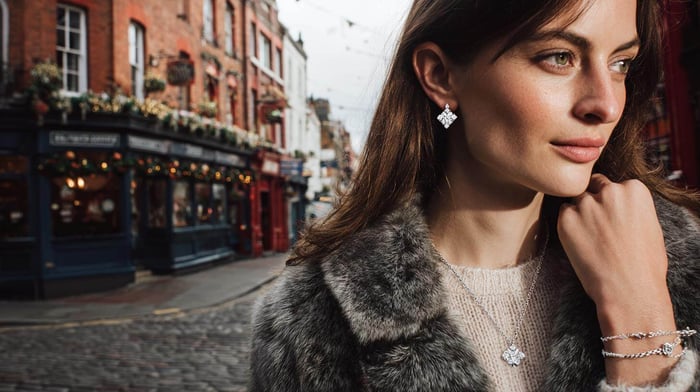
Finally, look at the necklace on a person whenever possible. Product photography is useful for detail, but an image showing the piece in wear is much better for judging scale.
Choose The Necklace You Can Already Picture Wearing
The right diamond necklace should make sense before it arrives.
You should be able to imagine the clothes it will work with, the occasions when you will reach for it and whether it will quietly finish an outfit or become the reason the outfit works.
Begin with the visual effect.
Then choose the shape, scale, setting, metal and chain that create it.
Find The Necklace That Fits Your Wardrobe
Look beyond the isolated product photograph. Picture each design with your jackets, dresses, shirts and favourite necklines. That is usually where the right necklace reveals itself.
Explore The CollectionFrequently Asked Questions
What type of diamond necklace is the most versatile?
A simple round solitaire is usually the easiest to wear with different outfits. A restrained pendant on a 16- or 18-inch chain can work with shirts, dresses, T-shirts and fine knitwear.
What size diamond should I choose for a necklace?
Choose according to the effect you want rather than carat weight alone. A smaller diamond creates a subtle point of light, while a larger stone, halo or bezel setting gives the necklace more visible presence.
Should my necklace match my earrings and rings?
They do not need to be an exact set. Repeating one element, such as metal colour, diamond shape or overall level of detail, is usually enough to make the jewellery feel connected.
Can I wear a diamond necklace every day?
Yes. Solitaires and other simple pendants are particularly easy to wear regularly. Check the chain, clasp and setting periodically, and remove the necklace where it could be pulled, knocked or exposed to unsuitable chemicals.
Which neckline is best for a diamond pendant?
Open collars, V-necks and scoop necks naturally frame pendants, but the ideal combination depends on chain length and scale. The pendant should sit in a clear area rather than competing with the edge of the clothing.
Is white gold or yellow gold better for a diamond necklace?
Neither is universally better. White gold creates a cool, seamless look, while yellow gold adds warmth and contrast. The colours you wear and the jewellery you already own are useful guides.