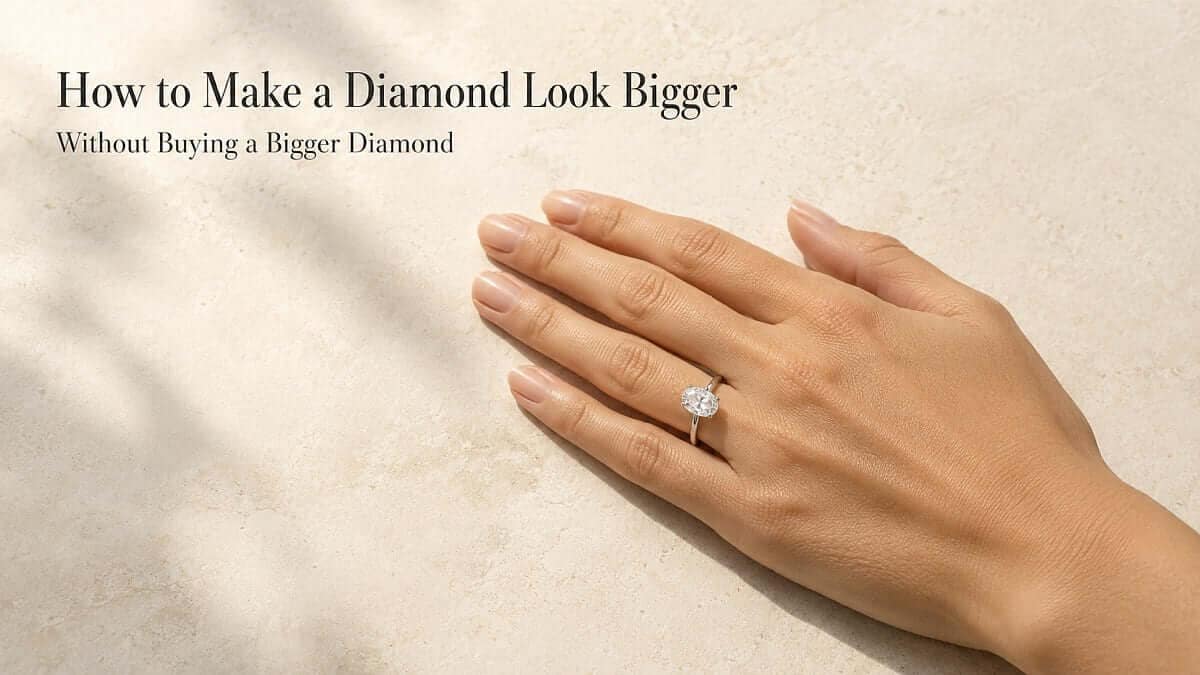

A bigger-looking diamond and a heavier diamond are not always the same thing. That distinction can save money, but only if it is used sensibly.
Lab-grown diamonds have changed what many buyers can afford. A budget that once required a fairly strict compromise on centre-stone size may now reach a noticeably larger diamond. Even so, no budget is limitless, and every extra fraction of a carat still competes with cut quality, setting, metal, craftsmanship and the rest of the ring.
The useful question is therefore not simply, 'How many carats can I buy?' It is, 'How much visual presence can I achieve without paying for weight that does not improve the ring?'
A practical guide to the diamond shapes, dimensions and settings that create greater visual presence.
Table Of Contents
- Carat Weight Is Not Face-Up Size
- Start With The Ring You Want To See
- Compare Millimetres, Not Just Carats
- Choose Shape For Spread And Style
- Do Not Buy Spread By Sacrificing Cut
- Let The Setting Increase Presence
- Use The Budget Where The Eye Notices It
- The Small Differences Near Round Numbers
- What To Check Before You Decide
- More Impact, Not Merely More Weight
- Find The Right Balance For Your Ring
- Frequently Asked Questions
Carat Weight Is Not Face-Up Size
The first distinction is the most important. GIA defines carat as a measure of weight, with one metric carat equal to 200 milligrams. It does not directly tell you how wide or long the diamond will look from above.
Two diamonds can have the same carat weight but different outlines and proportions. One may carry more of its weight below the girdle, where it is largely hidden once the diamond is set. Another may distribute more of that weight across the visible top surface. The second diamond can look larger even though the scales record the same weight.
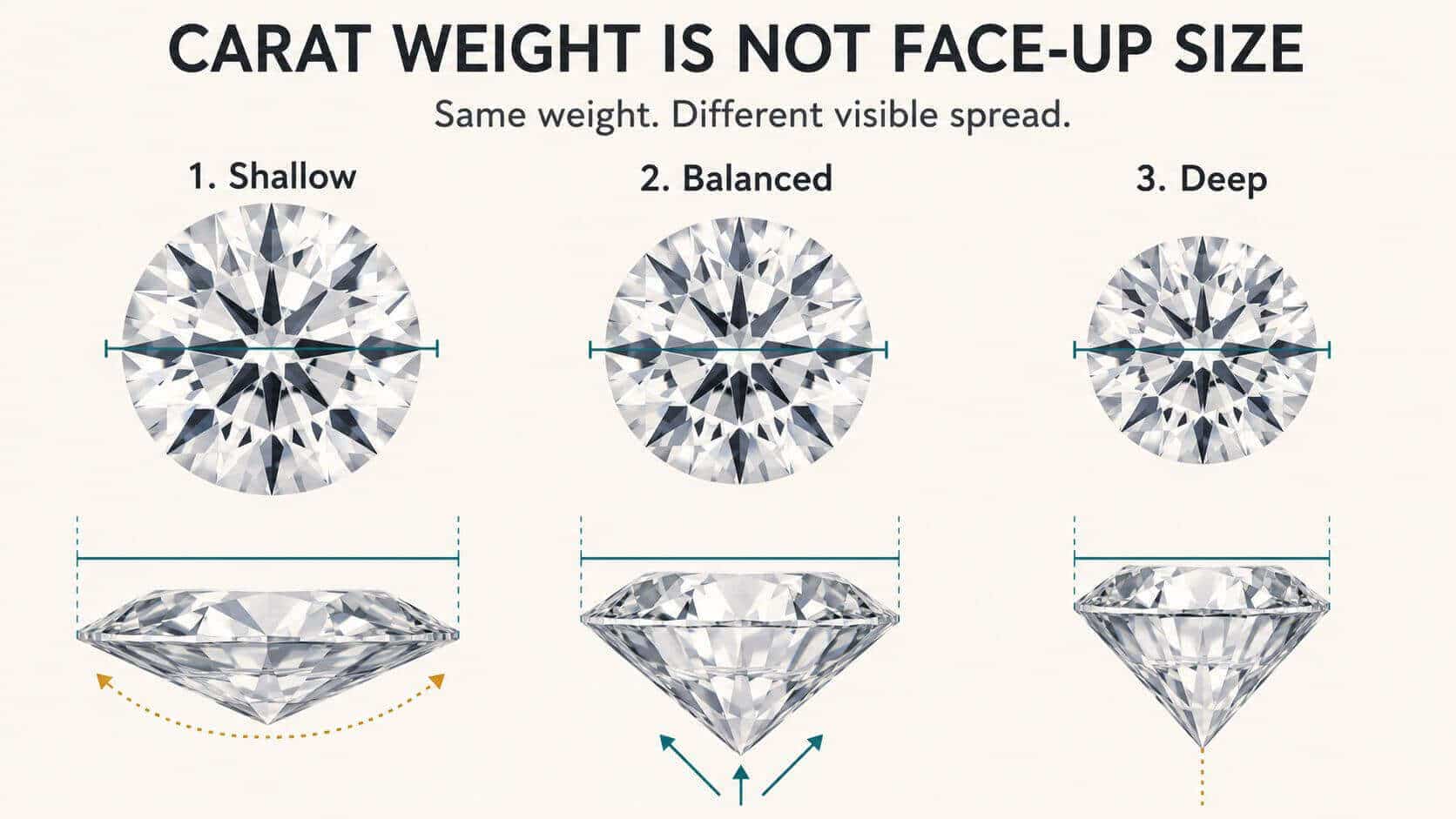
This is why our diamond size guide treats carat as one part of the picture rather than a complete description of size.
There is no deception involved here. Carat weight is doing exactly the job it is meant to do. Buyers simply ask it to answer a different question when they use it as shorthand for visible size.
Start With The Ring You Want To See
Before comparing specifications, decide what 'bigger' means to you. It might mean a centre stone that occupies more space on the finger. It might mean a ring with more sparkle across its full width. Or it might mean a clean solitaire with enough presence to feel substantial without looking overly decorative.
Those are different design briefs. A halo can make the overall diamond area look larger, but it does not make the centre stone itself larger. Side stones can broaden the composition, but they create a three-stone effect rather than the visual simplicity of a solitaire. An elongated centre stone may cover more finger length, but its personality will be different from a round brilliant.
Working this out early stops the search becoming a race towards the highest carat number available. That matters especially with lab-grown diamonds. Greater size may be attainable, but attainability is not the same as suitability. The aim is a ring that looks deliberately proportioned, not merely one that wins a specification contest.
Compare Millimetres, Not Just Carats
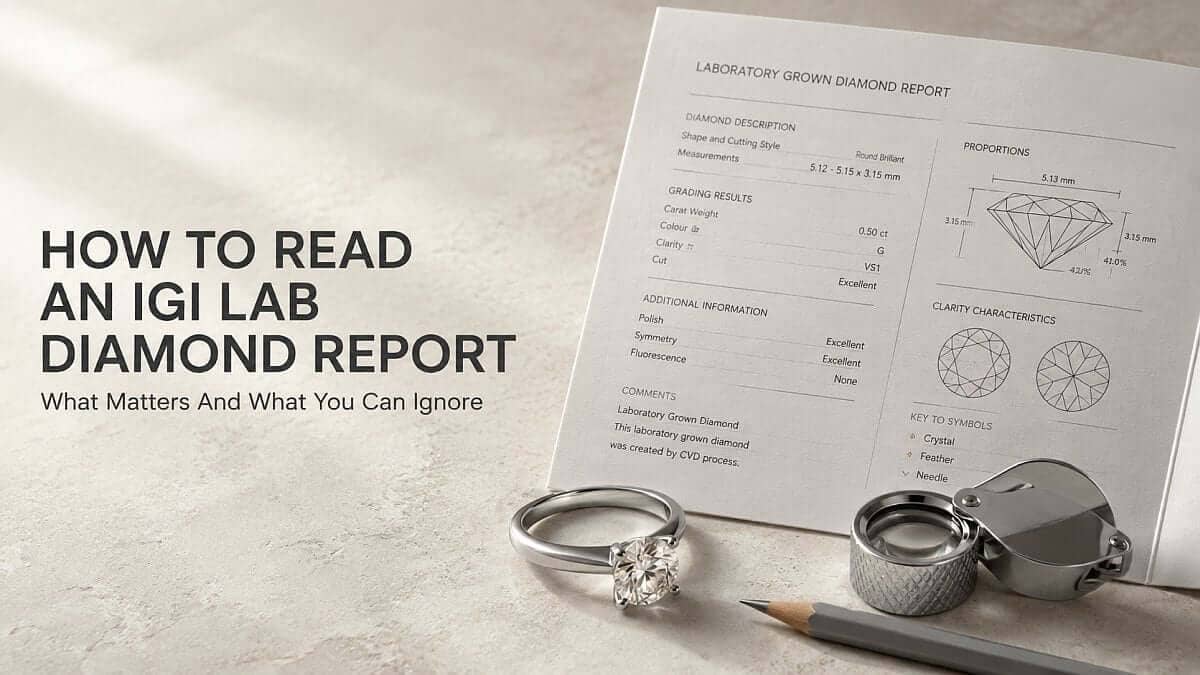
A diamond grading report normally records length, width and depth. IGI explains that these measurements reveal a diamond's physical spread and allow more meaningful comparison between stones of equal weight.
For a round diamond, look at the diameter. For an oval, pear, marquise, emerald or cushion shape, compare both length and width. A long stone that is unusually narrow may sound impressive on one measurement while looking less balanced in person, so the outline and length-to-width relationship still matter.
The practical method is straightforward: compare diamonds of a similar shape and weight, note their face-up measurements, and then view images or the stones themselves. Millimetres are useful evidence, not a substitute for judgement.
Choose Shape For Spread And Style
Shape changes how a diamond uses its weight and how the eye reads its outline. Elongated shapes often create more apparent size because they occupy more length on the finger. They can also make the finger appear longer, which adds to the impression of scale.
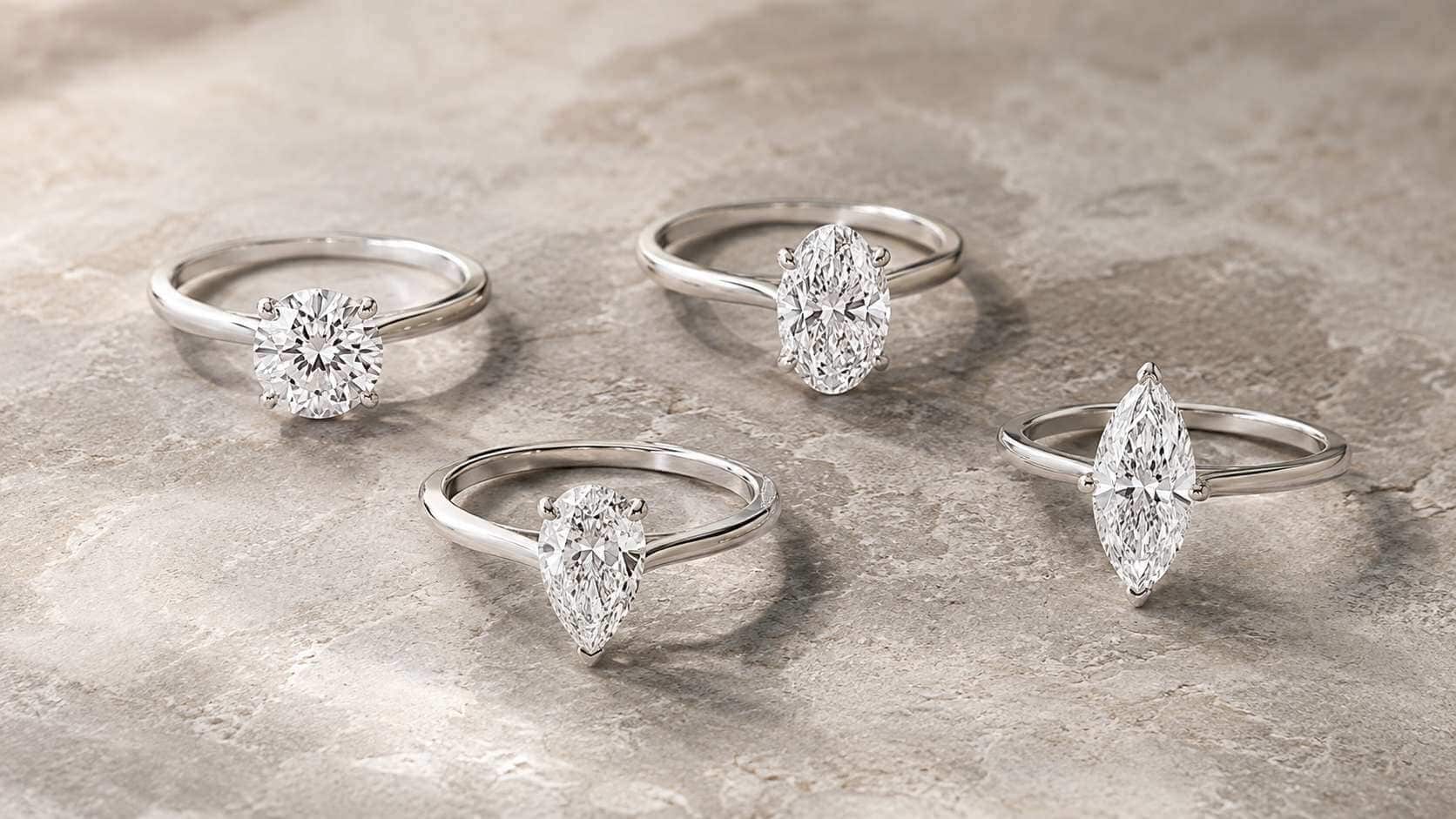
Oval diamonds combine an elongated outline with lively brilliance and tend to give good finger coverage.
Marquise diamonds usually create a particularly long face-up impression for their weight, although symmetry and the balance of the points matter.
Pear-shaped diamonds gain visual length from their tapered point and bring a more directional look.
Emerald cuts can present a broad, elegant surface, but their step-cut faceting produces a calmer kind of light return and makes proportion, colour and clarity choices especially noticeable.
Cushion and princess cuts can carry more weight in their depth, so the face-up measurements deserve careful checking rather than assumption.
Round brilliants may not always give the maximum outline per carat, but their balanced proportions, familiarity and strong light performance can make them look exceptionally lively.
Do Not Buy Spread By Sacrificing Cut
A diamond can be cut shallowly enough to increase its visible diameter, but that does not automatically make it a clever purchase. If the proportions weaken brightness, fire or scintillation, the diamond may look larger on paper and less compelling on the hand.
This is the boundary that prevents a useful buying strategy becoming a false economy. Apparent size matters, but light performance is part of what makes that size visible. A bright, well-proportioned diamond attracts the eye across its full outline. A poorly performing stone can look flat, dark or watery, which works against the effect you were trying to create.
For individually reported centre stones, an IGI laboratory-grown diamond report records the shape, measurements and 4Cs, with cut assessment for round brilliants and shape-specific assessment for fancy shapes. Read those elements together rather than treating any one number as decisive.
Let The Setting Increase Presence
Once the centre diamond is chosen, the setting determines how much visual work the complete ring does. This is often the most economical way to increase presence because the effect comes from composition rather than centre-stone weight alone.
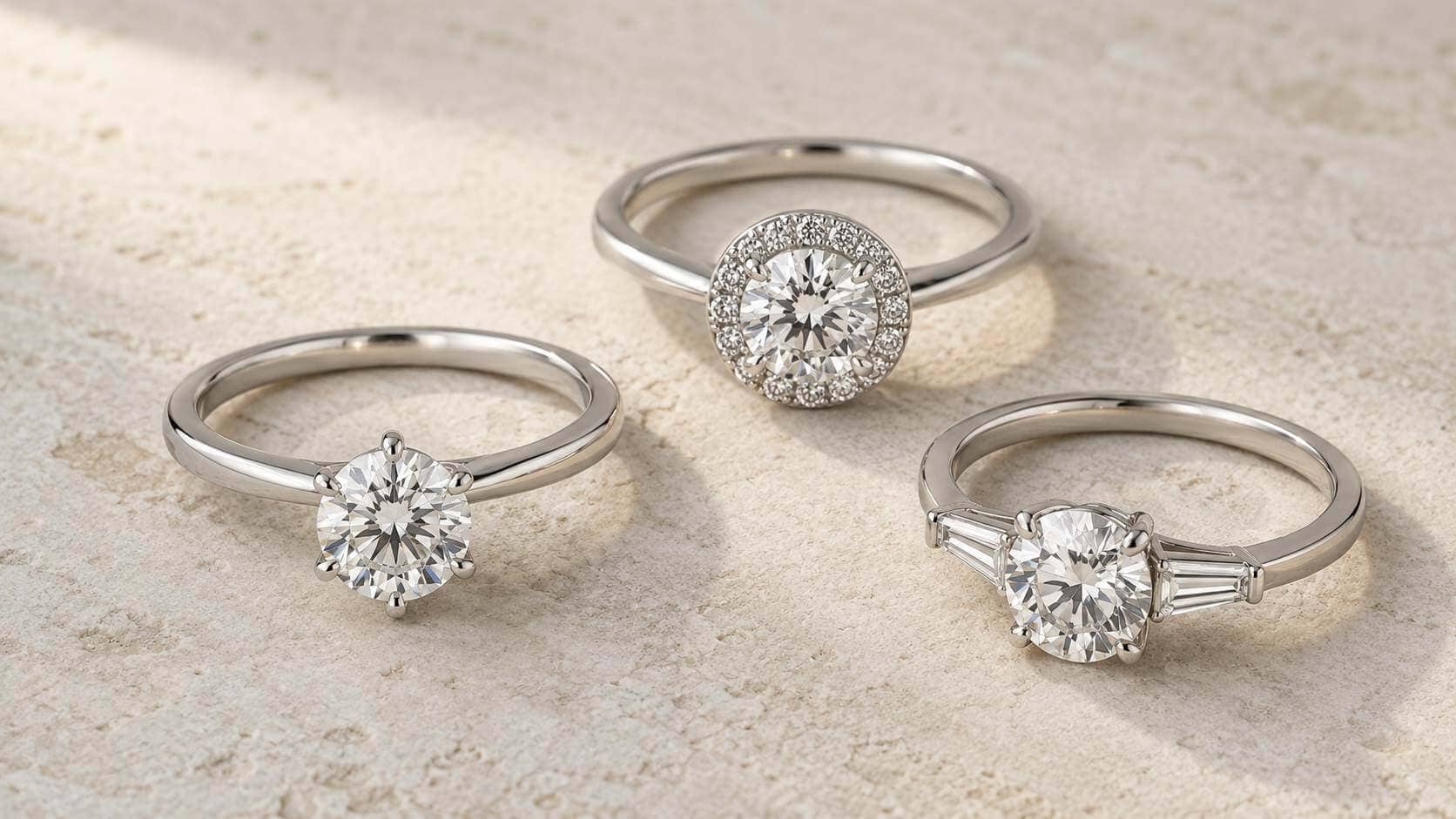
A Fine Band Creates Contrast
A relatively slim band can make the centre diamond look larger by comparison. The principle is simple: the less visual width surrounding the diamond, the more dominant the centre can appear. The band must still be structurally appropriate for the design, so this is a proportion decision rather than an instruction to choose the thinnest possible metal.
Claws Can Leave More Of The Outline Visible
Fine, well-made claws reveal more of the diamond than bulky metalwork. Four claws may expose more of a round or oval outline, while six claws can create a more rounded visual frame and provide additional points of security. The best choice depends on the stone, setting and wearer's priorities.
A Halo Expands The Diamond Area
A closely fitted halo adds a border of smaller diamonds around the centre. From normal viewing distance, this can create a much larger field of light. It is one of the clearest ways to increase overall visual impact without putting the entire budget into a heavier centre stone. The trade-off is a more detailed, decorative look.
Side Stones Broaden The Composition
Tapered side stones or a three-stone arrangement extend the design across the finger. They will not make the centre diamond's dimensions change, but they can make the ring feel more substantial and balanced. For some buyers, that is a better expression of 'bigger' than a solitary stone with more carat weight.
Metal Can Blend Or Frame
White gold or platinum can visually blend with a colourless diamond and reduce the interruption between stone and setting. Yellow or rose gold creates more contrast and can outline the diamond more distinctly. Neither effect is universally larger-looking. One extends the field of whiteness; the other gives the centre a clearer boundary.
Our guide to diamond ring settings explains the practical differences between solitaire, halo, pavé, three-stone and rubover designs in more detail.
Use The Budget Where The Eye Notices It
Lab-grown diamonds make it easier to buy a larger centre stone within a defined budget, but the principle of allocation has not disappeared. Money spent on a specification that cannot be appreciated in normal wear is not automatically better spent than money used to improve cut, proportion or the setting.
A sensible order of decisions is:
Set the total ring budget, not just a centre-stone budget.
Choose a shape you genuinely like and that suits the wearer.
Compare face-up dimensions among credible candidates.
Protect cut quality, symmetry and attractive light performance.
Select colour and clarity at levels that support the intended look rather than chasing grades in isolation.
Use the band, claws, halo or side stones to complete the visual effect.
Judge the ring at realistic scale, including how it sits on the hand.
If the budget itself is still uncertain, start with our guide to how much to spend on a lab diamond engagement ring. It treats affordability as a personal boundary, not a rule set by salary, tradition or social expectation.
The Small Differences Near Round Numbers
Carat targets such as 1.00, 1.50 and 2.00 have a strong psychological pull. GIA describes these as 'magic sizes'. Yet the visible difference between a diamond just below a threshold and one just above it may be slight, particularly if their face-up measurements are close.
That makes near-threshold comparisons worthwhile. A well-proportioned 1.90-carat diamond, for example, may deliver nearly the visual presence expected from 2.00 carats while leaving more of the budget for the setting. This is not a guaranteed saving and should never override the actual dimensions or quality. It is simply a reminder not to pay for a round number without checking what changes on the hand.
What To Check Before You Decide
Carat weight: useful for weight comparison, but not a complete size description.
Length and width: the face-up measurements that most directly influence visible spread.
Depth and proportions: evidence of where the weight sits and how the diamond may handle light.
Shape and outline: the source of both finger coverage and design personality.
Cut, polish and symmetry: quality factors that help the visible area perform attractively.
Setting proportions: band width, claws, halo spacing and side-stone balance.
Realistic images or viewing: the final check that numbers and appearance agree.
More Impact, Not Merely More Weight
There is nothing wrong with wanting a larger diamond. Lab-grown diamonds have made that choice accessible to many more buyers, and a generous centre stone can look beautifully confident. The mistake is assuming that carat weight is the only route to that result.
A ring gains presence through the relationship between the diamond's visible dimensions, its light performance, its outline and the way it is framed. When those elements work together, the result can look larger, brighter and more considered without requiring the heaviest centre stone the budget can possibly reach.
Find The Right Balance For Your Ring
After Diamonds can help you compare diamond dimensions, shapes and settings as parts of one decision. Begin with the look you want and the budget you are comfortable with, then use the specifications to support that choice rather than control it.
Explore lab-grown diamond rings Feel free to speak to the team about a design that balances presence, quality and everyday wearability. Just click on the chat logo on each page of the site, and you will get an immediate response.
Frequently Asked Questions
Does A Higher Carat Weight Always Look Bigger?
No. Carat measures weight. Shape, proportions and depth determine how much of that weight is visible from above, so equal-weight diamonds can have different face-up dimensions.
Which Diamond Shape Usually Looks Largest For Its Weight?
Elongated shapes such as marquise, oval and pear often provide generous finger coverage. The best choice still depends on outline, proportions, light performance and personal style.
Can A Halo Make A Diamond Look Bigger?
A halo does not change the centre diamond, but it adds a closely surrounding field of smaller diamonds. This can make the overall diamond area and ring look substantially larger.
Does A Thin Band Make The Centre Diamond Look Larger?
Often, yes. A finer band creates stronger scale contrast with the centre stone. It still needs enough structure for the chosen design and intended wear.
Should I Choose A Shallow Diamond For More Spread?
Not simply for that reason. Extra diameter is poor value if shallow proportions weaken brightness or create an unattractive appearance. Compare dimensions and light performance together.
Is It Worth Buying Just Below A Full-Carat Size?
It can be. A diamond just below a familiar threshold may look very similar to one just above it. Compare the actual measurements, cut and total ring price rather than assuming the lower weight is automatically the better buy.