
You’re considering a lab-grown diamond, perhaps for an engagement ring, eternity band or special piece you’ll wear often.
It looks beautiful. The price makes sense. The ethics feel right.
Then the quiet question appears:
“But is it really as tough as a natural diamond?”
That doubt is completely understandable. When you invest in fine jewellery, you want it to last. Not just look beautiful today, but cope with real life for years to come.
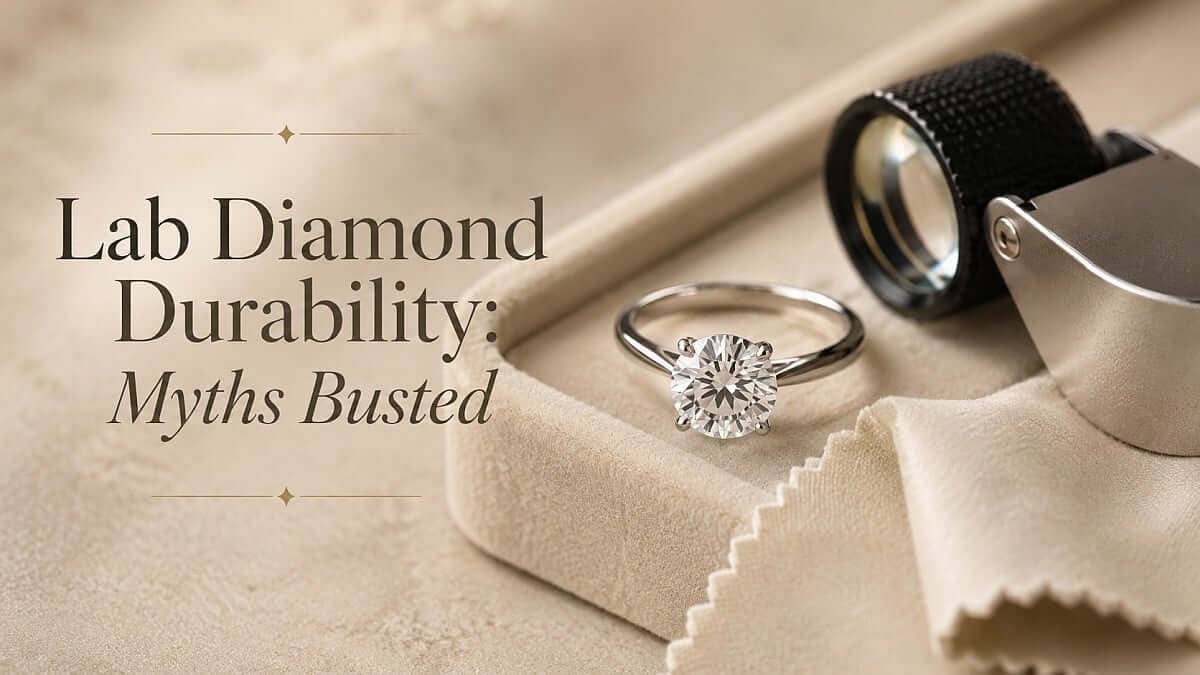
The good news is simple and reassuring: lab-grown diamonds are real diamonds. They have the same physical and chemical structure as natural diamonds, which means they share the same exceptional hardness, brilliance and long-term durability.
They are not diamond lookalikes. They are genuine diamonds created in a controlled laboratory rather than formed deep in the earth.
That fact matters because it changes how confidently you can wear them. Durability, though, is about more than the stone itself. Here are ten practical reasons lab diamonds are more durable than many buyers initially think, plus the important details that help you choose wisely.
Quick Answer
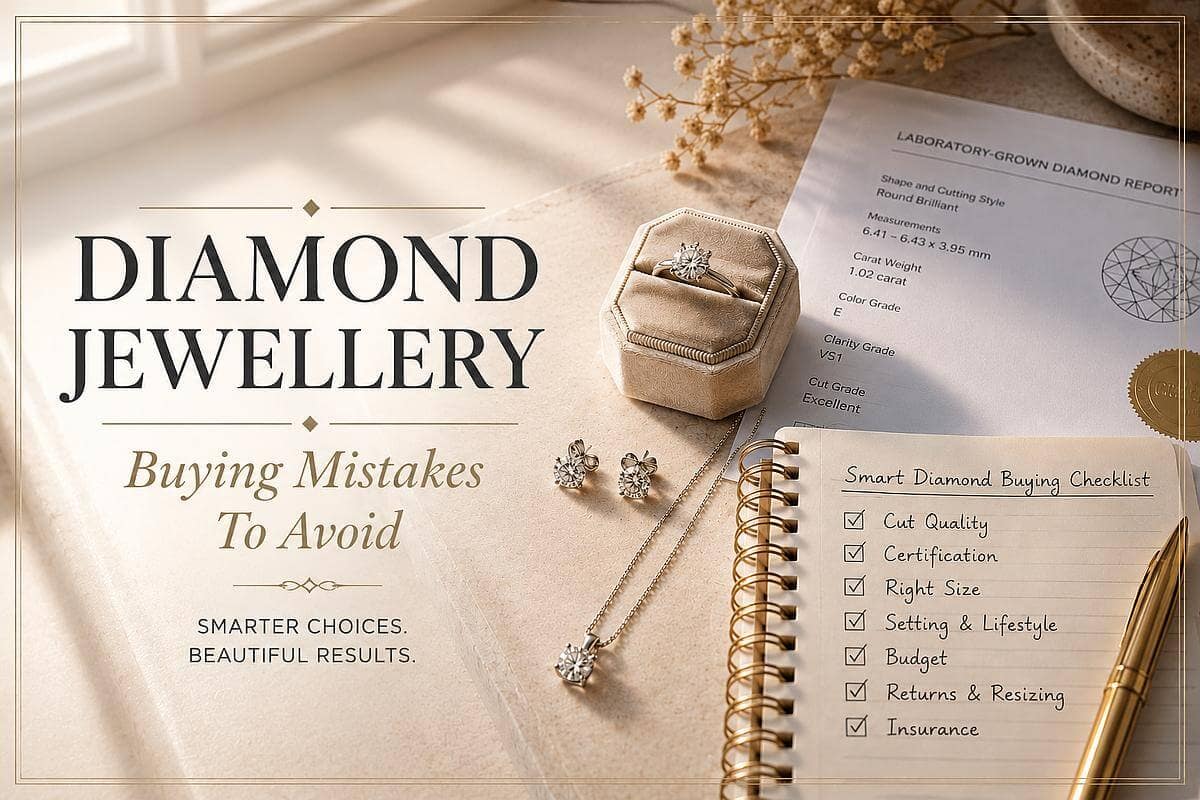
Yes, lab diamonds are durable. A lab-grown diamond has the same essential physical and chemical structure as a natural diamond, which means it has the same famous hardness and everyday wear potential. It can still chip if hit sharply, just as a natural diamond can, but it does not become weaker simply because it is lab-grown.
A clear short guide to lab diamond durability, including hardness, chipping, settings and what “synthetic diamond” really means.
Table Of Contents
- Lab Diamonds Are Real Diamonds
- Lab Diamonds Score 10 On The Mohs Hardness Scale
- They Resist Everyday Scratches
- They Are Suitable For Engagement Rings
- Lab Diamonds Do Not Cloud Or Fade With Normal Wear
- They Can Still Chip If Hit Sharply
- Setting Style Can Matter As Much As The Diamond
- Metal Choice Also Affects Long-Term Wear
- Worth Knowing: Synthetic Diamond Does Not Mean Fake Diamond
- Insurance Is About Real Life, Not Diamond Weakness
- A Well-Made Lab Diamond Piece Can Last For Generations
- What To Remember About Lab Diamond Durability
- Choose Lab Diamond Jewellery With Confidence
- FAQ
1. Lab Diamonds Are Real Diamonds
The most important durability point is also the simplest: lab diamonds are not diamond substitutes.
A diamond simulant is something that looks like diamond but is made from a different material. Cubic zirconia and moissanite are common examples. They can be attractive in their own right, but they are not diamonds.
A lab-grown diamond is different. It is grown in a controlled laboratory environment using technology that creates diamond crystal. The origin is different, but the resulting material is diamond.
That matters because durability follows material. A lab diamond does not need special pleading. You do not have to say it is “almost” a diamond or “diamond-like”. In normal jewellery language, it is a diamond, and it should be cared for as one.
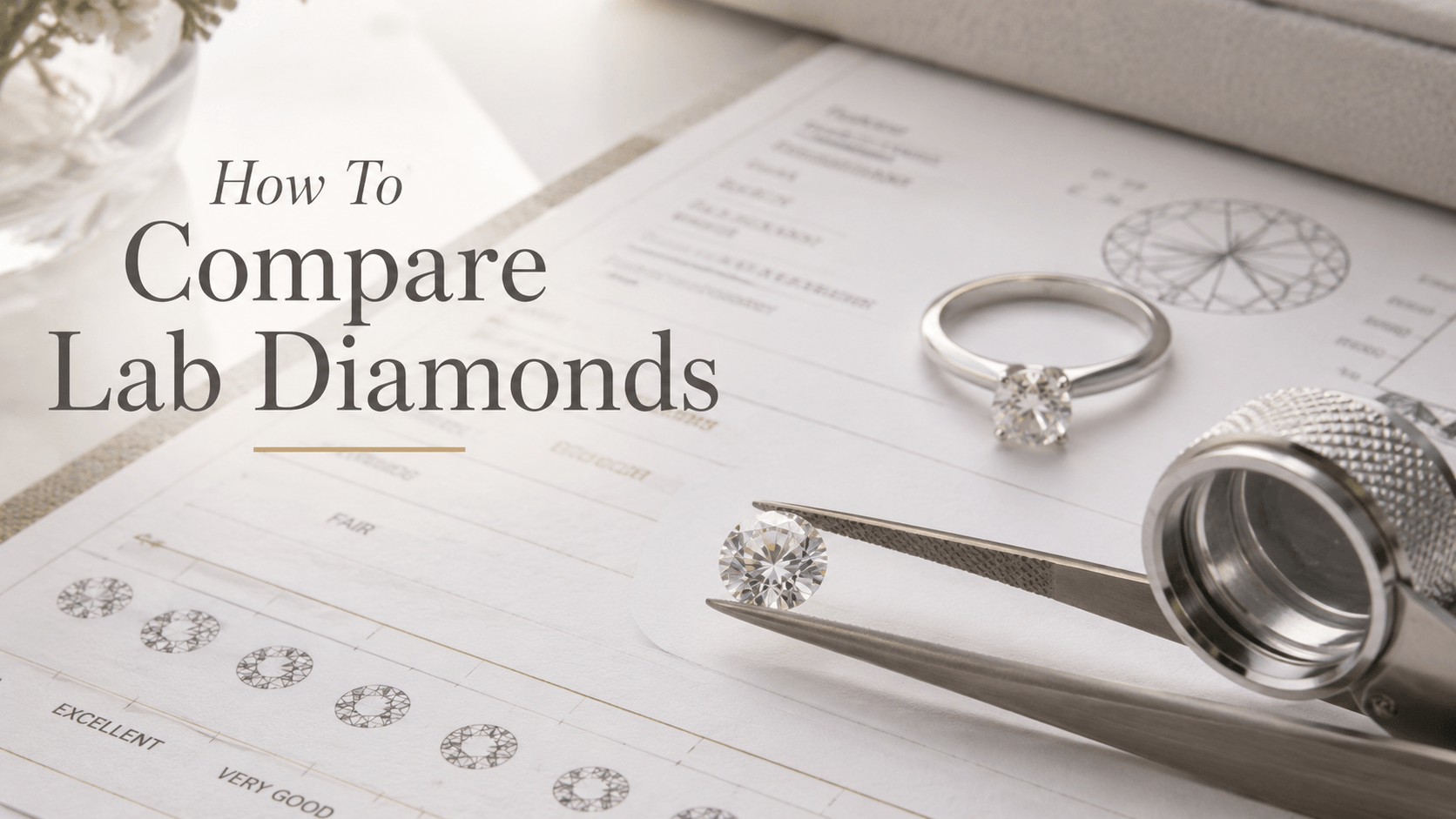
If you are still comparing origin, certification and grading, our guide to how to compare lab diamonds is a useful companion read.
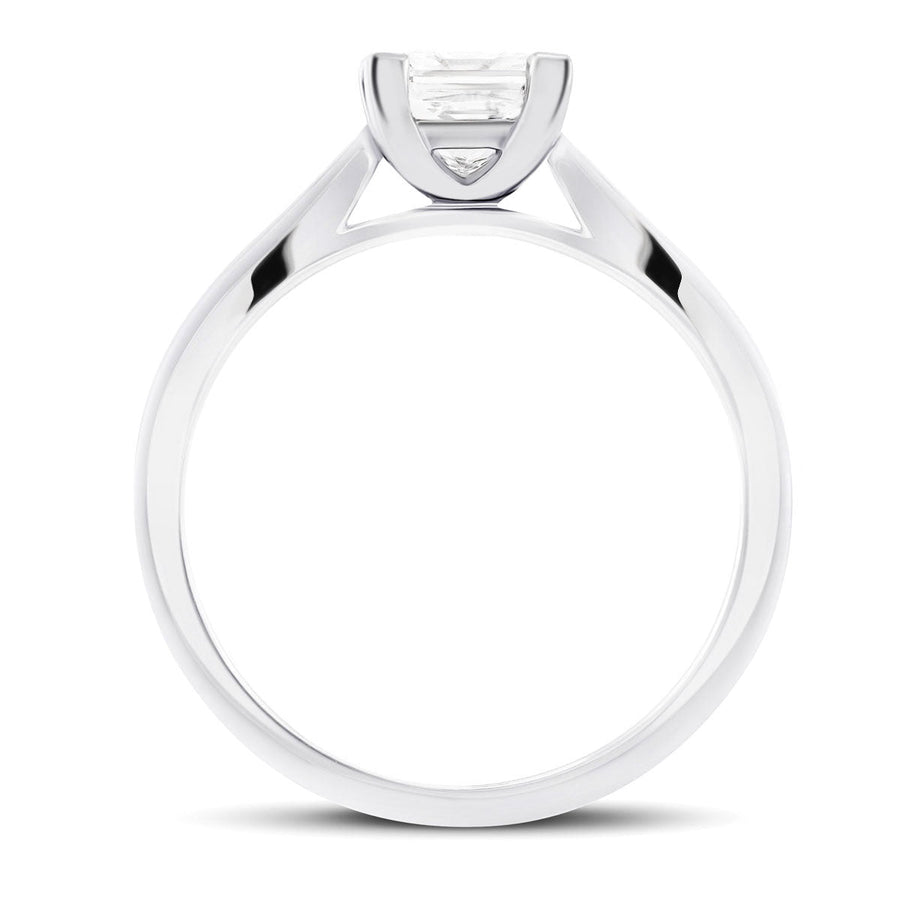
Design Example
Grace Lab Princess Diamond Solitaire Engagement Ring
This is a useful example for the “real diamond” point because it keeps the design simple: a princess-cut lab diamond solitaire, set in platinum, with an IGI-certified centre stone and UK hallmarking. The appeal is not complexity. It is the confidence of knowing what the centre stone is, how it is presented, and why certification matters.
2. Lab Diamonds Score 10 On The Mohs Hardness Scale
When people say diamond is the hardest gemstone, they are usually talking about scratch resistance.
The Mohs scale measures how well one material resists being scratched by another. Diamond sits at the top. A lab-grown diamond has the same hardness position as a natural diamond because it is the same material.
In practice, this means a lab diamond is highly resistant to everyday scratching. Your keys, coins, desk surface, handbag fittings, phone case and most household objects are not going to scratch the diamond itself.
This is one reason diamonds work so well for engagement rings. They are chosen for jewellery that may be worn every day for years.
The important caveat is that hardness is not the same as indestructibility. A diamond resists scratching extremely well, but that does not mean it can never chip or break under a sharp impact. We will come to that distinction shortly.
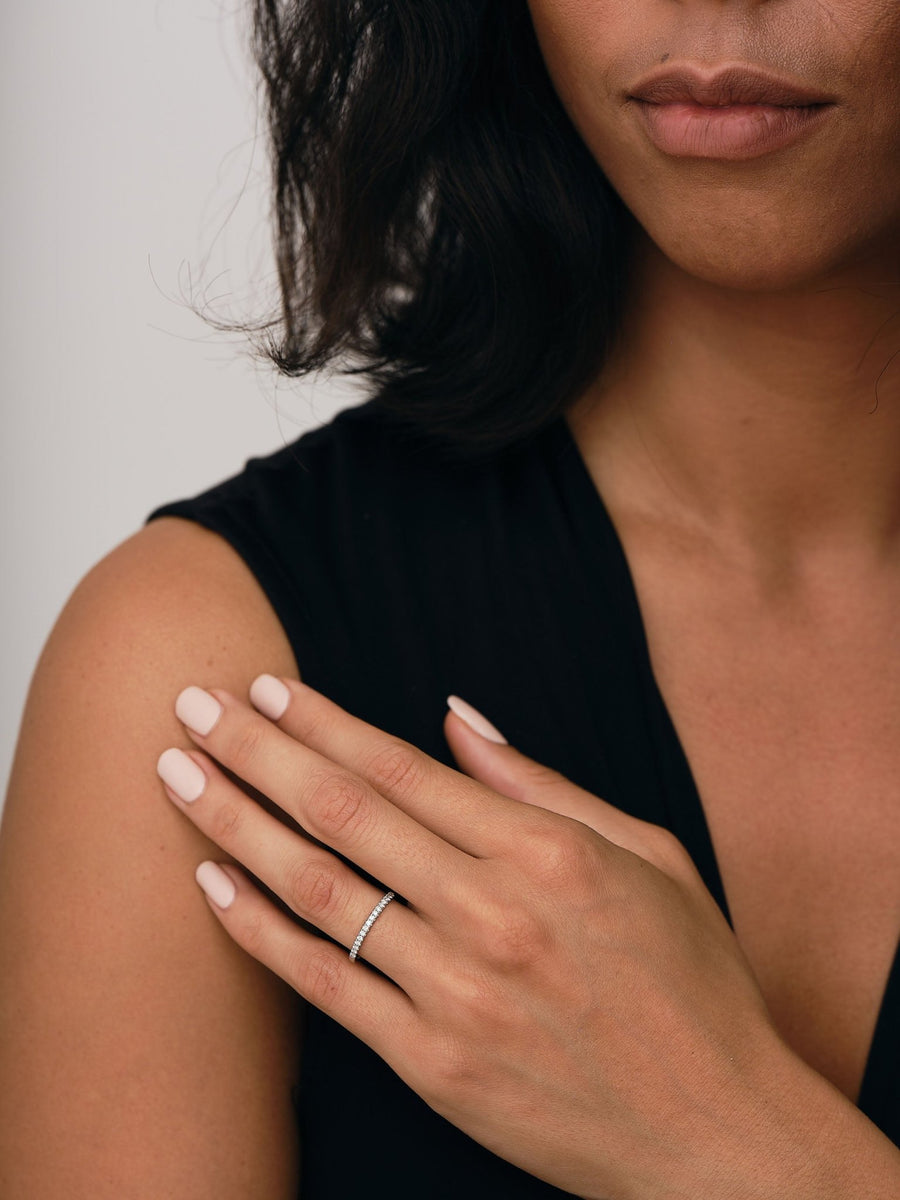
Everyday Detail
Lab Diamond 16 Stone Half Eternity Ring
A half-eternity ring is a useful example of everyday diamond wear. This platinum design uses 16 round lab diamonds across part of the band, giving sparkle without covering the entire circumference. That matters in practice because the underside of a ring takes more contact from daily life than most buyers realise.
3. They Resist Everyday Scratches
Scratch resistance is one of the most practical advantages of diamond jewellery. A lab-grown diamond can cope with ordinary wear because it is not a soft decorative stone trying to imitate a diamond's behaviour.
That is useful whether the diamond is large or small. A delicate pendant, a pair of studs or a narrow diamond band may look refined and light, but the diamonds themselves still have diamond hardness.
The surrounding jewellery still matters. Chains can tangle, claws can wear, and softer metals can mark over time. But the diamond does not lose scratch resistance because it is small, lab-grown or used in a more delicate design.
Choosing everyday lab diamond jewellery?
If you want diamond jewellery for frequent wear, look beyond the stone alone. Consider the setting, metal, clasp, chain, band width and how the piece will sit against skin, clothing and daily movement.
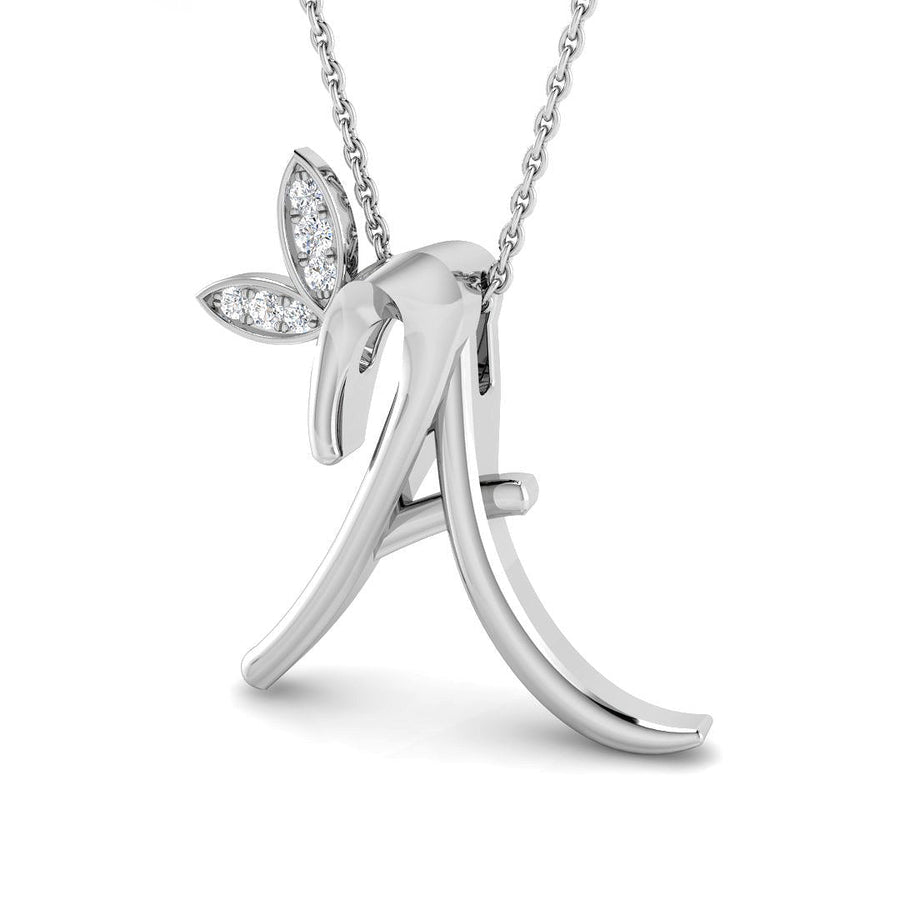
A Style Worth Considering
Lab Diamond Initial Pendant Necklace
A small initial pendant is a helpful example of scale. These are small stones, but they are still lab diamonds. The size changes. The diamond identity and scratch resistance do not.
4. They Are Suitable For Engagement Rings
Engagement rings are one of the toughest jewellery tests because they are worn so often.
A ring on the hand meets more knocks, pressure and friction than earrings or a pendant. It touches door handles, bags, desks, steering wheels, gym lockers, luggage handles and the edges of everyday life. If a stone is unsuitable for regular wear, a ring usually reveals that quickly.
Lab diamonds are suitable for engagement rings for the same reason natural diamonds are suitable: they combine exceptional hardness with beauty, brilliance and long-term wearability.
The more important choice is not whether the diamond is lab-grown or natural. It is whether the whole ring is properly designed for the way it will be worn.
That means thinking about the shape of the centre stone, the exposure of corners and points, the security of the setting, the strength of the metal, the height of the ring and the wearer’s lifestyle.
A lab diamond in a well-made ring is not a compromise on durability.
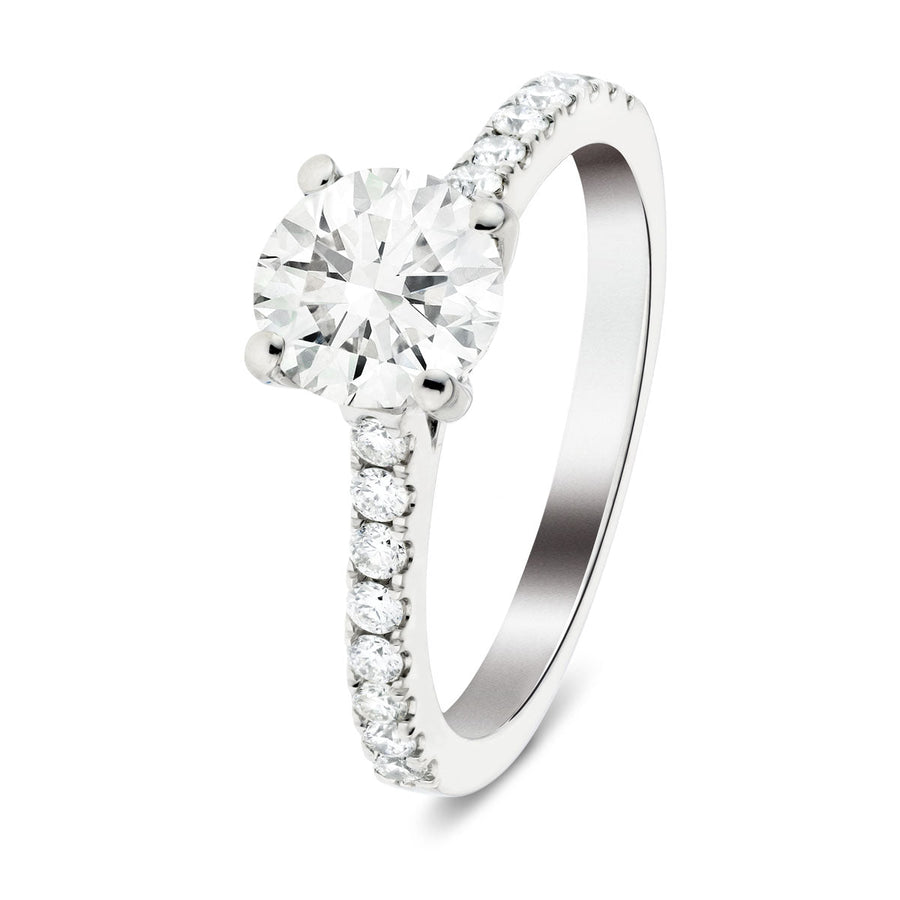
Engagement Ring Example
Emily Lab Diamond Round Engagement Ring
The Emily round engagement ring gives a practical example of why total ring construction matters. For a durability article, it is useful because the appeal is not only the diamond. It is the combination of centre stone, side stones, metal, setting and workmanship.
5. Lab Diamonds Do Not Cloud Or Fade With Normal Wear
Some buyer worries come from confusing lab diamonds with diamond simulants.
Certain imitation stones can become duller over time because of surface wear, coating issues or material differences. That is not how a lab diamond behaves.
A lab-grown diamond does not lose its diamond identity with wear. It does not become less diamond-like because it is exposed to normal daylight, body heat, indoor lighting or regular jewellery use.
What can happen is much simpler: it can get dirty.
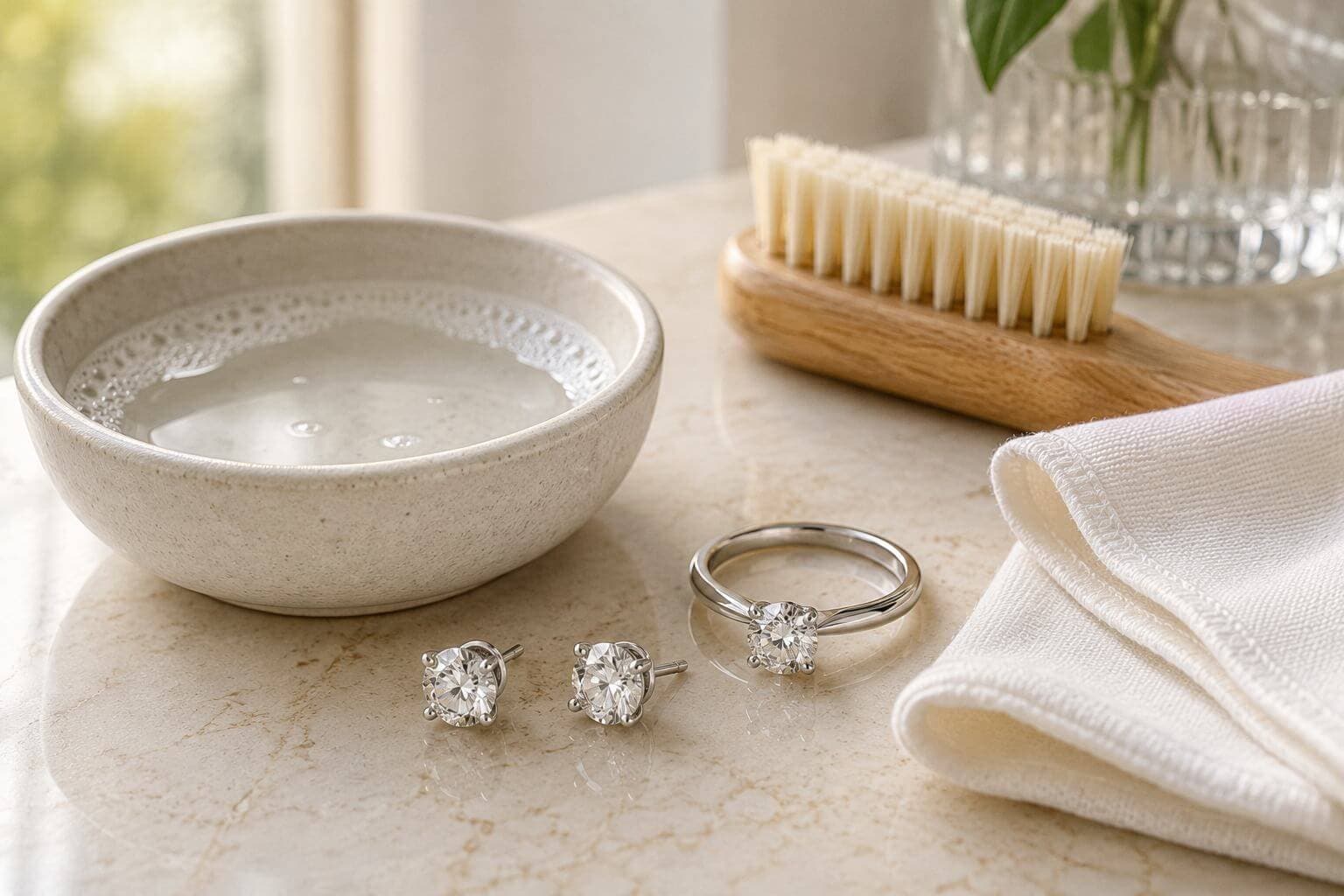
Soap, moisturiser, hand cream, cooking oil, sunscreen and everyday skin contact can build up on jewellery. That film reduces visible sparkle, especially on rings and earrings. The diamond has not become cloudy. Its surface is simply not clean.
A gentle cleaning routine can restore much of the brightness. For valuable or complex pieces, professional checks are also sensible, especially where many small stones are held by tiny claws.
Cleaning And Sparkle Example
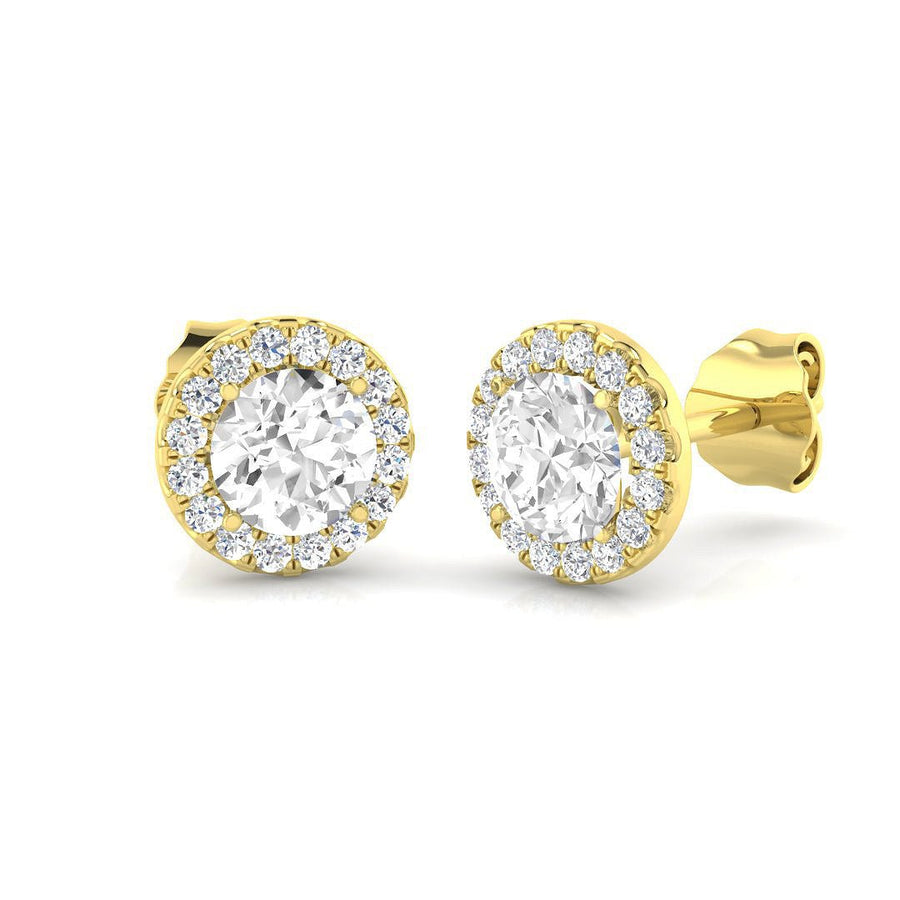
Lab Diamond Halo Earrings
Halo earrings make the cleaning point neatly. A central diamond surrounded by smaller stones is designed for brilliance, but small gaps around multiple stones can collect everyday residue. The diamonds remain durable. Regular cleaning simply helps the design keep doing its job visually.
6. They Can Still Chip If Hit Sharply
This is the point that should be explained honestly.
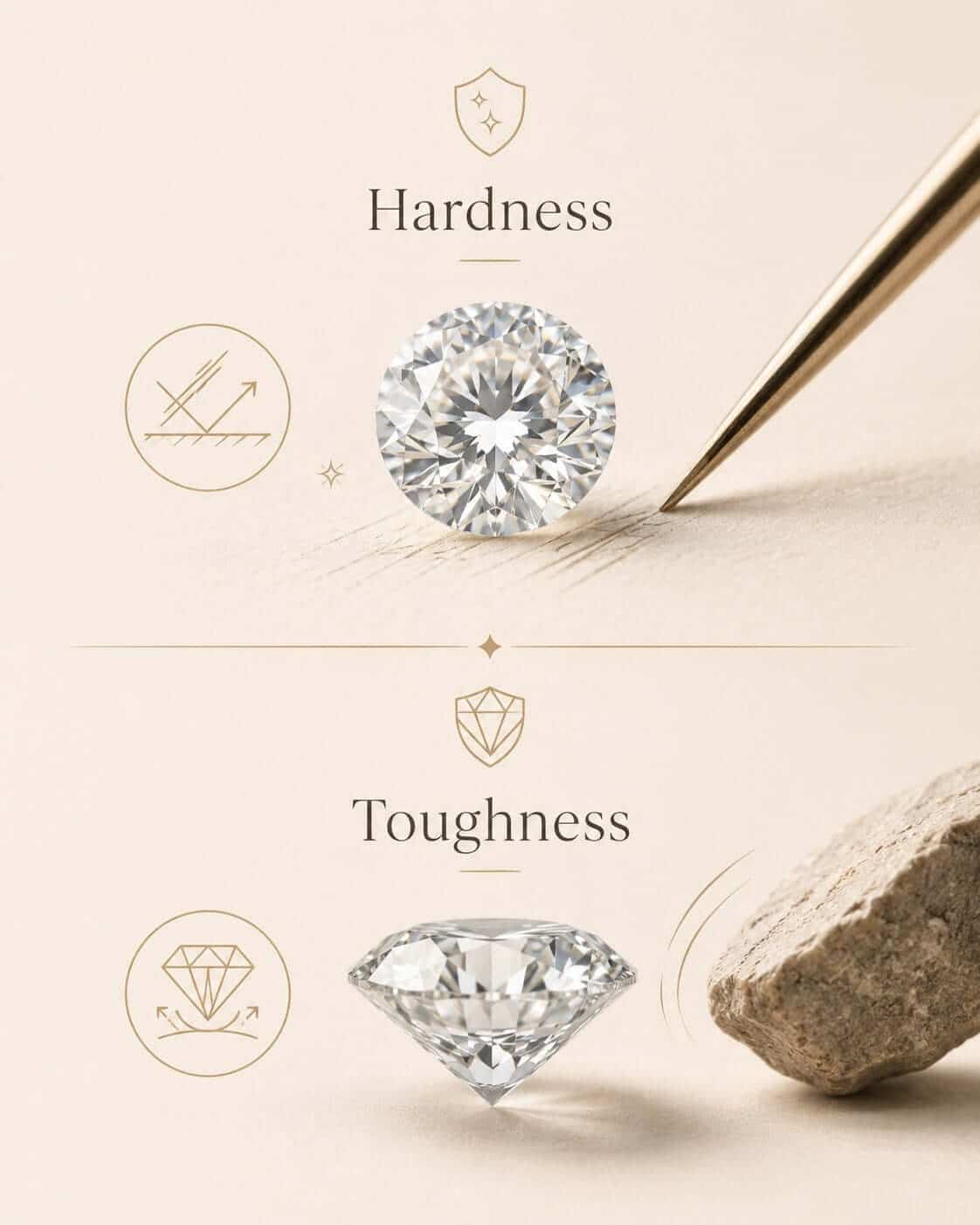
Diamonds are extremely hard, but hardness means scratch resistance. Toughness is different. Toughness is resistance to breaking, chipping or splitting.
A diamond can chip if it is struck at the wrong angle with enough force. This is true of natural diamonds and lab-grown diamonds. The risk is not that lab diamonds are weaker. The risk is that diamonds, as a material, are not indestructible.
Certain shapes need a little more thought. Princess, pear and marquise cuts have points or corners that can be more vulnerable than a round brilliant. This does not make them bad choices. It simply means setting style and sensible wear matter.
In practice, you do not need to be nervous. You just need to treat a diamond ring as fine jewellery, not sports equipment.
Take rings off for heavy gym work, gardening, DIY, lifting rough objects, moving furniture, rock climbing, or any work involving metal tools or hard surfaces.
That advice applies whether the diamond came from the earth or from a laboratory.
Protection Through Setting
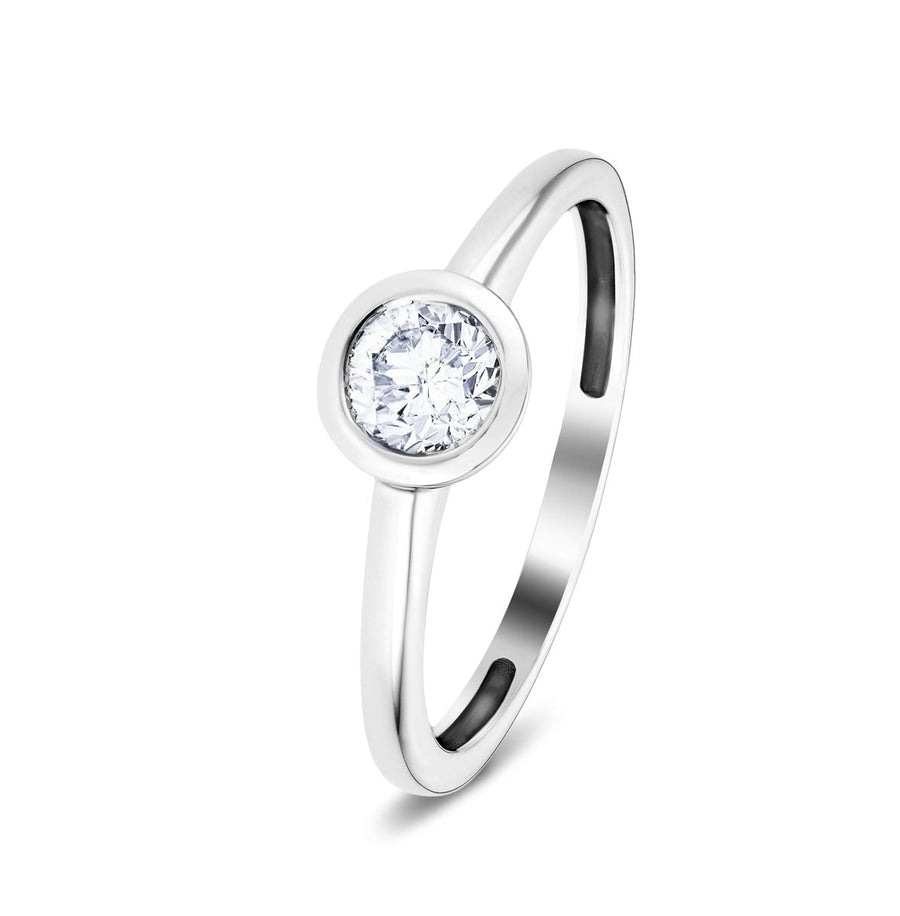
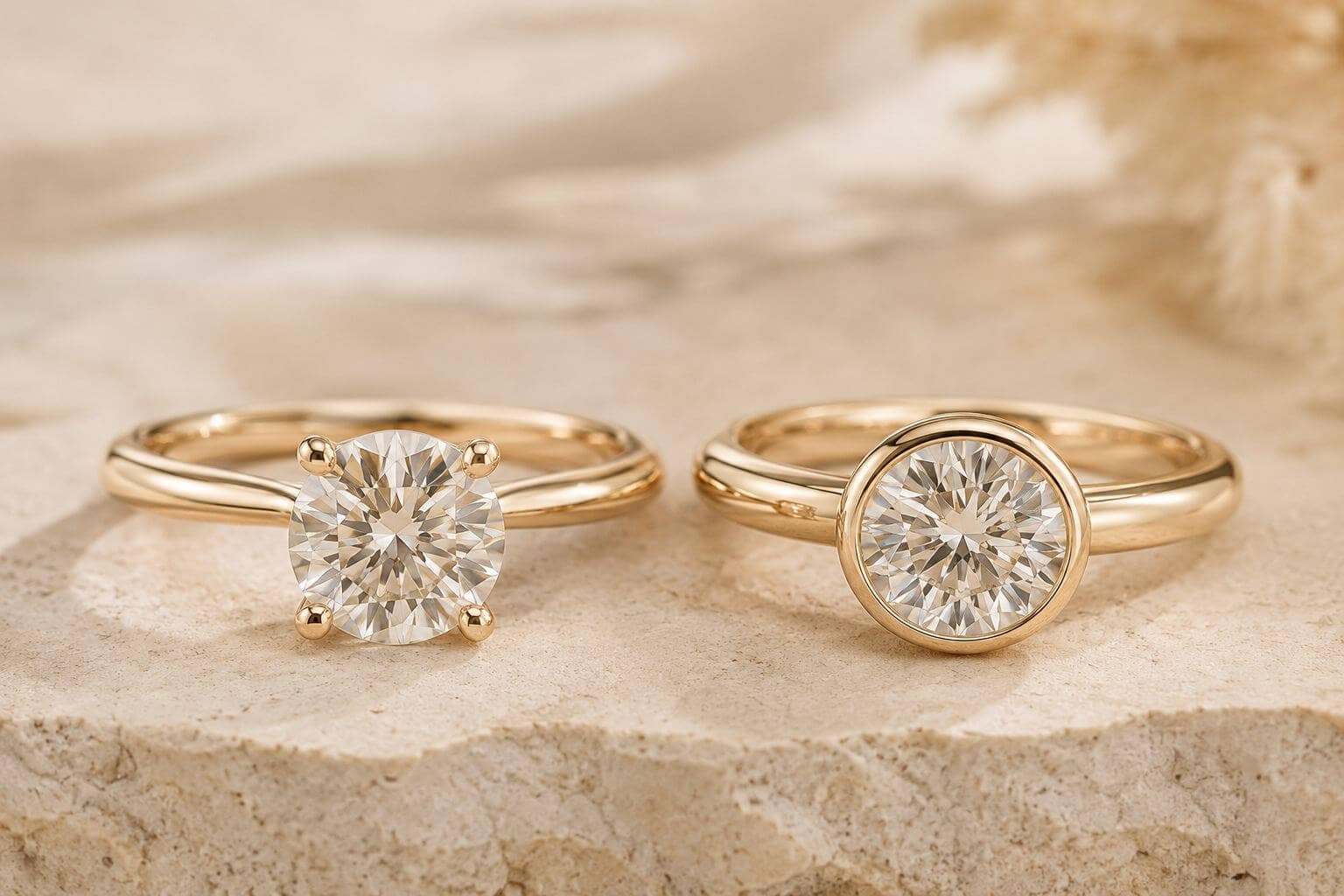
Maya Lab Diamond Bezel Solitaire Engagement Ring
A bezel-set solitaire is an especially useful design to show after discussing chipping. A bezel or rub-over setting surrounds the stone with metal, which can give the edge more protection than a more exposed claw setting.
7. Setting Style Can Matter As Much As The Diamond
If buyers worry about durability, they often focus entirely on the diamond. In real life, the setting can matter just as much.
The setting is the way the stone is held in the jewellery. It affects how much of the diamond is exposed, how much light reaches it, how secure it feels, and how well vulnerable edges are protected.
A claw setting usually allows more light into the diamond and can give a lighter, more open appearance. It is a very common choice for engagement rings and earrings.
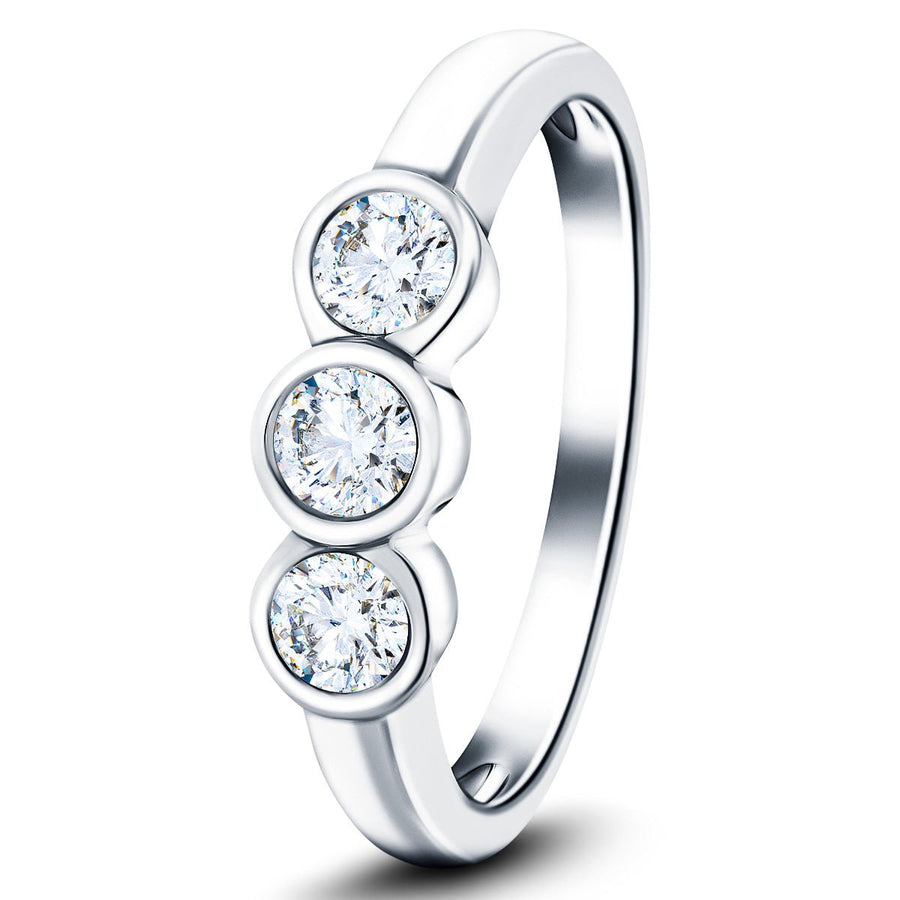
A bezel setting surrounds more of the diamond with metal. It can look sleek and modern, and it offers a more protective frame around the stone.
A halo setting uses smaller diamonds around a centre stone. It can increase visual presence and protect the look of the design, although the smaller stones and claws still need occasional checking.
A channel setting holds stones between metal walls. It can be practical for rows of smaller diamonds, especially on bands.
The right setting depends on style, sparkle, protection and lifestyle. There is no single correct answer. There is only a better answer for the person wearing the piece.
For more detail, see our guide to diamond ring settings.
Setting Example
Zara Three Stone Bezel Lab Diamond Engagement Ring
The Zara three-stone bezel ring is a good example of setting doing practical work. The visual effect is simple, but the surrounding metal also shows why a setting is not just decoration. It is part of the jewellery’s long-term wear logic.
8. Metal Choice Also Affects Long-Term Wear
A durable diamond still needs a suitable metal around it.
The diamond may resist scratching, but the setting, band, claws, chain or bracelet links are made from precious metal. Different metals behave differently.
Platinum is often chosen for engagement rings because it is dense, strong and naturally white. Gold is versatile and available in yellow, white and rose tones. Silver can be attractive and accessible, but it is usually better suited to pieces that face less constant impact than rings worn every day.
This is why the same lab diamond can feel very different depending on the jewellery around it. A pendant lives a gentler life than a ring. Earrings usually face fewer knocks. A bracelet can be more exposed than many people expect because wrists meet tables, desks, handbags and sleeves.
A good durability decision looks at the whole piece.
Metal And Setting Example
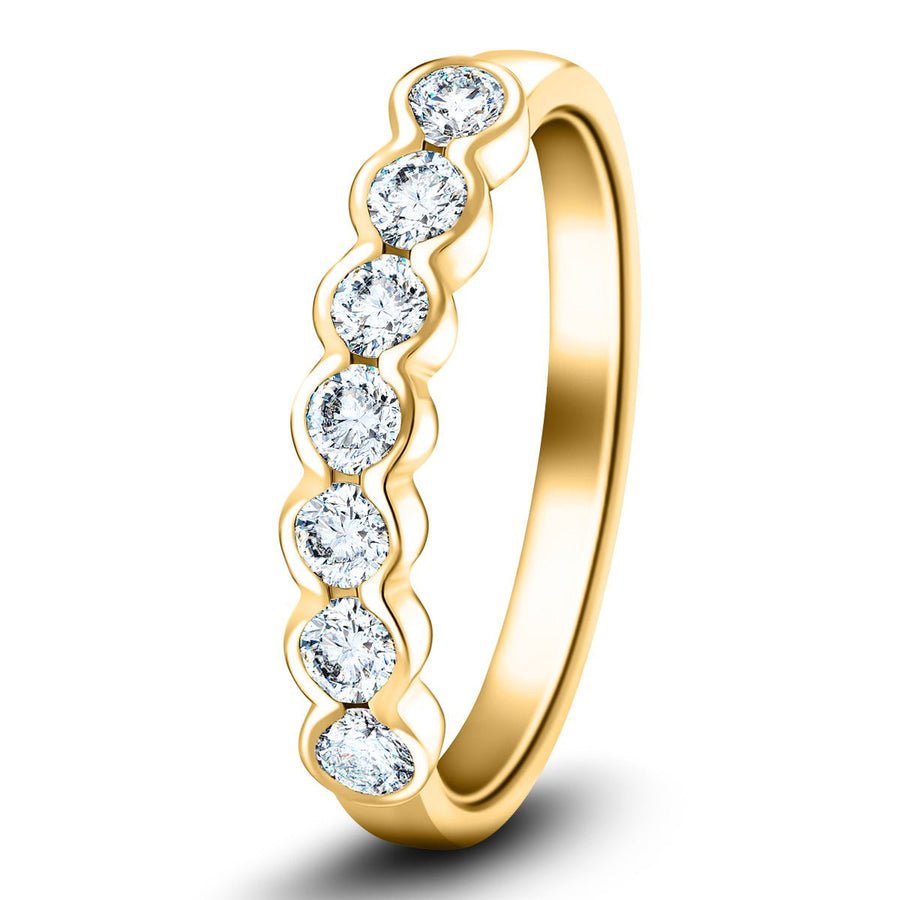
Semi Bezel Seven Stone Lab Diamond Ring
This semi-bezel seven-stone ring helps connect metal, setting and proportion. It is a useful example because durability is not only about one centre stone. It is about how several stones, a band and a setting style work together.
Worth Knowing: Synthetic Diamond Does Not Mean Fake Diamond
You may increasingly see lab-grown diamonds described as “synthetic diamonds” in regulatory, gemmological or industry contexts. That wording can sound worrying if you are used to “synthetic” meaning fake, artificial or inferior.
In this context, it means something more specific.
A synthetic diamond is a laboratory-grown diamond with essentially the same material properties as a natural diamond. It is not cubic zirconia, moissanite, glass or crystal. Those are diamond simulants, which means they may resemble diamond visually but are made from different materials.
This distinction may become more visible over time. Some countries and industry bodies prefer stricter language around the origin of lab-grown diamonds. France has upheld rules requiring lab-grown diamonds to be described using synthetic terminology, while other markets continue to debate the clearest consumer wording.
The US Federal Trade Commission guidance also makes the practical distinction clear: terms such as laboratory-grown, laboratory-created or synthetic should only be used where the stone has essentially the same optical, physical and chemical properties as mined diamond.
For buyers, the practical point is simple: the terminology may vary, but the durability point does not change. A properly identified lab-grown diamond is still a diamond.
9. Insurance Is About Real Life, Not Diamond Weakness
Insurance can make buyers wonder whether jewellery is more fragile than they thought.
Usually, that is the wrong conclusion.
You insure fine jewellery because it is valuable, portable and emotionally important. The main risks are often loss, theft, accidental damage or being unable to replace a piece easily, not the diamond quietly failing in normal wear.
A durable diamond can still be lost. A secure ring can still be stolen. A well-made bracelet can still be damaged in an accident. A pendant can still vanish while travelling.
Insurance is not an admission that lab diamonds are weak. It is a sensible part of owning jewellery you would not want to replace casually.
This is especially true for engagement rings and higher-value pieces. For more detail, see our guide to diamond jewellery insurance.
Real-Life Wear Example
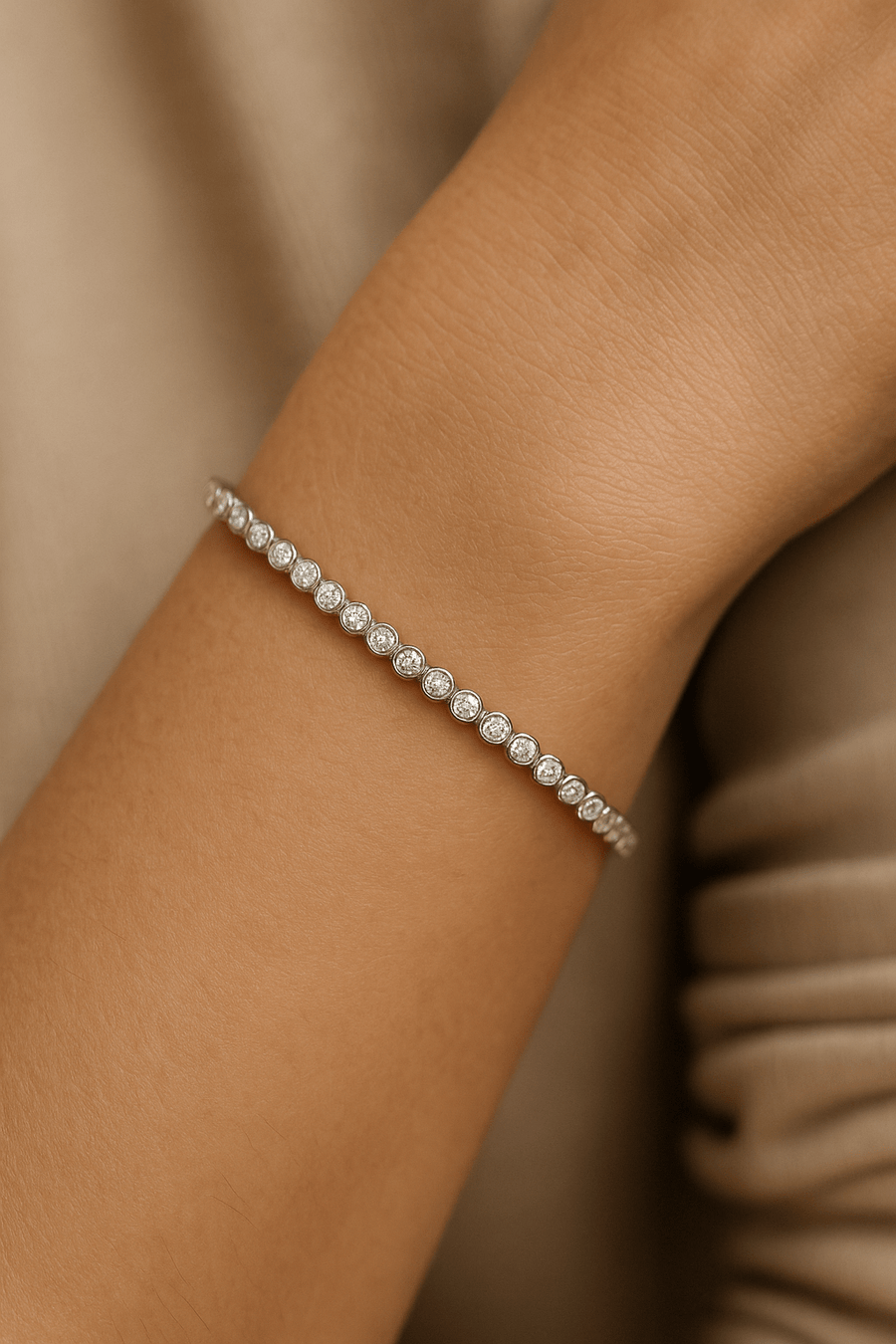
Lab Diamond Bezel Set Tennis Bracelet
A tennis bracelet is a good reminder that durability includes lifestyle. The diamonds may be securely framed, but a bracelet still lives on the wrist, where it meets more movement and contact than a necklace. It is exactly the kind of piece where care, clasp awareness and insurance all make practical sense.
10. A Well-Made Lab Diamond Piece Can Last For Generations
The best reassurance is not that nothing can ever happen to diamond jewellery. That would be unrealistic.
The better reassurance is this: a lab diamond, properly set in a well-made piece of jewellery, can be worn and enjoyed for many years. With sensible care, it can become part of someone’s long-term jewellery life.
That is the real durability story.
Lab diamonds are not temporary diamonds. They are not costume stones. They are not glass. They are not cubic zirconia. They are not a short-lived fashion material pretending to be fine jewellery.
They are genuine diamonds grown by modern technology.
For most buyers, the better questions are:
- Is the diamond properly identified?
- Is there a grading report where one is expected?
- Is the design suitable for how the piece will be worn?
- Is the setting appropriate for the stone shape?
- Is the metal right for the type of jewellery?
- Is the piece backed by good workmanship and sensible aftercare?
Answer those questions well, and lab diamond durability becomes much less mysterious.
It becomes exactly what it should be: a reason to buy with confidence.
Summary: What To Remember About Lab Diamond Durability
Lab diamonds are durable because they are real diamonds. They have the same essential structure and hardness as natural diamonds, which makes them highly resistant to scratching and suitable for everyday fine jewellery.
They are not indestructible. No diamond is. Sharp impacts, exposed corners, worn settings and poor jewellery care can still create problems. That is why setting style, metal choice, cleaning, inspection and insurance all matter.
The word “synthetic” may appear more often in some markets, but in this context it does not mean fake. It means laboratory-grown. A properly described synthetic diamond is still a diamond, not a simulant.
For most buyers, the practical conclusion is reassuring: choose a well-made lab diamond piece, look after it sensibly, and it can be part of your jewellery life for many years.
Ready To Choose Lab Diamond Jewellery With Confidence?
A durable diamond is only one part of a good jewellery decision. The design, setting, metal, certification and workmanship all matter too.
At After Diamonds, our lab-grown diamond jewellery is designed to give you real diamond beauty with clear value, careful craftsmanship and practical reassurance. Explore engagement rings, earrings, necklaces and bracelets knowing that a lab diamond is not a compromise on durability. It is a modern way to choose genuine diamond jewellery with confidence.
FAQ
Are lab diamonds as durable as natural diamonds?
Yes. Lab diamonds have the same essential physical and chemical structure as natural diamonds, so they offer the same diamond hardness and everyday durability. The main difference is origin, not wearability.
Can a lab diamond chip?
Yes. A lab diamond can chip if it is hit sharply at the wrong angle, just as a natural diamond can. Diamond is extremely scratch-resistant, but it is not indestructible.
Do lab diamonds get cloudy over time?
No, a lab diamond should not become cloudy simply because it is lab-grown. If a diamond looks dull, the usual cause is surface residue from soap, oils, lotion or everyday wear. Cleaning can restore much of the sparkle.
Does synthetic diamond mean fake diamond?
No. In gemmology and regulation, synthetic diamond can mean a laboratory-grown diamond with essentially the same properties as natural diamond. It does not mean cubic zirconia, moissanite, glass or another imitation material.
Which setting is best for lab diamond durability?
There is no single best setting for everyone. Bezel settings can give more edge protection, while claw settings can show more of the diamond and allow more light in. The best choice depends on diamond shape, style preference and how the jewellery will be worn.
Can I wear a lab diamond engagement ring every day?
Yes. Lab diamonds are suitable for everyday engagement rings. You should still remove any fine jewellery before heavy gym work, DIY, gardening or activities where the ring may be knocked against hard surfaces.