
Buying diamond jewellery should feel exciting, but it can also feel strangely easy to get wrong.
A ring, pair of earrings, necklace or bracelet may look simple from the outside. A diamond sparkles, the setting looks pretty, the price seems acceptable, and the decision appears to be made. In practice, most jewellery buying mistakes happen because the wrong detail takes control of the decision. A buyer chases carat weight, trusts a discount, ignores the setting, forgets the wearer’s lifestyle, or assumes that every certificate tells the same story.
The good news is that diamond jewellery is much easier to buy well once you know which mistakes to avoid. You do not need to become a gemologist. You do not need to memorise every table, grade and proportion. You simply need to understand the few points that make the biggest difference to beauty, wearability, value and peace of mind.
Quick Answer
The biggest diamond jewellery buying mistakes include prioritising carat weight over cut, buying without a reliable grading report, overpaying for grades the eye cannot appreciate, dismissing lab-grown diamonds, trusting inflated discounts, choosing a setting that does not suit real life, and forgetting practical safeguards such as returns, resizing and insurance. Here are the ten most common mistakes to avoid before you buy.
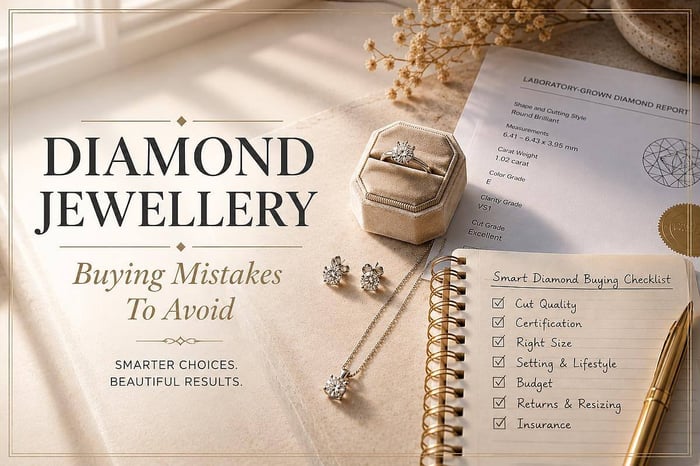
A short guide to the most common diamond jewellery buying mistakes, from carat weight and certification to settings, budget and insurance.
Table Of Contents
- Buying Size Instead Of Sparkle
- Buying Without A Proper Independent Report
- Paying For Grades You Cannot See
- Assuming Online Jewellers Are Riskier
- Letting A Sale Do The Thinking
- Ignoring The Setting And The Wearer’s Lifestyle
- Dismissing Lab-Grown Diamonds Too Quickly
- Following Old Spending Rules
- Buying Before You Know Enough About Their Taste
- Forgetting Insurance And Valuation
- A Simple Way To Buy Better Diamond Jewellery
- Diamond Jewellery Buying FAQs
1. Buying Size Instead Of Sparkle
Carat weight is easy to understand. A two-carat diamond sounds bigger than a one-carat diamond, so it is tempting to treat size as the main measure of value.
That can be an expensive mistake.
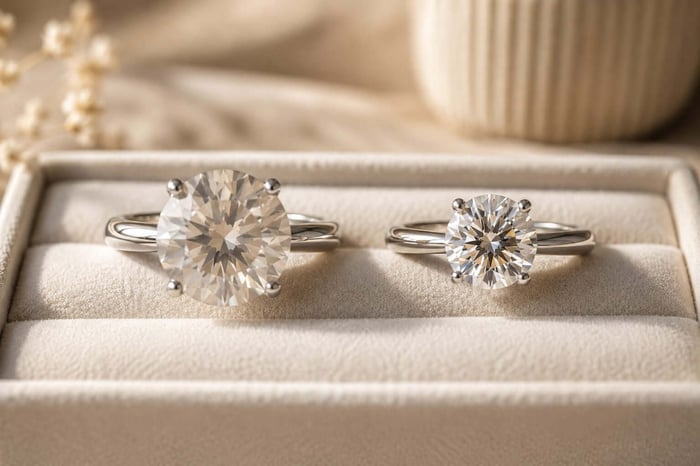
Carat measures weight, not beauty. A larger diamond can look dull if it is poorly cut, while a slightly smaller diamond with better proportions can look brighter, livelier and more impressive on the hand, ear or neckline. This matters especially for diamond rings, stud earrings and pendants, where the stone is viewed face-up and light performance does much of the visual work.
Cut is not the same as shape. Shape means round, oval, cushion, pear, emerald, princess or another outline. Cut quality concerns how well the diamond’s facets, angles and proportions handle light. The GIA’s guidance on diamond cut makes the same practical point: cut quality can affect brightness, beauty and the way a diamond appears when viewed.
In practice, a well-cut diamond gives you more of what most buyers actually want: brightness, fire, contrast and movement. A poorly cut diamond may carry weight in the wrong places, making it cost more without looking meaningfully larger.
What to do instead:
- Prioritise cut quality before chasing the next carat milestone.
- Compare diamonds face-up, not just by weight.
- Remember that a lively 1.40ct diamond may look more beautiful than a flat 1.60ct diamond.
For lab-grown diamond jewellery, where larger stones can be more accessible, this point becomes even more important. Bigger is useful only if the diamond still looks balanced, bright and wearable.
2. Buying Without A Proper Independent Report
A diamond grading report is not romantic, but it is one of the most reassuring documents in the purchase.
For significant diamond jewellery, especially engagement rings and larger diamond pieces, you should know what the diamond is, how it has been assessed, and whether it is natural or laboratory-grown. A proper report gives you an independent record of the stone’s identity and quality.
For lab-grown diamonds, IGI reports are widely used and remain especially relevant because they identify origin and document the diamond’s value-setting characteristics. GIA also evaluates laboratory-grown diamonds, although its approach changed in 2025. For many colourless to near-colourless lab-grown diamonds, GIA now uses Premium and Standard quality assessment terminology rather than the full natural-diamond colour and clarity scale.
Put simply, older advice to “ask for GIA or AGS” needs updating in 2026. AGS no longer operates independently as a grading laboratory, and GIA now uses a simpler Premium or Standard system for many lab-grown diamonds. GIA explains its updated laboratory-grown diamond services in its 2025 lab-grown diamond announcement.
For buyers, the practical point is straightforward. Ask who graded the diamond, what the report covers, and whether you can verify the report number.
Do not rely on vague wording such as “certified diamond” without checking the source. The report should be from a recognised independent laboratory, not merely an in-house description written by the seller.
What to do instead:
- Prioritise recognised independent reports.
- Check that the report matches the diamond or jewellery being sold.
- Verify the report number where possible.
- For lab-grown diamond jewellery, check that the report clearly identifies the stone as laboratory-grown.
A reliable report does not guarantee that a piece is perfect for you, but it does protect you from buying blind.
3. Paying For Grades You Cannot See
A flawless diamond sounds perfect. A D-colour diamond sounds like the obvious best choice. Those top grades have their place, but most buyers do not need to pay for perfection on paper.
Clarity is a good example. If a diamond is eye-clean, meaning its inclusions are not visible to the naked eye in normal viewing, a higher clarity grade may add cost without adding noticeable beauty. The difference between Flawless, VVS and VS clarity can be important to collectors, but not always to someone choosing a ring, pendant or pair of earrings to wear every day.
Colour works in a similar way. A D-colour diamond is at the top of the colour scale, but many near-colourless diamonds still appear beautifully white once set in jewellery. The metal colour, diamond shape, setting style and viewing conditions all affect how colour is perceived.
This does not mean colour and clarity do not matter. They do. It means they should be judged in proportion to the whole piece.
A very high colour or clarity grade can be worth paying for if:
- You are buying a large centre stone.
- You prefer step cuts such as emerald or Asscher, where clarity can be more visible.
- You want a very crisp white look in platinum or white gold.
- You value top-grade specifications for personal reasons.
For many buyers, though, the better decision is to find a sensible balance. Put more of the budget towards cut, design, craftsmanship and the overall look of the jewellery.
If you want a deeper guide to this balance, our article on why better diamond colour and clarity matter is a useful next read.
Choose With Clarity, Not Pressure
After Diamonds creates lab-grown diamond jewellery for buyers who want the beauty of a serious diamond without unnecessary pressure or inflated buying rules. Explore the collection when you want a piece that balances sparkle, setting and sensible value.
4. Assuming Online Jewellers Are Riskier
Some buyers still feel that a physical shop must be safer than an online jeweller. Sometimes it is. Sometimes it is not.
The real question is not whether the jeweller is online or offline. The real question is whether the jeweller is transparent, reachable, properly documented and clear about what happens if the piece is not right.
A reputable online jeweller can offer excellent value because it does not carry the same retail overheads as a traditional shop. That can mean a stronger diamond, better metal, or more carefully made jewellery for the same budget. But the saving is only meaningful if the buying process is properly protected.
Before buying diamond jewellery online, check the basics:
- Is the returns policy clear?
- Are resizing and exchange rules explained?
- Are the diamond reports shown or available?
- Is the company clear about where the jewellery is made?
- Are guarantees, delivery timing and customer service routes easy to find?
- Can you ask questions before purchase?
Online buying is not the mistake. Buying online without checking the practical safeguards is the mistake.
This is particularly relevant for engagement rings, where timing, sizing, presentation and return flexibility can matter almost as much as the diamond itself.
5. Letting A Sale Do The Thinking
A large discount can be persuasive. It can also be misleading.
The problem with some jewellery discounts is that the original price may not be a meaningful reference point. If a retail price has been inflated before being crossed out, the buyer is not seeing true value. They are seeing theatre.
A sensible buyer looks past the percentage reduction and asks a better question: what am I actually getting for the final price?
That means comparing:
- The diamond’s report and origin.
- The cut, colour, clarity and carat weight.
- The metal and setting quality.
- The design and craftsmanship.
- The return and guarantee terms.
- The seller’s reputation and transparency.
A discount is useful only when the underlying jewellery is worth buying at the final price. A poorly cut diamond at 50 percent off is still a poorly cut diamond. A fragile setting in a sale is still a fragile setting. A vague certificate does not become reassuring because the price is lower.
This is where lab-grown diamonds can be useful. They often allow buyers to choose a larger or higher-specification diamond without needing the artificial drama of a “massive saving”.
Industry analyst Edahn Golan once made a useful point about how jewellers should present lab-grown diamonds: “You can’t make it look as if they’re cheap.” For buyers, the same principle applies. Good value should feel intelligent, not apologetic.
6. Ignoring The Setting And The Wearer’s Lifestyle
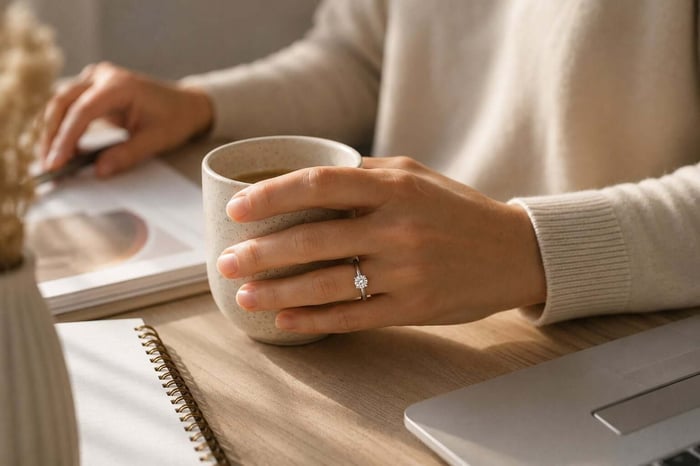
Diamond jewellery is not worn in a showroom. It is worn while holding bags, typing, washing hands, hugging children, travelling, working, dressing quickly and living ordinary life.
That is why the setting matters.
A delicate ring with fine claws may look beautiful, but it may not be ideal for someone very active with their hands. A high-set engagement ring can look elegant in photographs, but catch on clothing. A tennis bracelet needs secure workmanship because it moves with the wrist. Stud earrings need comfortable backs and sensible proportions, not just an impressive total carat weight.
The wearer’s lifestyle should shape the choice.
For an active wearer, consider:
- Lower-profile ring settings.
- Secure claws or protective settings.
- Platinum for strength in engagement rings.
- Designs that are easy to clean.
- Earrings and necklaces with comfortable daily wear in mind.
For someone who dresses more formally or enjoys statement jewellery, a more dramatic design may make sense. The point is not to avoid detail. The point is to match the jewellery to the person who will wear it.
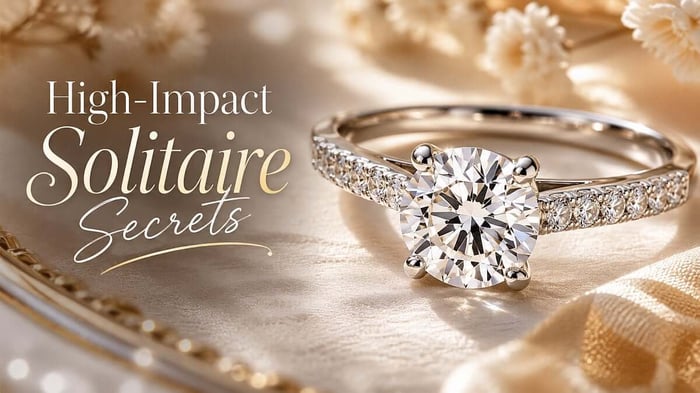
This is where our guide to diamond ring settings may help, especially if you are choosing an engagement ring and weighing up solitaire, halo, shoulder-set or more protective designs.
7. Dismissing Lab-Grown Diamonds Too Quickly
Some buyers dismiss lab-grown diamonds because they assume they are imitation stones. That is not correct.
A lab-grown diamond is a real diamond with the same essential chemical and optical nature as a natural diamond. The difference is origin. One formed in the earth. The other was created in controlled laboratory conditions.
For many modern buyers, lab-grown diamonds make excellent sense. They can offer more size, better colour, higher clarity or a more ambitious design for the same budget. That can be especially attractive for engagement rings, stud earrings, tennis bracelets and diamond necklaces, where visible impact matters.
The important point is to buy lab-grown diamonds with the same discipline you would apply to any diamond jewellery. Look at the report. Understand the cut. Consider the setting. Check the retailer. Think about wearability.
Do not buy lab-grown simply because it is cheaper. Buy it because it helps you create the piece of jewellery you actually want, within a budget that feels sensible.
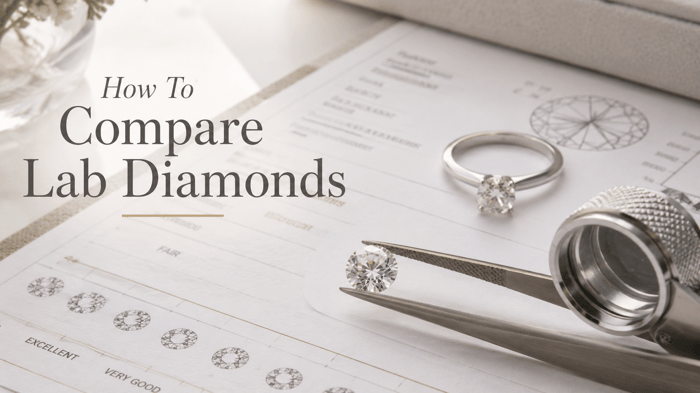
This is why our guide to comparing lab diamonds focuses on the whole buying decision, not just the headline price.
8. Following Old Spending Rules
The old rule that an engagement ring should cost one, two or three months’ salary is not a serious buying principle. It is a marketing idea that has lingered because it is simple, memorable and emotionally loaded.
It is also unhelpful.
Your salary does not know your rent, mortgage, family situation, savings goals, wedding plans or appetite for debt. Nor does it know your partner’s taste. A person who loves a refined, understated ring may not want the most expensive piece the buyer can technically afford.
A better budget starts with comfort. Decide what you can spend without resentment, anxiety or financial strain. Then decide what matters most within that budget.
For some buyers, the priority will be a larger centre stone. For others, it will be platinum, a beautifully made setting, or a particular diamond shape. For others still, it may be the confidence of knowing the ring can be resized, exchanged or insured without fuss.
There is no moral virtue in overspending. There is also no shame in choosing a more ambitious piece if you can do so comfortably. The mistake is letting an old rule replace a personal decision.
For more detail, see our guide on how much to spend on a lab diamond engagement ring.
9. Buying Before You Know Enough About Their Taste
Surprise can be wonderful. Total guesswork is riskier.
Many diamond jewellery mistakes happen because the buyer focuses on the proposal, occasion or deadline before understanding the wearer’s taste. This is especially common with engagement rings, but it can also happen with earrings, necklaces and bracelets.
Before buying, try to understand:
- Do they prefer yellow gold, white gold, rose gold or platinum?
- Do they wear jewellery every day or only occasionally?
- Do they like classic, minimal, vintage-inspired or bolder designs?
- Would they enjoy a larger diamond, or prefer something more discreet?
- Are there practical issues such as ring size, metal sensitivity or workplace suitability?
If you are buying an engagement ring, also check the retailer’s resizing, exchange and return policies before purchase. This matters if you are buying early, planning a proposal abroad, or choosing a made-to-order design.
A ring bought too early without policy awareness can become difficult to change later. A little planning protects both the surprise and the money.
If sizing is part of the concern, our guide to getting your ring size right explains why fit is about more than simple measurement.
10. Forgetting Insurance And Valuation
A diamond ring, necklace, bracelet or pair of earrings is small, portable and valuable. That is a practical risk.
Many buyers insure the car, the phone and the house contents, then forget to add the new diamond jewellery. Others assume it is automatically covered under home insurance, only to discover later that single-item limits, away-from-home cover or valuation requirements were not what they expected.
After buying a significant piece of diamond jewellery, do three things:
- Keep the receipt, diamond report and any valuation documents.
- Check whether your home insurance covers the full replacement value.
- Ask whether the jewellery is covered outside the home, while travelling, and against accidental loss.
For higher-value items, a specialist jewellery policy may be worth considering. The right answer depends on the value of the piece and your existing insurance, but the wrong answer is leaving it to chance. The National Association of Jewellers’ guidance on valuations and insurance is a useful starting point for understanding why documentation and cover matter.
This is not the most glamorous part of buying diamond jewellery. It is one of the most sensible.
A Simple Way To Buy Better Diamond Jewellery
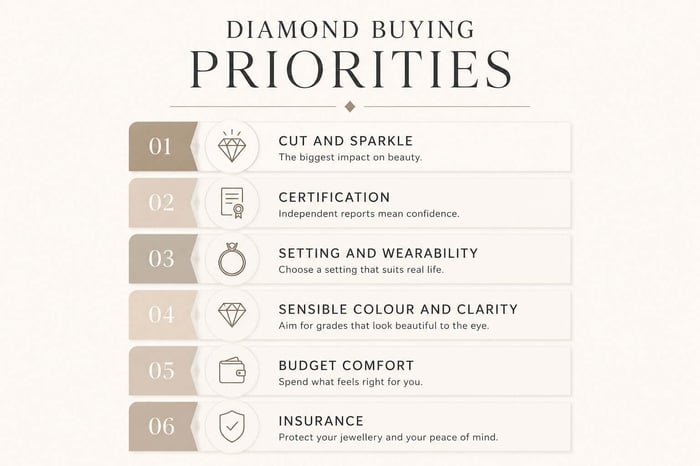
The safest way to avoid mistakes is to judge the whole piece, not one impressive-sounding detail.
Ask yourself:
- Is the diamond bright and well cut?
- Is the report reliable and appropriate?
- Are the grades sensible for the budget?
- Does the setting suit the wearer’s life?
- Is the jeweller transparent?
- Do the return and resizing policies protect the purchase?
- Is the piece insured after purchase?
That short checklist will prevent most poor decisions.
Diamond jewellery should not feel like a test you might fail. It should feel like a considered choice. When you understand the common mistakes, you can ignore the noise, compare more calmly, and choose a piece that makes sense in real life as well as on paper.
Choose Diamond Jewellery With More Confidence
After Diamonds creates lab-grown diamond jewellery for buyers who want clarity, value and reassurance as well as beauty. Explore our engagement rings, earrings, necklaces and bracelets, or use our guides to compare diamonds before you choose.
The right diamond jewellery should feel considered from every angle: the stone, the setting, the price, the policy and the way it will be worn.
Diamond Jewellery Buying FAQs
Is cut more important than carat weight?
For most buyers, yes. Carat weight affects size, but cut has a major effect on sparkle, brightness and visual impact. A slightly smaller well-cut diamond can look more impressive than a larger poorly cut one.
Do lab-grown diamonds need certification?
For significant lab-grown diamond jewellery, a recognised report is strongly advisable. It should identify the diamond as laboratory-grown and give useful quality information. IGI reports are widely used for lab-grown diamonds, while GIA now uses Premium and Standard quality assessment terminology for many colourless to near-colourless lab-grown stones.
Is a flawless diamond worth paying for?
Sometimes, but not for everyone. If a diamond is eye-clean, higher clarity grades may add cost without adding visible beauty in normal wear. The best choice depends on diamond size, shape, setting and personal preference.
Are online diamond jewellers safe?
They can be, provided the jeweller is transparent and offers clear reports, return terms, resizing information, guarantees and customer support. The risk is not buying online itself. The risk is buying without checking the safeguards.
Should I follow the two-month salary rule?
No. Treat it as an old marketing idea, not a serious financial rule. Set a budget that feels comfortable, then prioritise the diamond, setting and service details that matter most to you.
Should I insure diamond jewellery straight away?
Yes, for valuable pieces. Check your home insurance limits or consider specialist jewellery cover. Keep receipts, reports and valuation documents so the piece can be properly covered if lost, stolen or damaged.