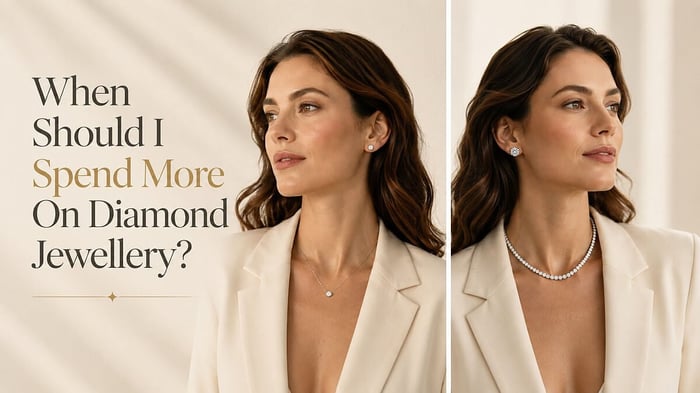

Spending more on diamond jewellery is easy. Knowing whether the extra money will improve the jewellery is more difficult.
One upgrade might give you noticeably larger diamonds. Another might improve the colour and clarity grades without creating an obvious difference when the jewellery is worn. A third may leave the diamonds unchanged but place them in a more precious metal.
All three can be legitimate reasons to spend more. They are not equally valuable to every buyer.
The useful question is not simply, “Can I afford the upgrade?”
What will the extra money actually change?
Quick Answer
Spend more when the upgrade gives you something you will see, wear or personally value. A larger visual presence can justify a higher price. Better grades may appeal to buyers who value technical quality, even when the improvement is difficult to see. A more precious metal can be worthwhile for material reasons, but it will not necessarily make the diamonds look better.
The price relationships below are approximate and based on standard listed prices. Promotions can temporarily narrow or widen the differences.
A practical guide to deciding whether a diamond-size, quality or precious-metal upgrade is genuinely worth the additional spend.
Table Of Contents
- Spending More Is Not One Decision
- When Spending More Buys Visible Presence
- When Spending More Buys Better Grades
- When Spending More Buys More Gold
- Spend More In The Right Order
- The Three-Question Upgrade Test
- A Better Specification Is Not Always A Better Purchase
- Choose The Upgrade You Will Appreciate
- Frequently Asked Questions
Spending More Is Not One Decision
Most jewellery upgrades fall into three broad categories:
1. A visible upgrade, such as larger diamonds or a stronger design.
2. A specification upgrade, such as higher colour or clarity.
3. A material upgrade, such as moving from 9k to 18k gold.
Confusing these categories is where buyers often overspend.
A certificate can show that one diamond has a higher grade than another, but that does not guarantee a dramatic difference on the neck or ear. A piece containing more gold may be materially more valuable without looking substantially different. Meanwhile, an apparently modest increase in diamond diameter can change the entire presence of a pair of earrings.
The right upgrade depends on what you want the jewellery to do.
Our diamond size guide explains why carat weight and visible size are related but not identical. For this comparison, the product measurements are especially useful because they tell us what the buyer will actually see.
Comparison One: When Spending More Buys Visible Presence
These two pairs of solitaire studs use the same basic formula: round G/VS lab diamonds, claw settings and 18k white gold. The meaningful difference is size.
The 1.00ct pair measures approximately 5mm at each ear. The 2.00ct pair measures approximately 6.5mm. At standard listed prices, the larger pair costs about 47% more, yet it doubles the combined diamond weight and increases the diameter of each stud by 1.5mm. On an ear, that is not a microscopic change. The larger diamonds occupy substantially more visual space and create a much stronger point of light.
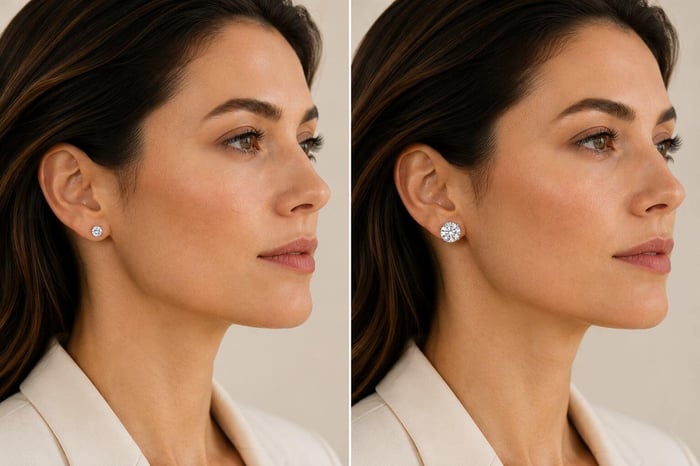
This is one of the clearer cases in which spending more buys something you can genuinely see.
The 1.00ct pair remains substantial enough to look like fine diamond jewellery, but it is also restrained, versatile and easy to wear during the day. The 2.00ct pair moves towards statement territory. It will register more quickly, particularly with shorter hair, an updo or an evening outfit.
Neither is automatically the better choice.
The upgrade makes sense when you actively want greater presence rather than merely wanting the larger number. It is harder to justify when subtlety, comfort and everyday ease are more important.
What The Upgrade Buys
- Twice the combined diamond weight
- A clearly larger diameter at each ear
- Greater visibility at normal conversational distance
- A more dressed-up and statement-led effect
Spend More If
You want the earrings to be noticed rather than simply add light around the face. The larger pair is also easier to justify if the earrings will be worn frequently for dinners, events or occasions where a stronger look suits your style.
Save The Difference If
You prefer understated jewellery, have smaller earlobes or want studs that work without thought from morning to evening. The 1.00ct pair is not a compromise piece. It is simply the quieter choice.
Editorial Comparison
The Same Classic Stud, Two Levels Of Presence
The larger pair costs about 47% more at standard listed prices. Here, the upgrade is easy to explain: it buys twice the combined diamond weight and a clearly larger face-up diameter. Choose according to how strongly you want the earrings to register, not simply according to the higher carat figure.
Everyday Presence
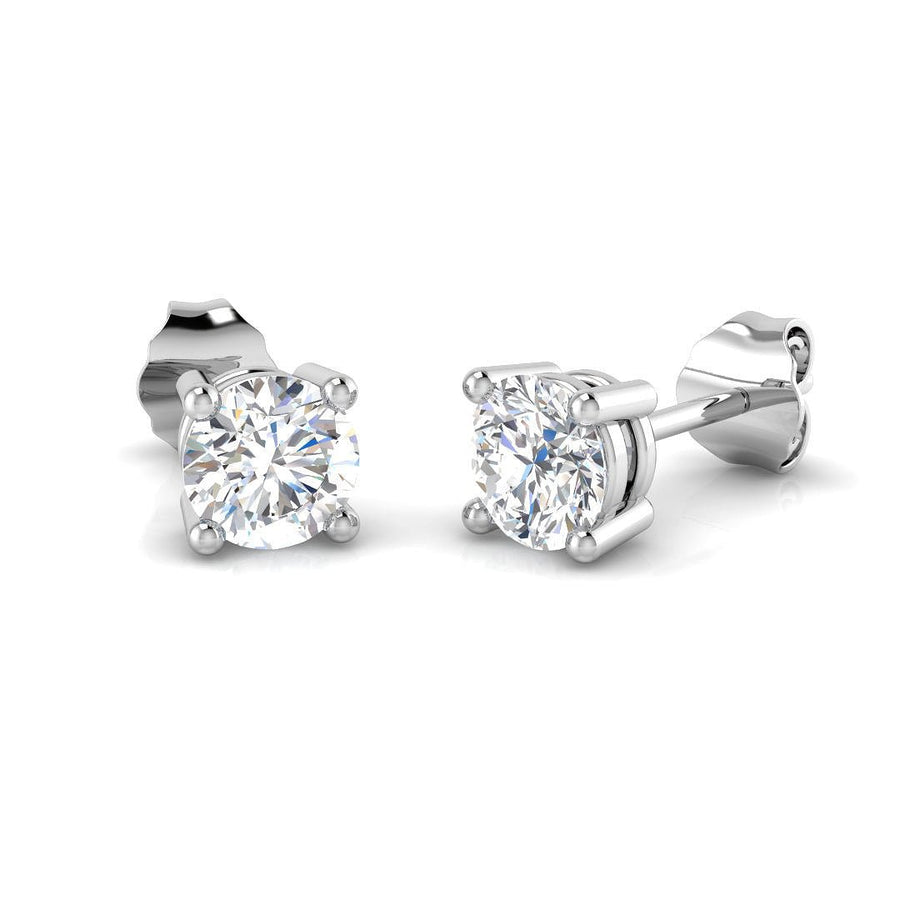
Lab Diamond Solitaire Stud Earrings 1.00ct G/VS in 18k White Gold
A restrained, versatile scale with approximately 5mm of diamond presence at each ear.
View The Everyday ChoiceStronger Statement
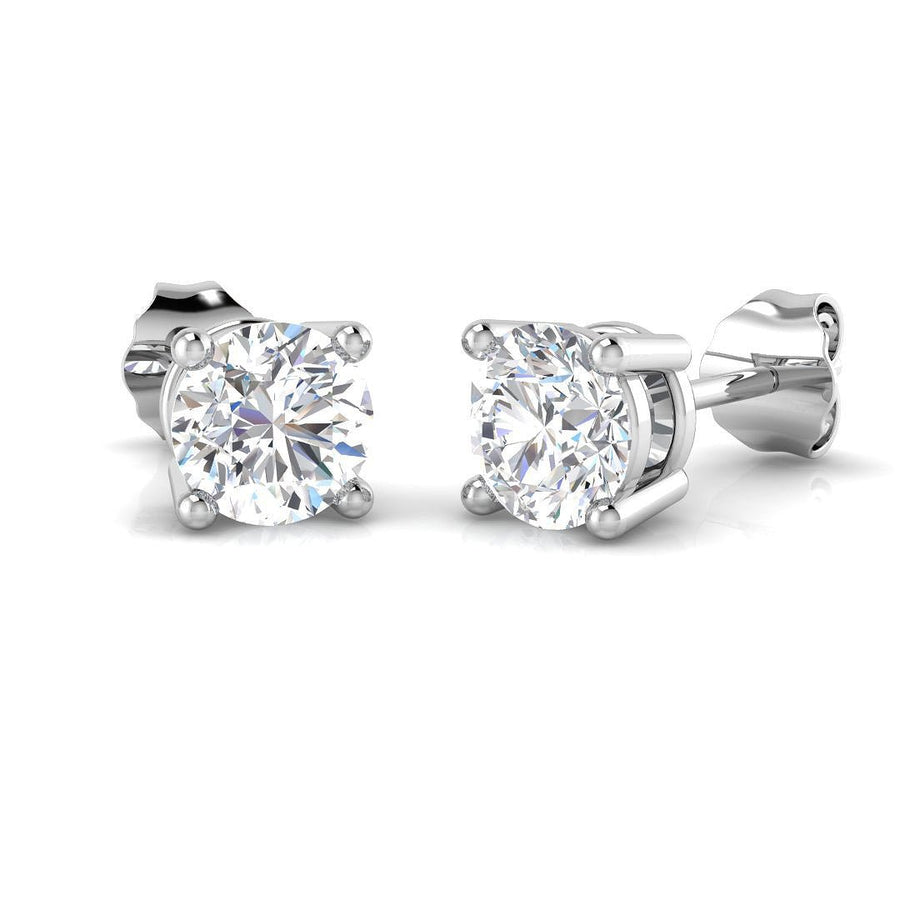
Lab Diamond Solitaire Stud Earrings 2.00ct G/VS in 18k White Gold
A more assertive scale with approximately 6.5mm of diamond presence at each ear.
View The Upgrade ChoiceSee How Diamond Stud Size Changes The Look
Compare classic lab diamond earrings across different carat weights and decide whether your preference is subtle light or a stronger point of focus.
Explore Lab Diamond EarringsComparison Two: When Spending More Buys Better Grades
Now consider two 0.50ct solitaire necklace pendants.
Both use a round diamond measuring approximately 5mm. Both are claw-set in 18k white gold, include an 18k white-gold chain and carry IGI certification. One uses a G/VS diamond. The other moves up to D/VVS.
At standard listed prices, the D/VVS version costs roughly 22% more. Promotional pricing can reduce that gap considerably, but the underlying upgrade remains the same: the pendant does not become larger or more elaborate. The extra spend buys higher colour and clarity grades.
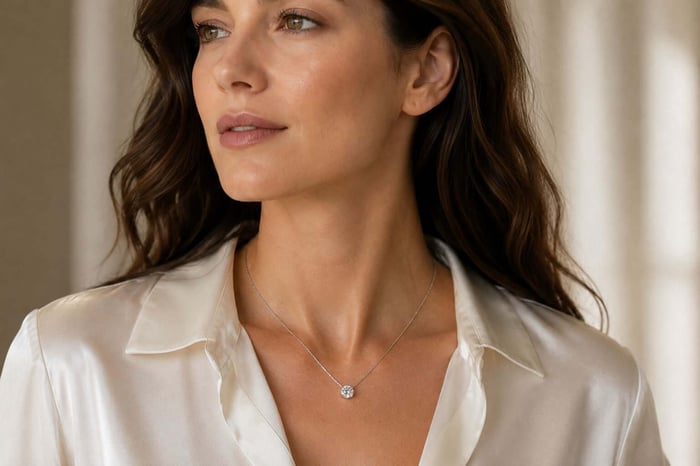
D sits at the top of the widely used D-to-Z colour scale, while G is still within the colourless-to-near-colourless end of the range. VVS is also a higher clarity category than VS. These are real and measurable distinctions.
They are not necessarily obvious distinctions at normal viewing distance.
GIA notes that the defining clarity characteristics of both VVS and VS diamonds are, in almost all cases, not visible to the naked eye. Colour grading is also conducted under controlled lighting using comparison stones, which tells us something important: a laboratory can reliably distinguish grades that may appear extremely similar in ordinary wear.
That does not make the D/VVS pendant pointless. Technical excellence can carry its own satisfaction.
Some buyers like knowing that they chose the highest specification. That can matter in a significant gift, an anniversary piece or jewellery intended to be kept for life. The grading report becomes part of the pleasure of ownership.
But the higher grade should not be purchased on the assumption that everybody will immediately see why the pendant cost more.
What The Upgrade Buys
- A higher position on the colour scale
- A higher clarity classification
- Greater technical rarity
- The satisfaction of owning a top-specification diamond
Spend More If
The certificate matters to you, the pendant marks an important occasion, or you derive genuine pleasure from knowing that the diamond meets a higher technical benchmark. The upgrade becomes particularly attractive when a promotion temporarily narrows the price difference.
Save The Difference If
Your priority is how the pendant looks when worn. The G/VS version has the same carat weight, approximate diameter, setting, precious metal and overall design. For many buyers, it delivers the same visible effect.
This is the kind of distinction we explore in more detail in our guide to why better diamond colour and clarity matter.
Editorial Comparison
The Same Visible Scale, Two Levels Of Specification
The D/VVS pendant costs about 22% more at standard listed prices, yet both diamonds measure approximately 5mm and sit in the same style of 18k white-gold setting. The upgrade is meaningful for a buyer who values the grading report. It is much less likely to transform the way the pendant looks across a room.
Balanced Specification
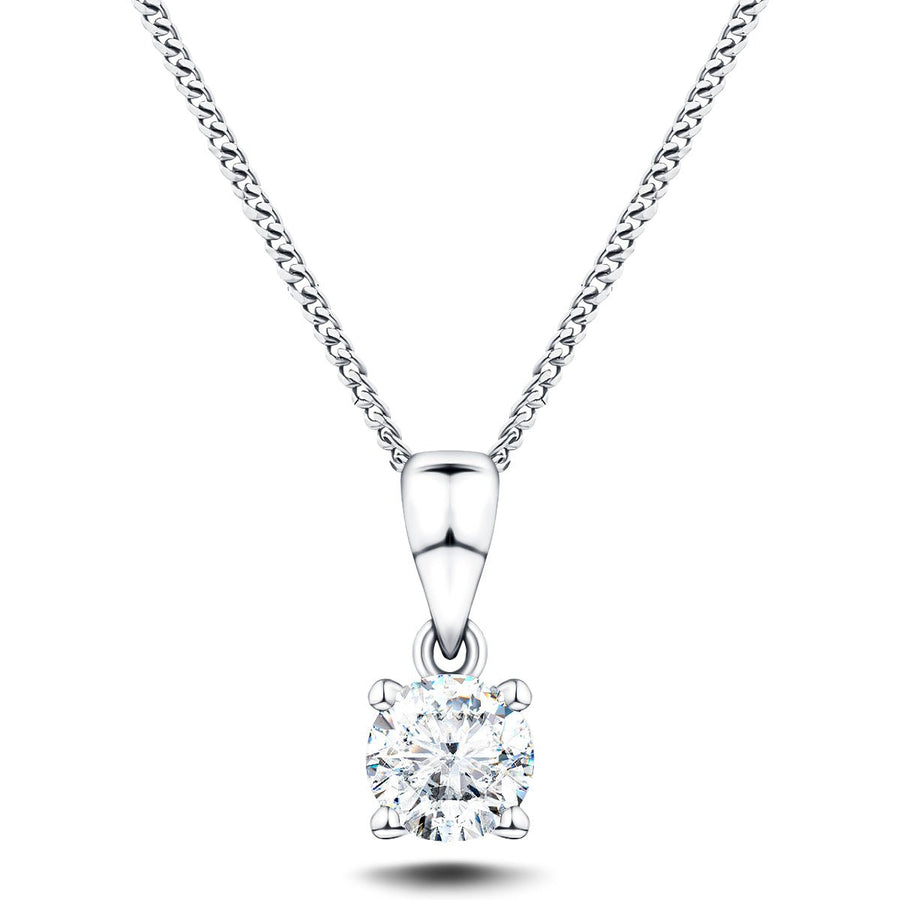
Lab Diamond Solitaire Necklace Pendant 0.50ct G/VS in 18k White Gold
The same approximately 5mm visible scale is paired with a sensible, high-quality G/VS specification.
View The Balanced ChoiceTop Specification
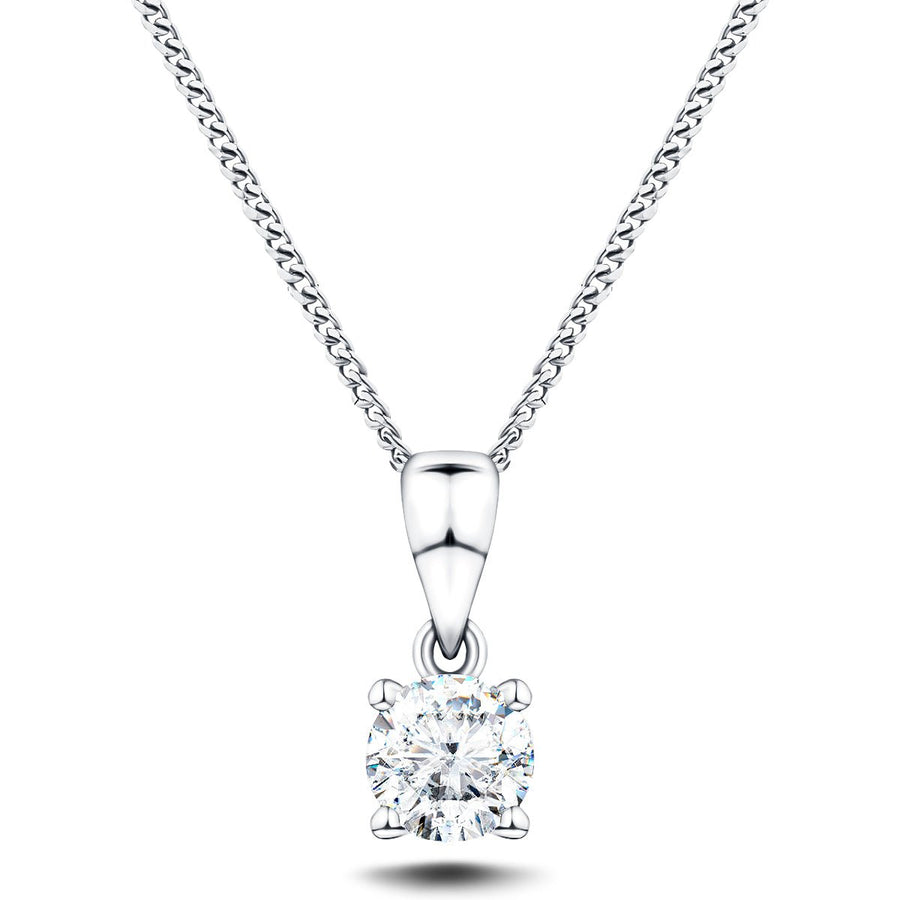
Lab Diamond Solitaire Necklace Pendant 0.50ct D/VVS in 18k White Gold
The same approximately 5mm visible scale with the technical upgrade to D colour and VVS clarity.
View The Top-Spec ChoiceComparison Three: When Spending More Buys More Gold
The final comparison keeps the diamonds almost entirely out of the decision.
Both tennis necklaces contain 5.00ct of round D/VVS lab diamonds. Both are 17 inches long, use claw settings and create a line of diamonds approximately 2mm wide. One is made of 9k white gold. The other one uses 18k white gold.
The 18k version costs roughly 55% to 60% more, depending on the applicable listed pricing. The diamonds, width, length and visual structure remain essentially the same.
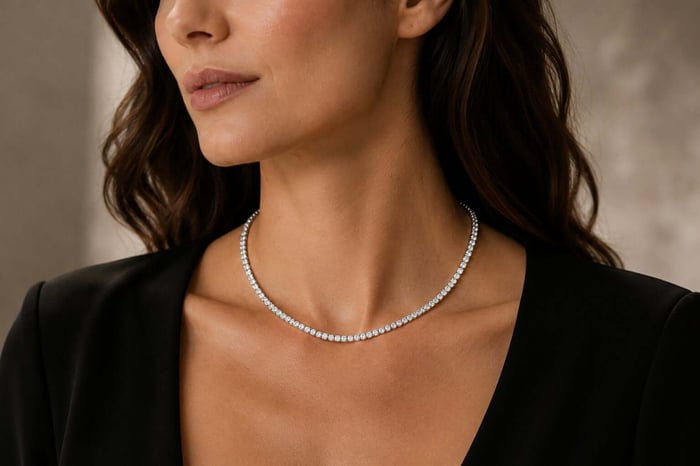
What changes is the precious-metal content.
In UK hallmarking terms, 9k gold has a fineness of 375 parts per thousand, while 18k gold has a fineness of 750 parts per thousand. Put simply, 18k gold contains twice the amount of gold. You can see the recognised UK fineness standards in the government hallmarking guidance.
That is a meaningful material upgrade. It does not double the necklace’s sparkle.
From the front, the eye is still primarily reading a continuous line of D/VVS diamonds. Someone looking at the necklace across a table will not know its gold fineness. The 18k version is therefore a purchase for the owner rather than the observer.
You are paying for higher gold content, a more precious construction and the satisfaction of knowing that the supporting metal matches the elevated nature of the necklace.
The 9k version directs more of the budget towards the diamond effect itself. It gives the same carat weight and approximate visible width in a less gold-rich setting.
What The Upgrade Buys
- Twice the proportion of gold in the alloy
- A materially more precious construction
- Greater satisfaction for buyers who value gold purity
- The same diamond specifications in a higher-gold setting
Spend More If
You regard the necklace as a major fine-jewellery purchase and want the metal specification to feel commensurate with five carats of diamonds. The 18k option also makes sense when intrinsic material quality is part of your definition of luxury.
Save The Difference If
The effect of the diamonds is your priority. The 9k necklace preserves the same diamond weight, quality, length and approximate width while keeping the overall spend more tightly focused on what people can see.
Our complete lab diamond tennis necklace guide offers more help with carat weight, styling and wearability.
Editorial Comparison
The Same Diamond Line, Two Levels Of Gold Purity
The 18k version costs roughly 55% to 60% more, while both necklaces retain the same 5.00ct D/VVS diamond specification, 17-inch length and approximate 2mm width. The upgrade is materially real, but its value depends on whether you care about the gold content itself.
Diamond-Led Value
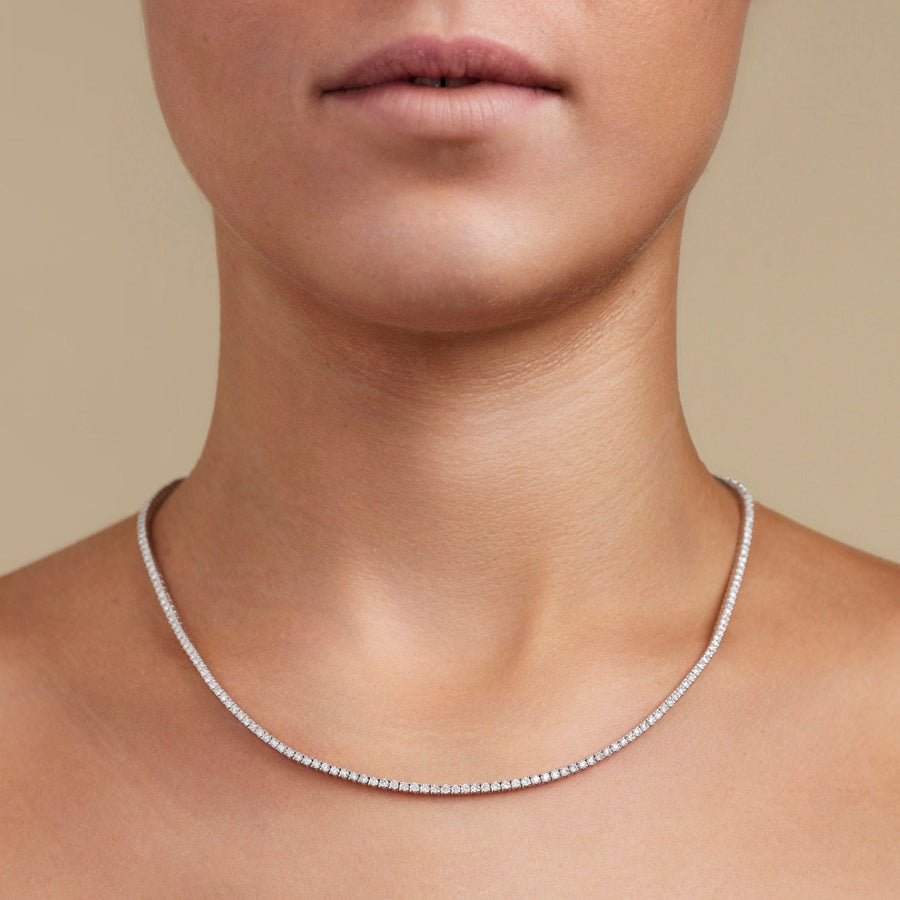
Lab Diamond Tennis Necklace 5ct D/VVS in 9k White Gold
The same five-carat diamond line and visible width, with the budget more tightly concentrated on diamond presence.
View The Diamond-Led ChoiceHigher-Gold Upgrade
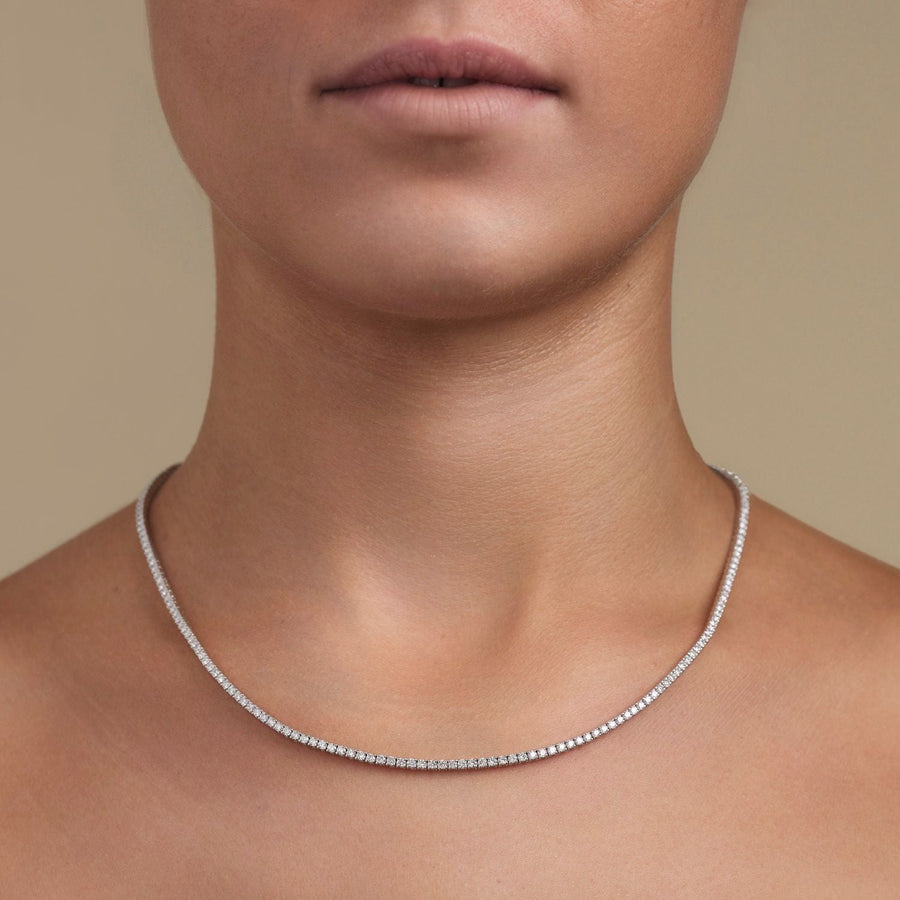
Lab Diamond Tennis Necklace 5ct D/VVS in 18k White Gold
The same five-carat diamond line in an alloy containing twice the proportion of gold.
View The Higher-Gold ChoiceSpend More In The Right Order
A larger budget works best when it follows your priorities rather than replacing them.
1. Choose The Right Type Of Jewellery
A technically perfect piece that rarely leaves its box is poor value. Start with something that fits your actual wardrobe, lifestyle and habits.
2. Get The Design And Scale Right
Proportion affects the whole personality of a piece. A pendant can feel delicate or assertive. Studs can add quiet light or become the focus of the face. A tennis necklace can sit as a refined line or become an unmistakable statement.
3. Protect The Visible Result
Carat measures weight, not face-up size. Proportions and cutting influence how large and lively a diamond appears, so more weight is not useful when it is hidden in depth rather than presented towards the viewer. GIA’s explanation of diamond cut and light performance provides useful context.
4. Reach A Sensible Quality Threshold
Once a diamond looks clean, bright and suitably white in its setting, additional colour and clarity grades may become more about rarity and specification than visible improvement.
That can still be worth paying for. It should be a conscious choice.
5. Upgrade The Metal When The Metal Matters To You
Higher gold purity and platinum are legitimate upgrades, but they should not be confused with larger or brighter diamonds. Decide whether you want greater intrinsic material value, a particular feel or simply the appearance of a white, yellow or rose-coloured setting.
The Three-Question Upgrade Test
Before spending more, ask:
1. Will I see the difference?
2. Will I use or wear the difference?
3. Will I value the difference even if nobody else notices it?
A “yes” to any one of those questions can justify the upgrade.
A “yes” to all three makes the decision straightforward.
If the honest answer is “no” to all three, the lower-priced piece is probably not the lesser choice. It is the better-judged one.
A Better Specification Is Not Always A Better Purchase
Jewellery is not bought to win a spreadsheet.
Specifications matter because they help us understand what we are buying. They become unhelpful when the higher number or grade is treated as the goal rather than evidence supporting a better piece.
The 2.00ct studs create more visible presence than the 1.00ct pair. That is an upgrade most people will notice.
The D/VVS pendant has a finer technical specification than the G/VS version. That is an upgrade the owner may value more than the observer.
The 18k tennis necklace contains considerably more gold than the 9k version. That is a material upgrade without a corresponding increase in diamond impact.
All three examples involve spending more. Each buys something different.
The smartest buyer knows which difference she is paying for.
For more help balancing specifications and real-world value, see our guide to comparing lab diamonds intelligently.
Choose The Upgrade You Will Appreciate
The right diamond jewellery should feel satisfying when you first open the box and remain satisfying after the specifications have faded from memory.
Spend more for a stronger visual effect when that is what you want. Choose a higher grade when technical excellence gives you genuine pleasure. Select a more precious metal when its composition matters to your idea of fine jewellery.
Do not spend more simply because the option exists.
Choose the difference you will continue to notice, use or value.
Frequently Asked Questions
Is A Higher-Carat Diamond Always Worth The Extra Cost?
No. Carat measures weight rather than visible size. Check the diamond’s measurements, proportions and setting to understand whether the extra weight produces a noticeable difference.
Can Most People See The Difference Between VS And VVS Clarity?
Usually not without magnification. Both grades commonly appear clean to the naked eye. VVS remains the technically higher and rarer specification.
Will A D-Colour Diamond Look Better Than A G-Colour Diamond?
D is the higher colour grade, but the visible difference can be subtle, particularly in a smaller diamond viewed in normal conditions. Setting colour, lighting and personal sensitivity to colour all affect perception.
Is 18k Gold Automatically Better Than 9k Gold?
It contains twice the proportion of gold, so it is materially more precious. That does not make it the right choice for every budget or every piece. A 9k setting can preserve the same diamond impact at a lower overall cost.
Should I Spend More On Diamond Quality Or Diamond Size?
First reach a quality level that looks clean and bright. Beyond that point, spending on visible size often creates a more noticeable result than moving further up the colour and clarity scales.
Will The Percentage Price Differences Stay The Same?
They are approximate relationships based on standard listed prices. Promotions, product updates and market changes can alter the gap, so check the current product pages before deciding.